Welcome to Short Ends. Quick (ish) reviews of a handful (ish) of movies. Sometimes connected by a theme, sometimes not. Today, Matty looks at the first four films by Mark Neveldine and Brian Taylor.
And yes, he’s totally done it to supplement his and Dave’s commentary track on 88 Films’ forthcoming Gamer (2009) disc.
Don’t Stop Moving: CRANK (2006)
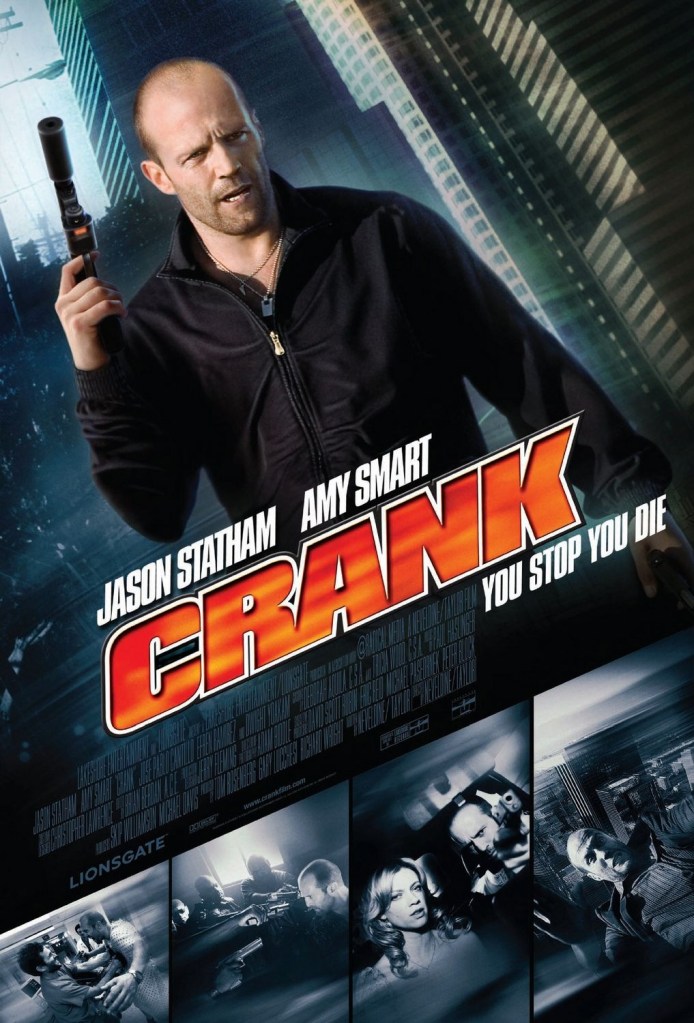
Die Hard’s (1988) influence on action cinema extends beyond the imitators it spawned, to the point where even its progeny inspired take-offs. Speed (1994), for instance, is ‘Die Hard on a bus’; and what is Crank if not ‘Speed inside Jason Statham’?’
Among the finest and most exciting larks of the ‘00s, Crank is a bomb blast; an explosion of pure energy. I’ve always wondered if its zest came from the artistic vexation of writers/directors Mark Neveldine and Brian Taylor. Legend dictates that the pair – a theatre brat and a punk guitarist with an interest in filmmaking, respectively – met when Taylor hired Neveldine to cameraman a short. Their creative union harmonised across a few more small projects, and the two quickly became weary of working for other people. Given how their collective output calls to mind the swagger of the great action auteurs of the VHS era, it’s delicious to note that, like Albert Pyun, Mark L. Lester, John Eyres and PM Entertainment, Neveldine and Taylor figured that they could do a better job themselves (context: Pyun and Lester set up their shingles, Filmwerks and American World, to control their own wares, and Eyres and PM junked distribution in favour of production after having their fingers burnt by poor acquisitions).
Exuding the sort of snotty, knuckle-whitening chutzpah indicative of debutants going hell for leather and proving their worth, Crank is visually and aurally stunning. Handheld; splitscreen; smash cuts; frantic zooms; ludicrous POVs; tracking shots executed on rollerblades (watch the making of); a pounding, genre-hopping soundtrack – and yet the film is never, ever gimmicky. All the wild and wacky flourishes are in tune with the essence of Neveldine and Taylor’s story:
Movement.
Propulsion.
Forging forward in the face of adversity because, hey, that’s the only way to stay alive.
Especially impressive is Crank’s inner world. As outrageous as the film’s parade of crooks and crims are, they feel authentic and their surroundings are lived-in. You’re in there with them, irrespective of the broad strokes they’re painted with.
Neveldine and Taylor wrote Crank on spec and pitched it to Lakeshore Entertainment, initially as a vehicle for Jackass prankster Johnny Knoxville, then as something the totemic Nicolas Cage might want to chew his way through. Fittingly, years later, Neveldine and Taylor partnered with Cage on fun comic book superhero caper Ghost Rider: Spirit of Vengeance (2011). Both Knoxville and Cage are intriguing ‘what if?’ casting choices but it’s impossible to imagine anyone else as the film’s antihero, the gloriously named Chev Chelios, than The Stath. A frequently espoused trivia nugget claims that the grizzled star – at the time best known for The Transporter (2002) and his teamings with Guy Ritchie – was worried about his comedy chops. Thus, Neveldine and Taylor told Statham to play Chelios straight and to allow Crank’s boisterous brand of humour – potty-mouthed, goading, and wickedly naughty – to radiate via the supporting characters and increasingly absurd situations the doomed mob assassin rips into on his mission of vengeance. The result is a protagonist of surprising emotional resonance. Despite Chelios’ proclivity for violence, Statham reveals him to be a complicated man as Crank rattles along. Being poisoned is the least of his worries. If anything, the drug Chelios is pumped with by a tetchy rival – synthetic “Chinese shit” which can be temporarily thwarted by keeping adrenaline levels sky high – is an agent of change; a means for the hired gun to address his past and rectify the big problem in his present (neglecting his girlfriend).
Again, I often wonder how much of that is metaphorical and based on Neveldine and Taylor’s professional journey.
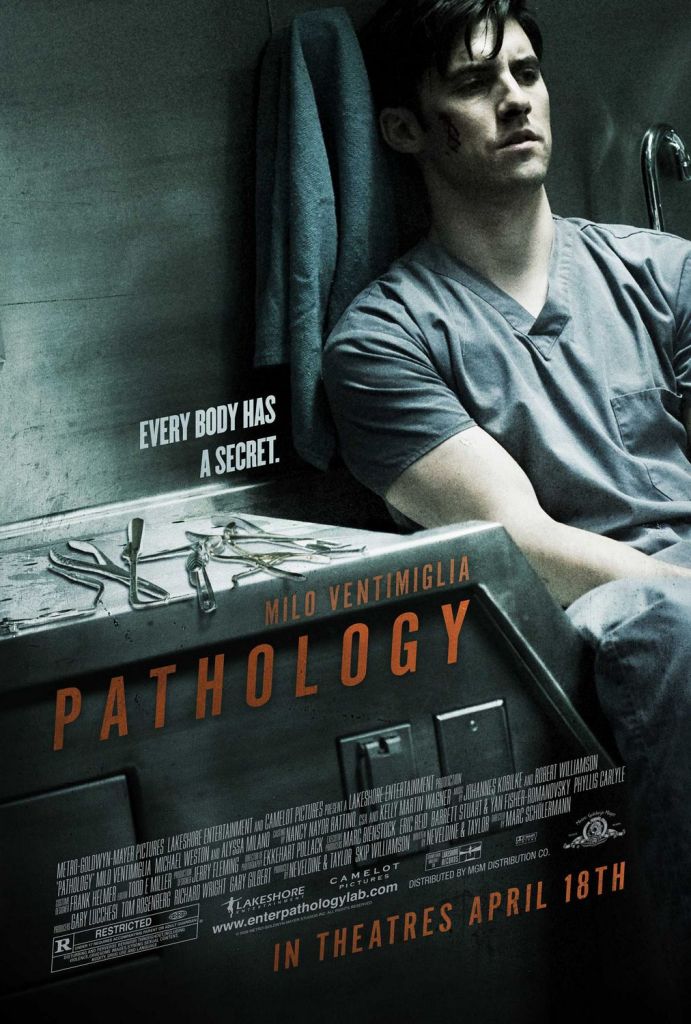
PATHOLOGY (2008): Let the Bodies Hit the Floor
Neveldine and Taylor’s work is anchored by a recurring motif:
That of a flawed hero – invariably a man – pushing back, even when the deck’s stacked against him.
In Pathology, it’s Milo Ventimiglia’s Teddy Grey: a gifted Harvard Medical School graduate who joins an elite pathology residency programme. Ambitious at the expense of his social life and, a la Crank, his affluent, out-of-the-area fiancée (Alyssa Milano), the studly junior doctor is soon suckered into the nefarious extracurricular activities of the residency’s other bright young things: an arrogant and conceited group of sick-puppies led by the charismatic Dr. Gallo (Michael Weston – a potent psycho turn)…
As with Crank and, indeed, the subsequent Crank 2: High Voltage (2009) and Gamer (2009), Pathology’s hook is gamesmanship. Perversely, here it’s in the inverse. Crank, Crank 2 and Gamer’s respective heroes are challenged to stay alive; in Pathology, Grey and the Gallo contingent challenge death, daring each other to solve the ‘perfect’ murders they commit with their medical knowledge. The premise – Rope (1958) meets Flatliners (1990) – is far-fetched and reliant on one twist too many. Moreover, the endless onslaught of shitty, unpleasant and grim characters really drains you if you’re not in the mood. Unlike Crank and its impish approach to offending, Pathology almost tries too hard to revolt. However, I love it. It’s at the top of the pile compared to the other hospital slab-based horror/thrillers of its period (cf. Unrest (2006), Sublime (2007), Autopsy (2008), the equally provocative Deadgirl (2008)).
Pathology sets it stall out right away during an icky pre-credits sequence, Gallo’s gang treating fresh cadavers as if they’re props, videoing themselves using them like ventriloquist dummies in some twisted attempt at ‘comedy’. While substantially less gory than the bountiful scenes of vivisection and bloodshed, it’s still a shocking sight. The disturbing and affecting imagery balloons to grotesquely morbid proportions as Pathology opens up, and the rest of the story’s transgressions include drugs, alcohol, child abuse, prostitution, and kinky sex.
The darkest and most serious-minded offering on Neveldine and Taylor’s CV, the drama hinges upon Grey’s plummet into depravity and his attempts to escape it. Pathology is a compelling, albeit sillily plotted, portrait of damaged people trying to control the chaotic existence they’re mired in; trying to validate their own lives by claiming the lives of others.
Written and produced by Neveldine and Taylor and bankrolled by their Crank backers Lakeshore, Pathology – which hit screens via Lakeshore’s freshly minted output deal with MGM – heralds the feature debut of German director Marc Schölermann. It’s a shame Schölermann, Neveldine and Taylor didn’t collaborate on anything else. The music video and commercial helmer is a good match for their script. He has pace and a visual sensibility reminiscent of, suitably, David Cronenberg circa Dead Ringers (1988). Several members of Pathology’s cast – Ventimiglia, Weston, John de Lancie, Johnny Whitworth, Dan Callahan, and Jarvis W. George – became Neveldine and Taylor’s stock company, and Buddy Lewis, Larry Drake and punk hero Keith Morris (whose band, the Circle Jerks, contribute their awesome 1983 track Parade of the Horribles to the soundtrack) also appear.
As an aside, I vividly recall catching Pathology on its opening night. There were seven of us in attendance at my local Cineworld – which probably helps explain the film’s dismal box office…
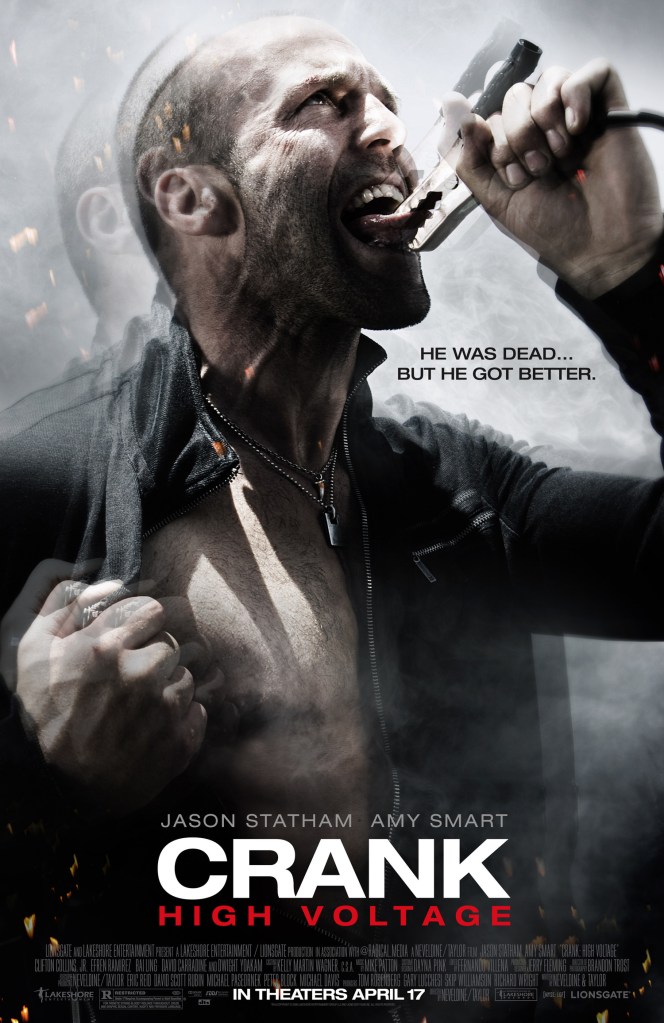
Kickstart My Heart – CRANK 2: HIGH VOLTAGE (2009)
They didn’t need to elaborate, but Neveldine and Taylor once stated that, in terms of the Crank saga’s overarching ideology, the first film was powered by adrenaline and Crank 2 – or, as it is on screen, ‘Crank: High Voltage’ – is about electricity. I know, I know: it’s very subtle. In any case, it adds another layer of metaphor to the duo’s incredibly personal strain of filmmaking. Consider this:
Crank represents the seat-of-their-pants thrill of making their directorial debut.
Crank 2 represents keeping the momentum going.
Buoyed by a loud, self-referential tone, Crank 2 is a superior sequel but its bolshy attitude is more obvious and knowing compared to its predecessor. The film is less sincere. Indulgent. Try-hard, even. However, it’s a minor gripe: Crank 2 is dynamite – and for all its wink-y posturing, there’s the unshakeable feeling that it’s Neveldine and Taylor at their purest.
Amazingly, when Lakeshore and co-producer/distributor, Lionsgate, asked them for a follow-up in the wake of Crank’s boffo box office, Neveldine and Taylor originally declined. As Chelios – spoiler alert! – had splattered across the pavement at the end of Crank, they thought a Crank 2 stupid. Besides, they were busy developing Gamer (2009). Reluctantly agreeing to script (money talks), the pair promptly fell in love with the material and decided to grab the film’s reins. Thank the movie gods they did.
Wearing their influences on their sleeves, Crank 2 is a potpourri of pleasure. Aesthetically, the film evokes Oliver Stone’s Natural Born Killers (1994). Neveldine and Tayor give Chelios inner and outer moments — flashbacks, cutaways — rendered by what Stone described as “vertical cutting”. There are bits and bobs pilfered from Paul Verhoeven’s RoboCop (1987) and – whether intentional or not – elements taken wholesale from Eric Red’s Body Parts (1991), a cult horror-thriller typified by a similar go-for-broke quality.
Neveldine and Taylor’s imagery is as flamboyant as their patter:
A shotgun wedged into a random goon’s arse.
A Statham kaiju.
A sentient severed head floating in a water tank.
And, of course, that poster visual: Statham with a whopping jump lead clamped to his tongue. Because, this time, that’s how the reanimated Chelios has to keep his newfangled electronic ticker ticking as he tears apart Los Angeles, looking for his actual missing organ.
Crank 2’s action is faster and gratuitous, Pathology’s full-frontal gore transposed and ballooned to farcical proportions for maximum splatstick laughs. The cast are unanimously in on the joke. Amy Smart and Dwight Yoakam return alongside Statham and their primo cartoon mugging is amplified by support from Clifton Collins Jr. (as the film’s heart-snatching, revenge-hungry villain), Bai Ling, Corey Haim, David Carradine in yellowface, Pathology holdovers John de Lancie, Michael Weston and Dan Callahan, and cameos by Lloyd Kaufman, Danny Lohner, Maynard James Kenan and Geri Halliwell (!) among others.
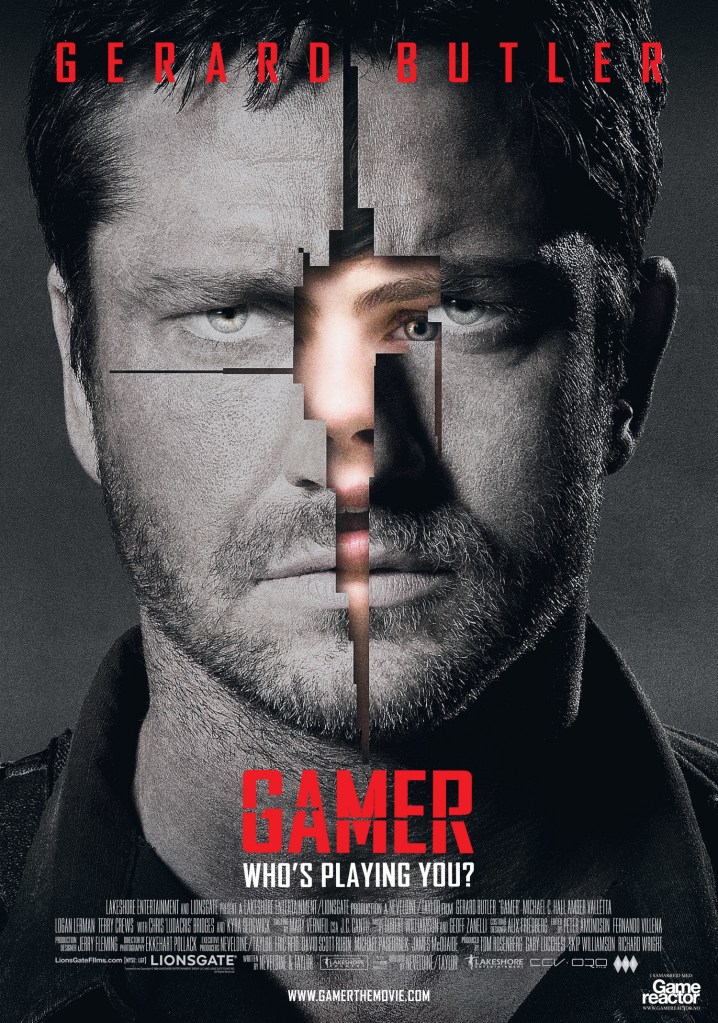
GAMER (2009): You Don’t Own Me
Save for additional shooting, Gamer mostly lensed before Crank 2 but landed in cinemas on 4th September 2009, four and a half months after it. The delay was caused by extensive post production tinkering that involved rendering the copious CGI FX and reframing the film from 2.40:1 to 1.85:1, much to the chagrin of cinematographer Ekkehart Pollack. Perhaps somewhat tellingly, Pollack — who’d paired with Neveldine and Taylor on Pathology — never worked with them again.
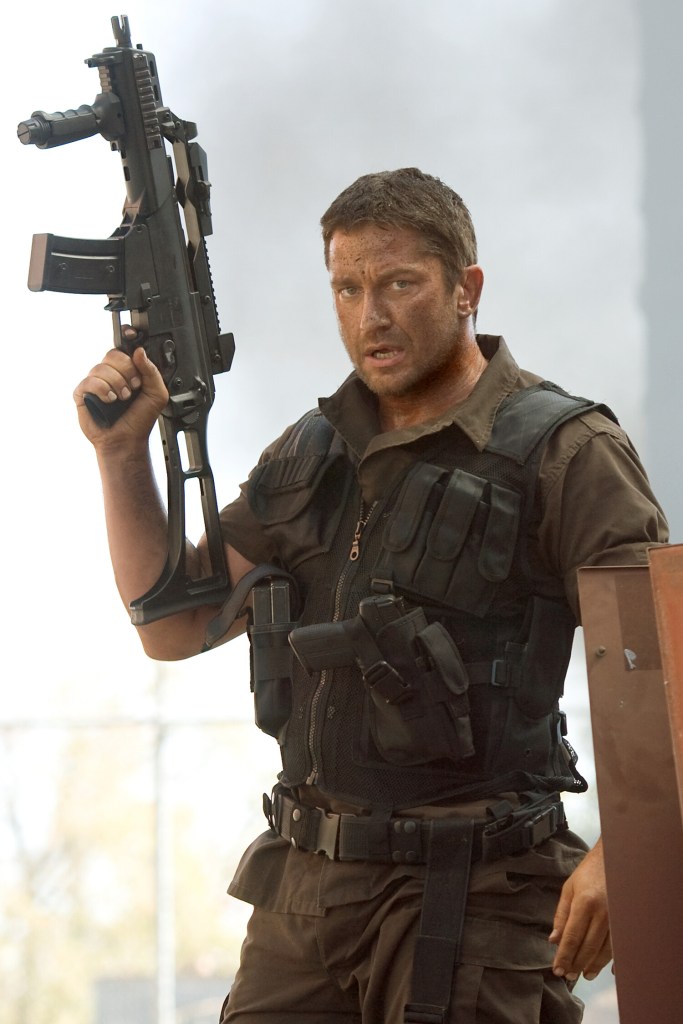
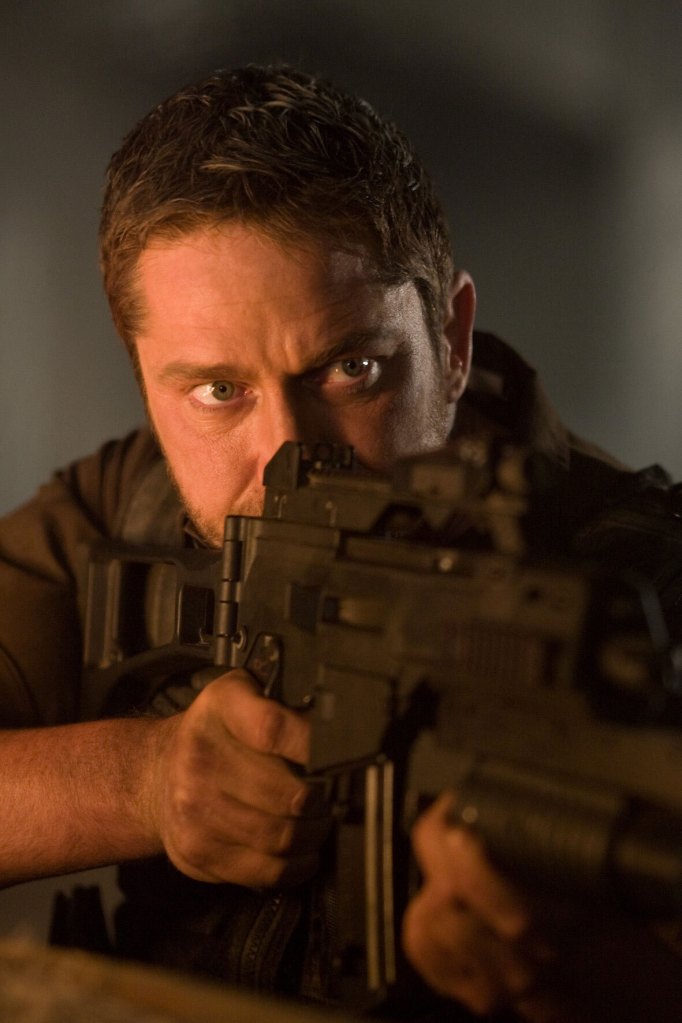
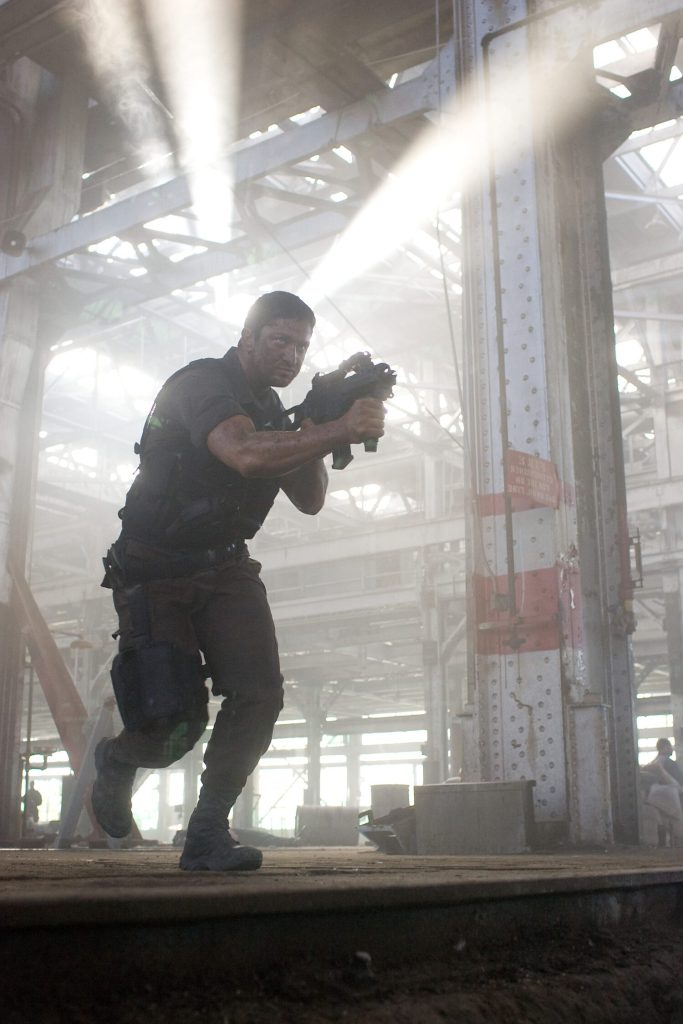
Watched in tandem, Gamer and Crank 2 are quite the experience. Crank 2 is stronger. As mentioned, there’s a purity to it; a joy wholly reflective of Neveldine and Taylor distilling their key themes and obsessions into a single text. Gamer likewise qualifies as an auteur vehicle. It too oozes Neveldine and Taylor’s hallmarks: Gerard Butler’s determined hero, a colourful supporting cast, an imaginative central gimmick, and an immersive world in which the story unfurls. Alas, the film is messier. It’s less focused. Less masterly. It’s as if the writer/directors, given carte blanche to create as they saw fit by producers Lakeshore (their last with the company – though Neveldine did go on to helm dud horror flick The Vatican Tapes (2015) for them solo), threw everything at the wall, wanting something to stick. As a piece of storytelling, Gamer is tantamount to a five year-old recounting their day: “and then and then and then and then”. In Inside the Game: Controlling Gamer, the comprehensive and brilliantly forthright making-of included on the film’s DVD and Blu-ray release (oh, for the days these things were home entertainment de rigueur), producer Skip Williamson mentions that he was confused by the script when he read it. An agreeable observation to say the least.
Still, as loud and as clunky as Gamer is, there’s plenty to savour. Contemporary critics were keen to draw attention to the video game lilt to Crank and Crank 2, ostensibly calling them unofficial adaptations of the Grand Theft Auto franchise. Taylor was – and presumably remains – a gamer, and his and Neveldine’s eponymous movie certainly captures the flavour of the hugely popular shoot-’em-ups, beat-’em-ups and strategy games of its era (Call of Duty et al). Battle Royale (2000) by way of Tron (1982), the plot sees Butler as the decorated ‘hero’ of Slayers: a nasty, hyper-violent computer game where, thanks to weird mind-controlling technology, real people have become avatars, controlled by gamers in bloody, to-the-death combat.
Friends with Neveldine and Taylor, Butler volunteered his services on Crank should Statham had proven untenable. And while Butler’s actual part is the slightest protagonist of Neveldine and Taylor’s first four pictures, the growling star, transitioning to action-man status following 300 (2006) (the loose Butlersploitation timeline: 300, Gamer, Law Abiding Citizen (2009), Olympus Has Fallen (2013)), fits the bill vis-à-vis appearance, temperament and rootability. Dexter’s Michael C. Hall is a phenomenal, scene-chewing villain (half Dick Jones, half Mark Zuckerberg); Terry Crews a striking and formidable secondary foe; and Alison Lohman, Kyra Sedwick, Ludacris, and Neveldine and Taylor’s Pathology players (John de Lancie, Michael Weston, Johnny Whitworth, Dan Callahan and Milo Ventimiglia) attack the material with gusto.
Grounded by several big – if rambling – ideas on rehabilitation, tech, and the nature of power and liberty, Neveldine and Taylor touted Gamer as “a throwback ‘80s actioner”, citing Mad Max (1979), The Running Man (1987) and Blade Runner (1982) as their influences. They’re in the mix for sure, as well as They Live (1988) and Commando (1985). However, my love for Gamer rests on its nicher winks. There are pockets of kamikaze carnage and flutters of conceptual and structural kookiness which echo the films of the aforementioned Albert Pyun, Mark L. Lester, John Eyres and Phillip J. Roth; flashes that suggest Gamer is the inevitable consequence of Neveldine and Taylor gorging on the real genre delicacies of the ‘80s and ‘90s video age.
Watch Gamer, and then watch Albert Pyun’s Nemesis (1992) or Phillip J. Roth’s Digital Man (1995) and tell me I’m wrong.