
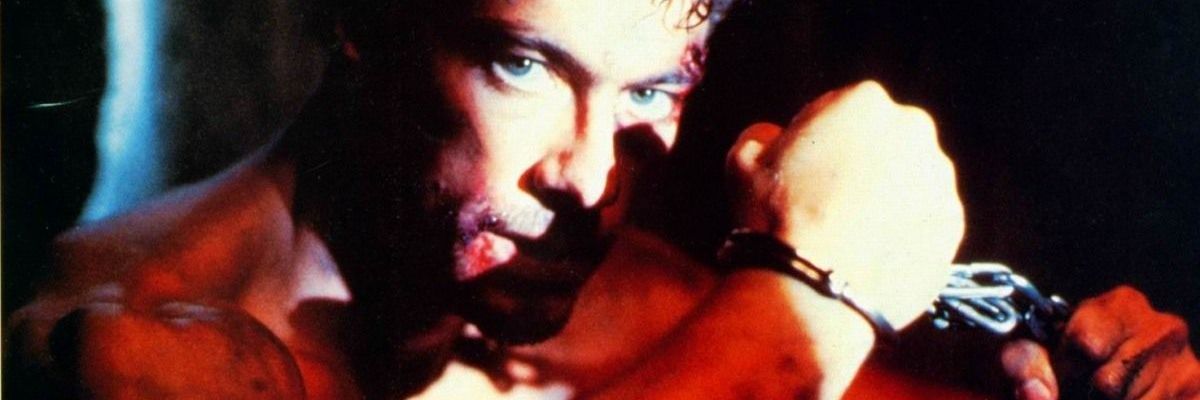
Matty locks down with one of his favourite Van Damme – and, indeed, Deran Sarafian – flicks.
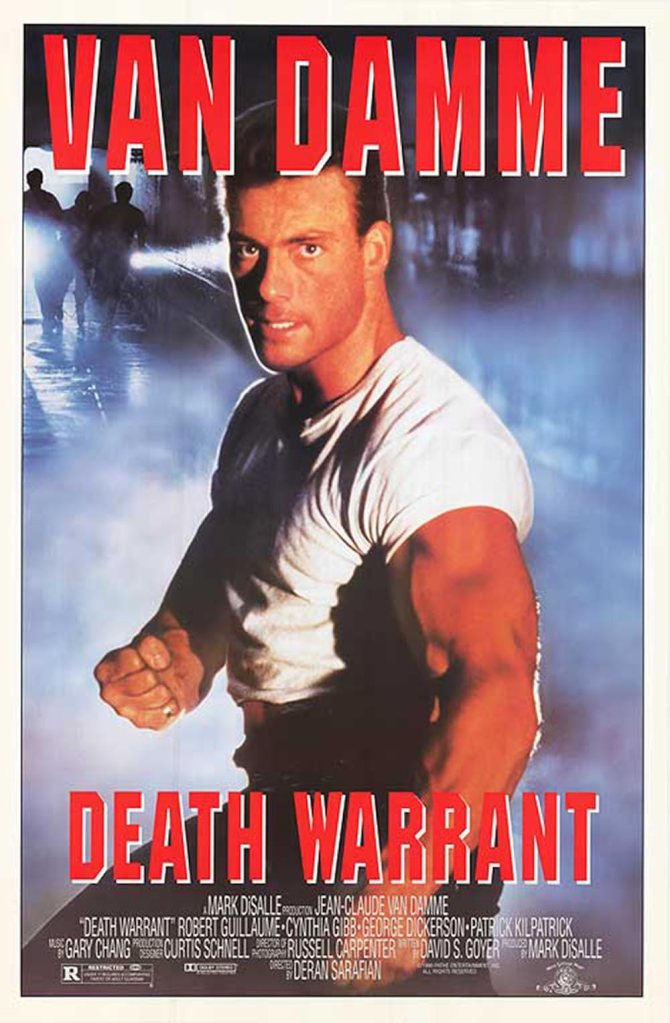
It didn’t get the wide theatrical release or critical acclaim producer Greg H. Sims desired, but vampire flick To Die For (1988) was seen by at least one right person. Proving that you never know who’s watching, legend goes that, after discovering the movie he and his cinema date actually wanted to see was sold out, Jean-Claude Van Damme settled into a screening of To Die For instead. And as To Die For unfurled, Van Damme decided that its helmer, Deran Sarafian, was the perfect choice to handle his new arse-kicking opus, DEATH WARRANT (1990). When the burgeoning martial arts hero threw Sarafian’s name into the ring, his credentials were supported by actress Dey Young. Sarafian worked with Young on Rock n’ Roll High School (1979), serving as a runner, and at the time of Death Warrant’s development, Young was married to actor-cum-mogul David Ladd. Ladd was then a top exec at MGM/United Artists, and the shingle inherited Death Warrant as part of their merger with Pathé and what was left of The Cannon Group. Van Damme and Young’s recommendation was duly noted.
Like he was on To Die For, Sarafian is an excellent fit for the material. At first glance, hypothetical pundits scrutinising the director’s career might have been confused at how the maker of a character-driven horror-romance could transition to action.
Death Warrant, however, is as much about people and mood as it is brawling.
Written as ‘Dusted’, Death Warrant marks the inaugural produced work of David S. Goyer. Goyer, the future architect of such behemothic comic book franchises as Blade and Christopher Nolan’s Dark Knight trilogy, penned the film on spec straight out of college, as he details on his website:
“Six months after I graduated, I got word that Van Damme wanted to buy it and make it. Six months after that, I was on the set, at the tender age of twenty-two. As soon as Van Damme was cast, I had to take much of the dialogue and reapportion it to other characters because Van Damme’s accent was pretty thick. I remember meeting Van Damme. He had one of those early, military-style cell phones. I’d never even seen one before. He gave me a hug and said, “Hollywood will try to destroy you. But I will protect you like an eagle.” So while the film isn’t high art, it started my career, so I’ll always be indebted to Van Damme for that.” [1]
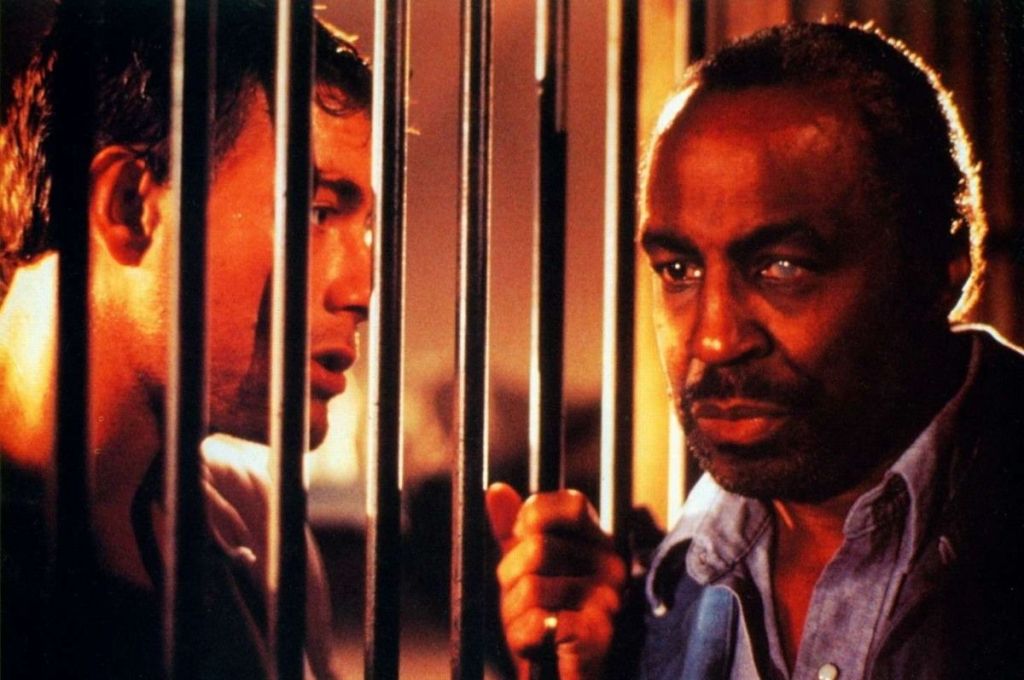
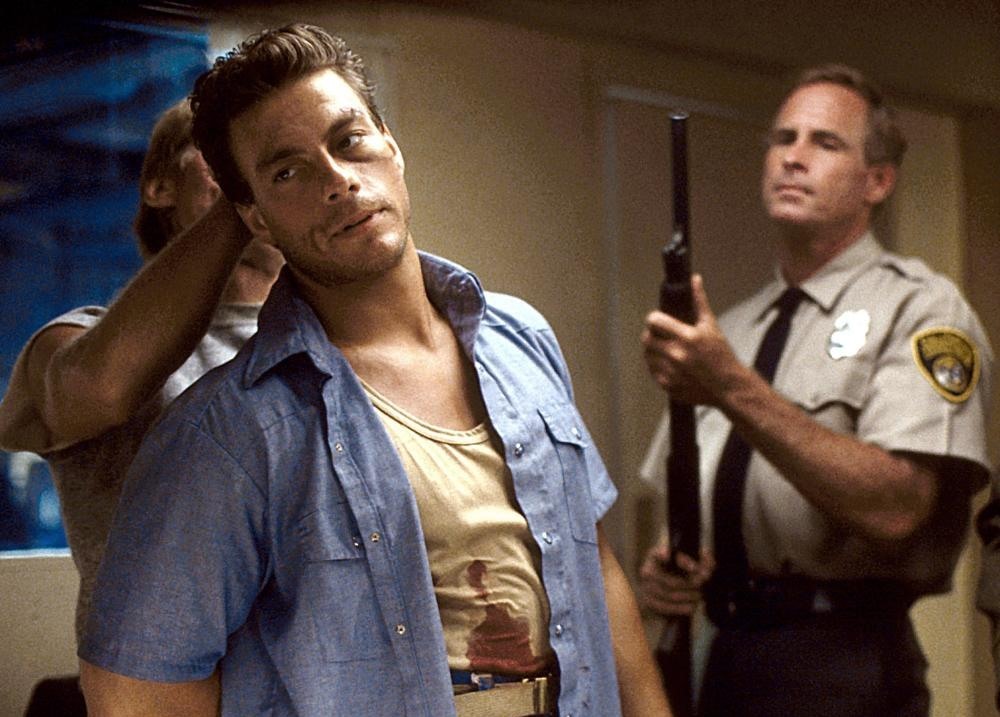
Though Van Damme’s performance is a touch monosyllabic and the thinnest of his Cannon quartet (Death Warrant began as his final picture for Messrs Golan and Globus, and was preceded by Bloodsport (1988), Cyborg (1989) and the Cannon-acquired Kickboxer (1989) [2]), his natural charisma shines. He’s just a captivating presence. The Muscles From Brussels plays Louis Burke, a Canadian cop (!) sent undercover to a tough California prison in order to find out who’s killing the inmates. The answer involves Burke beating the ever-loving shit out of cons and screws in roughly equal measure as Sarafian ticks the requisite prison movie boxes, sexing up Goyer’s pulpy tale of life behind bars with an organ-snatching subplot and a procession of quirky characters.
Indeed, Sarafian’s loved an ensemble since his first film, ace sci-fi shocker Alien Predators (1986); and while subsequent offerings Back in the U.S.S.R. (1992), Roadflower (1994) and the Disney-endorsed Terminal Velocity (1994) are heartier and more well-rounded in that regard, Death Warrant builds upon the flair Sarafian demonstrated in To Die For beautifully. Death Warrant is at its best when he’s focusing on its veritable buffet of ‘that guy’ talent. Armin Shimerman and Joshua Miller appear as the slammer’s oily doctor and a teen hacker, respectively, and George Dickerson (Blue Velvet (1986), Death Wish 4: The Crackdown (1987)) puts a shift in as a duplicitous bureaucrat. Art LaFleur is in fine ‘wicked sum’bitch’ form and nearly steals the show as the clink’s tyrannical warden, but it’s in Sarafian’s vivid depiction of the lags where the fun lies. A humanist filmmaker, Sarafian’s output repeatedly affirms that the power of good rests on how we, as people, deal with each other. There are heroes and villains in Sarafian’s pictures; both, mind, often lurk in grey areas, their motives delicate and nuanced. In Death Warrant, Burke’s greatest allies are the jailhouse residents, and they represent some of the most textured and fascinating characters in Sarafian’s oeuvre: creepy predator Konefke (Conrad Dunn, as ‘George Jenesky’); charismatic fixer Priest (Abdul Salaam El-Razzac) and his ‘girl’, Jersey (Harry Waters Jr.); and grizzled lifer Hawkins (Robert Guillaume).
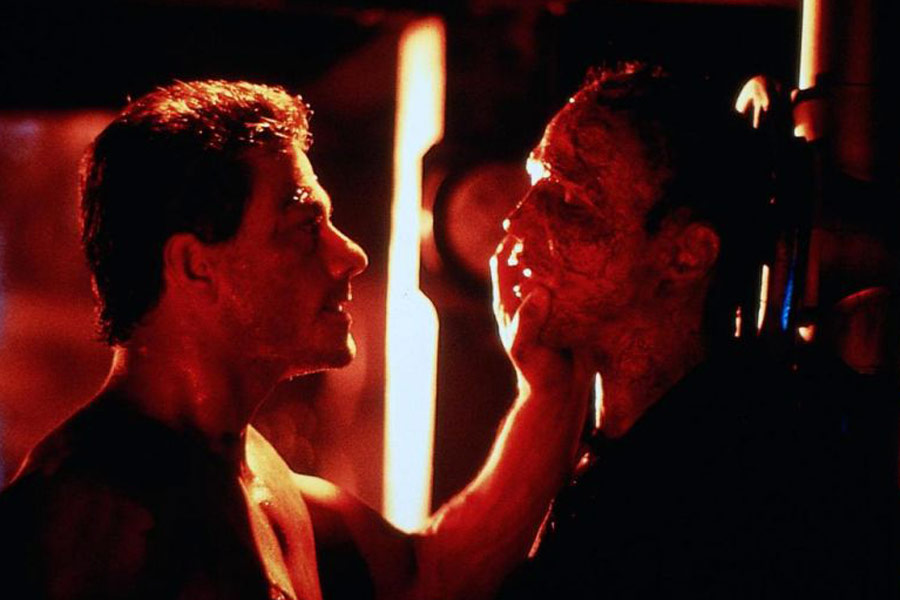
Despite Cynthia Gibb’s role, attorney Amanda Beckett, simply being ‘the nominal female’ in a bloke-heavy throng, its slightness is counteracted by Sarafian’s trump card: the mighty Patrick Kilpatrick as Burke’s terrifying nemesis, The Sandman. Cemented by Kilpatrick bellowing “Welcome to Hell!” during their showdown, Sarafian’s demonic presentation of the dead-eyed psycho almost tips Death Warrant into full-blown horror territory. Of course, it’s clear in general Sarafian is still in fright mode – still in his horror head – post Alien Predators and To Die For. The scene in which a snitch is burnt, for instance, oozes a giallo-esque flavour, and the swoop through Priest’s Bedouin tented lair is dreamy and macabre. Action-wise, Sarafian has stated that the film’s brawlin’ and tusslin’ was unabashedly influenced by John Woo and shaped on set and in the editing bay by Van Damme. But the rest of Death Warrant exhibits the same sense of space, place and tone as Alien Predators and To Die For.
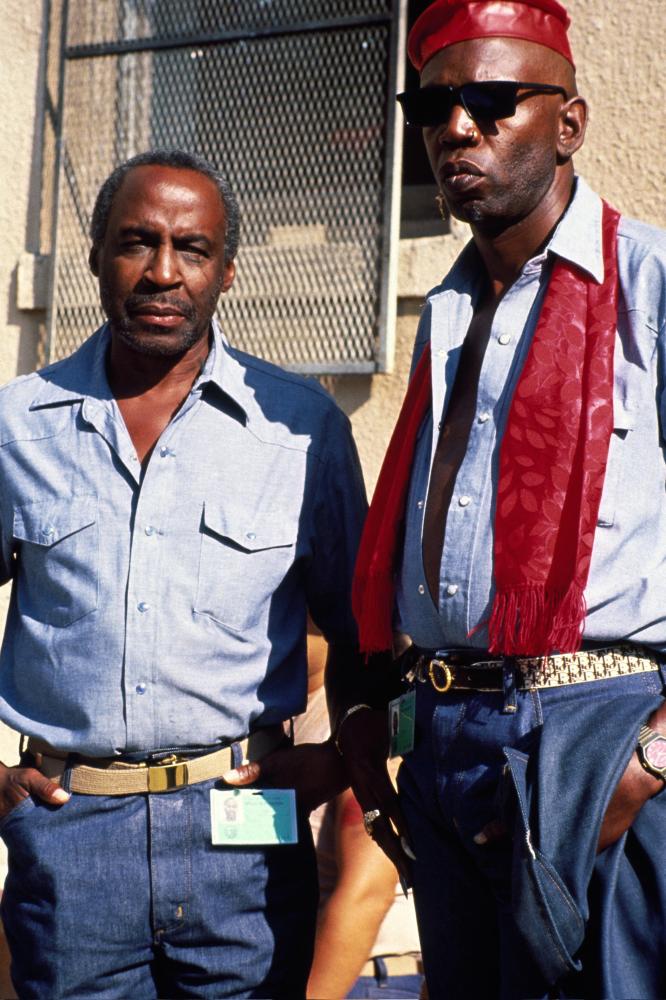
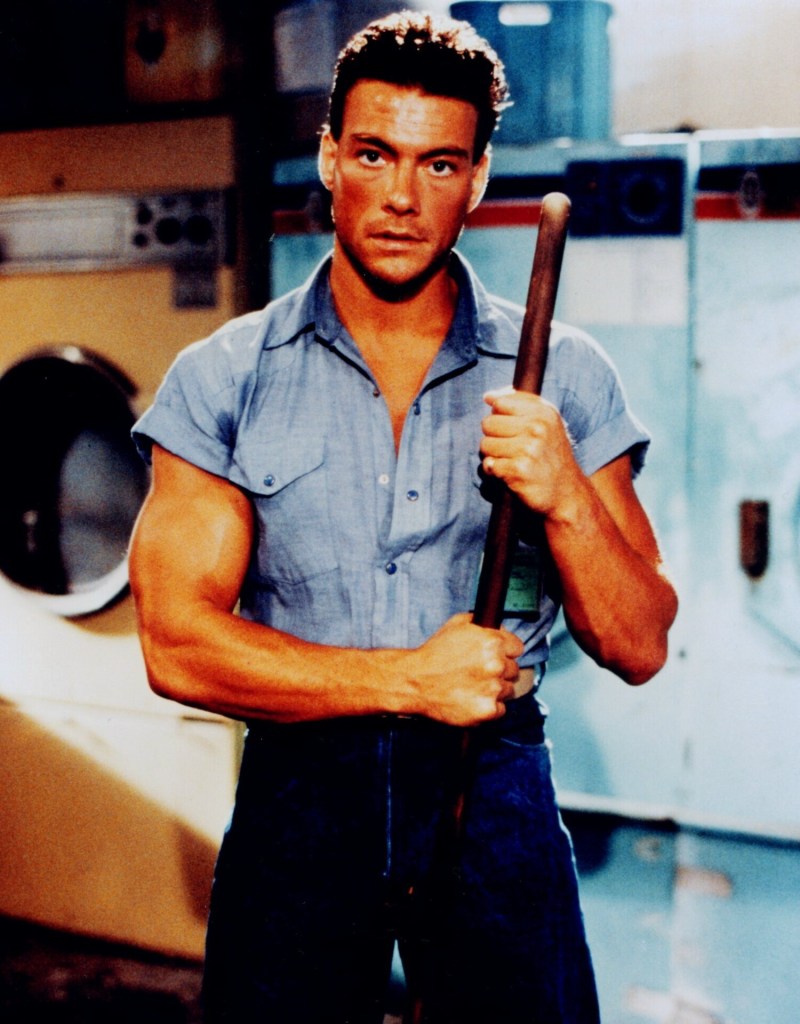
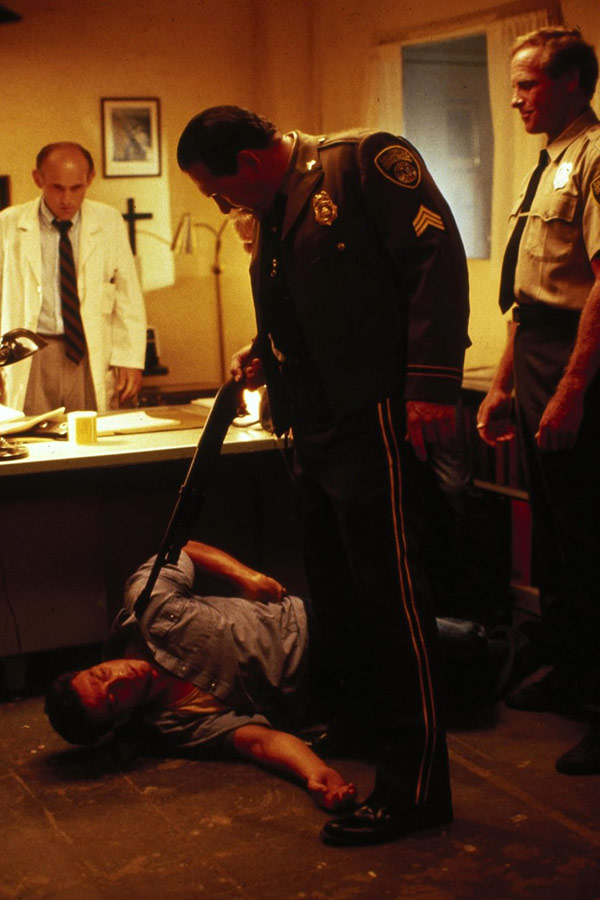
Shot between 26th July and 23rd September 1989, Death Warrant opened in U.S. theatres on 14th September 1990, mere weeks before Sarafian jetted off to Russia for Back in the U.S.S.R. The 17th September 1990 edition of The Los Angeles Times reported that Death Warrant opened in third at the box office, behind Mike Nichols’ Postcards From the Edge (1990) and Jerry Zucker’s epoch-making Ghost (1990) which was in its tenth week. The Times stated that Death Warrant had “ticket sales of about $4.9 million” with a screen average of $4,583 across 1,069 screens. It ultimately grossed $46.7 million against its $6million budget.
As it happens, 1990 was quite the year of Van Dammage here in the U.K. Cyborg debuted direct-to-video on 23rd February via Cannon/Pathe Video. VHS copies of Bloodsport and Kickboxer continued to rent solidly, and A.W.O.L. (1990) (aka ‘Lionheart’) — an Imperial Entertainment/Universal co-production that started shooting after Death Warrant — opened as an “exclusive” at the Prince Charles, London on 21st September 1990 and rolled out to Birmingham, Manchester, Liverpool, Derby, York, and Nottingham a week later. A retail/sell-through copy of Bloodsport was released on tape by Warner Bros. in November, and A.W.O.L. arrived on rental cassette via Guild Home Entertainment on 3rd December 1990. Three days later, on 6th December 1990, Death Warrant opened in Gateshead, Newcastle, Nottingham, Liverpool and Manchester, and swiftly rolled out to London and Bradford from the 7th. The film eventually surfaced as a rental via MGM/UA Home Video on 26th April 1991 — three weeks after Cyborg made its home video bow as a sell-through title on 8th April.
Funnily, Van Damme returned to Death Warrant’s ideas pit thrice more:
The Sandman/serial killer shtick resurfaces in Replicant (2001); the prison setting in Replicant auteur Ringo Lam’s next JCVD epic In Hell (2003) (which, a la Death Warrant, also features Van Damme buddy and Muaythai practitioner Paulo Tocha as a felon); and the organ harvesting bumf in Pound of Flesh (2015).
Van Damme and Kilpatrick, meanwhile, reunited on Black Water (2018) where, incidentally, the latter utters “Welcome to Hell” again.
[1] Death Warrant, www.davidsgoyer.com
[2] Dates for contextual purposes: Van Damme’s Cyborg and Kickboxer lensed virtually in tandem, the former spring/summer ‘88, the latter late summer/autumn; Cyborg and Kickboxer hit U.S. theatres on 7th April ‘89 and 8th September ‘89; and To Do For landed in stateside cinemas in between them, on 12th May ‘89.

