
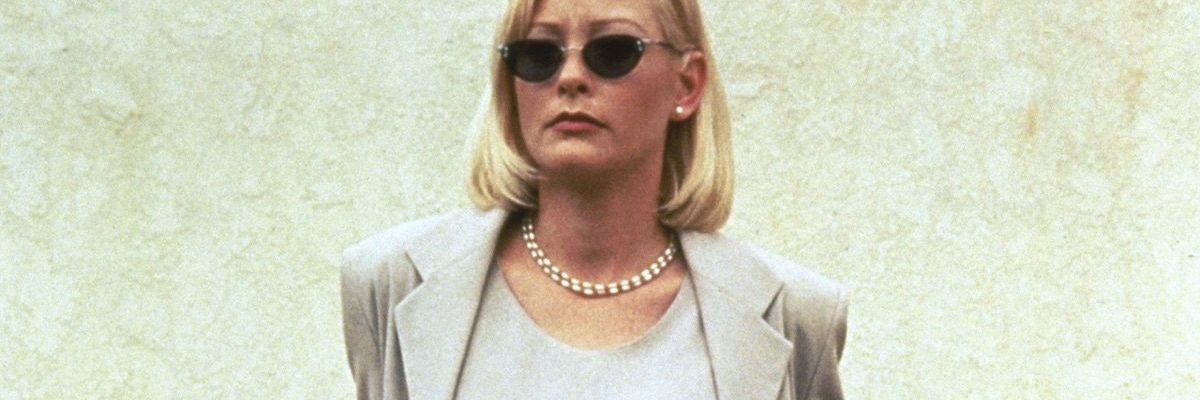
Dave convinces Belgian filmmaker Jan Verheyen to relive the trauma of his American debut.
“I watched the film again in preparation for this conversation,” says Jan Verheyen. “And I did so in trepidation as my memories of it were not fond. It was not a pleasant experience. Having said that, it was not as bad as I thought it was! [laughs].”
Born in Temse, Belgium in 1963, Verheyen began his career in the early ‘80s as programmer and curator of the Knokke-Heist Film Festival before setting up his own independent distribution company with his friend, Marc Punt. The shingle quickly became the country’s foremost outlet for both American imports and Belgian indie cinema. Keen to break into actual filmmaking, Verheyen used his industry nous to identify a gap in his homeland’s film market. Boys (1992) was the result.
“It was basically a Flemish version of the American teen movies,” recalls the director. “Comedies that were very much in fashion at the time. After all, when we looked in the multiplexes that were being built at the end of the ‘80s in Belgium, they were full of young people – and yet no films were being made for them.”
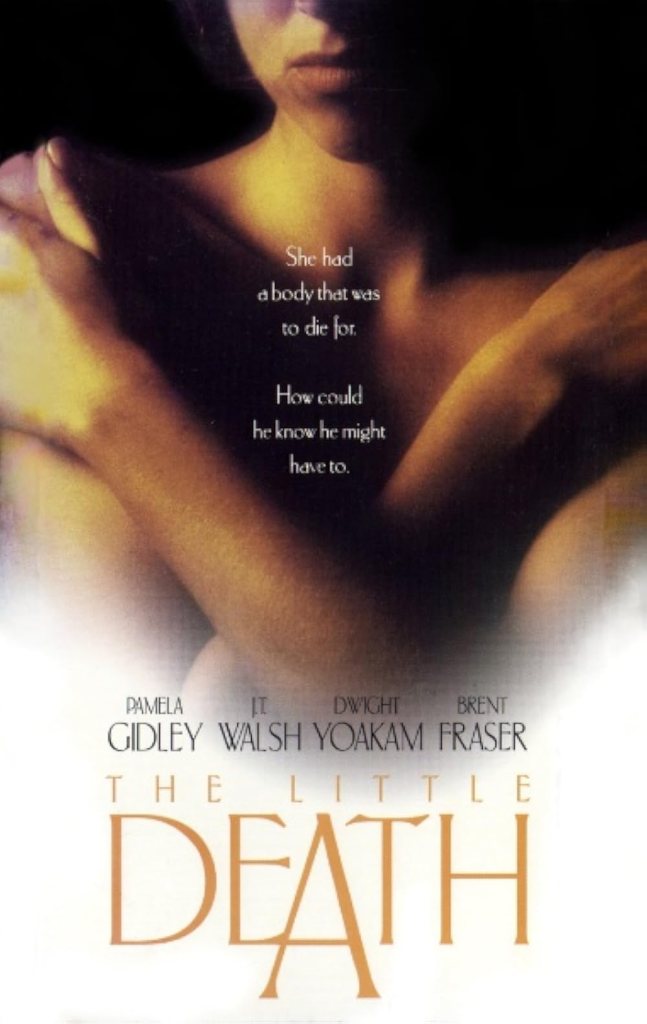
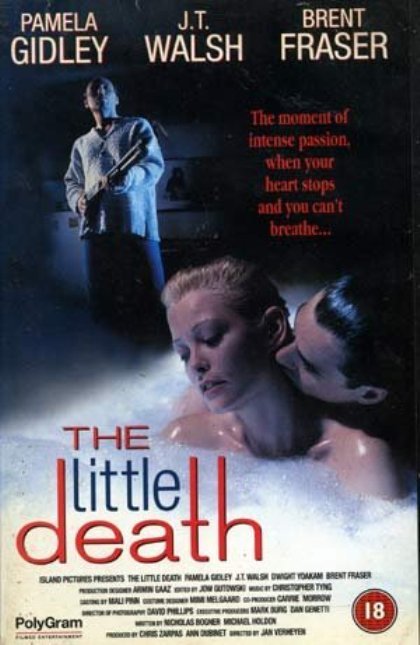
Boys was a huge success. It secured lucrative distribution deals in over a dozen foreign territories and brought Verheyen to the attention of Ann Dubinet, the President of International Distribution at Island Pictures. Dubinet had recently bought a script for a movie called THE LITTLE DEATH (1996) alongside her boss, Mark Burg [1].
Translated from ‘La petite mort’, the moniker, of course, refers to a brief loss or weakening of consciousness. And while the term has been in the vernacular for the best part of five-hundred years, it’s more recently evolved into a description for a post-orgasmic comedown.
The perfect title for an erotic thriller, then.
“That was the plan”, concedes Verheyen. “There was no question that erotic thrillers were one of the biggest trends in cinema and in video stores at that time. Fatal Attraction (1987) and Basic Instinct (1992) paved the way, and now the market was flooded with that type of film. They hired me because I was European; therefore I should be less prudish than my American counterparts!”
“At that time I was young and ambitious. I had grown up in the ‘70s when William Friedkin, Francis Ford Coppola and Martin Scorsese were in their prime. I would rather have gone to see Jaws (1975) for the fourth time than the new Fassbinder film. American filmmaking was a huge draw. And to be honest, Dave, if they would have called me for Police Academy 4 (1987), I probably would have packed my bags and gone to Hollywood [laughs].”
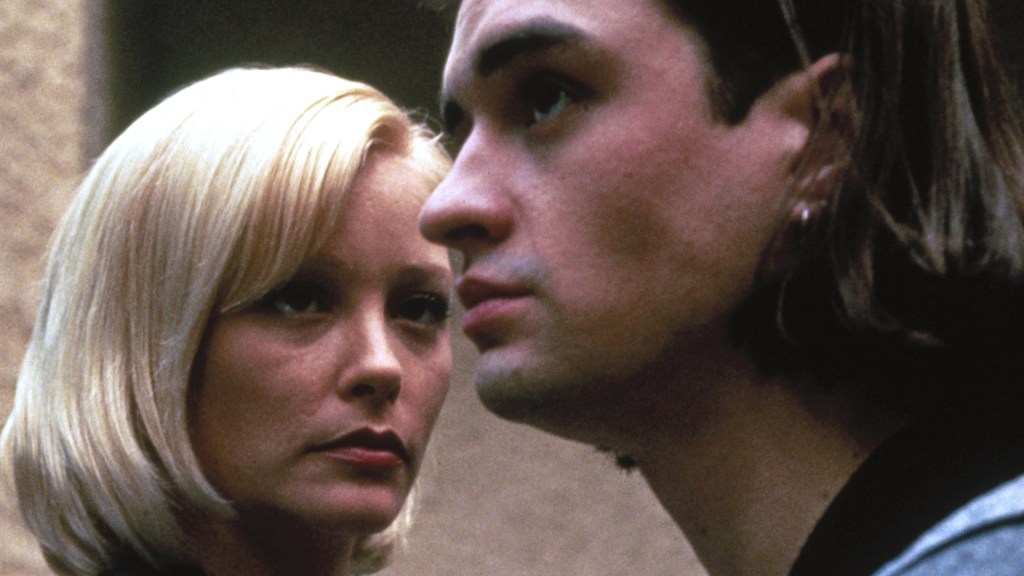
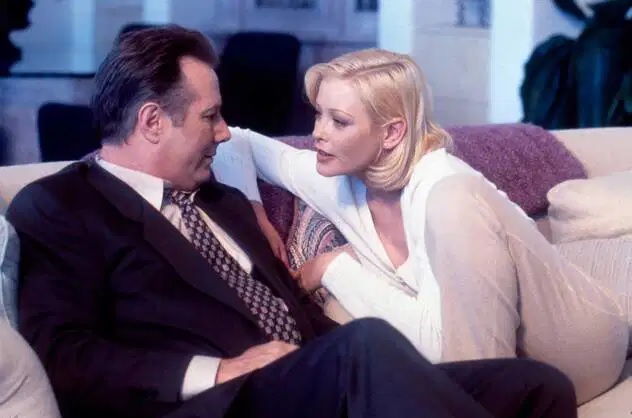
Nick Hannon (Brent Fraser) has been drifting since his teens, bitter about his father (J.T. Walsh) walking out on him, and saddened by the suicide of his mother. In the wake of a brutal beating, Nick is forced back to the family home where the sole bright spot is his new, young and attractive stepmother, Kelly (Pamela Gidley). Far from being the stoic maternal influence Nick requires, Kelly brings another dimension to an already traumatised clan in the form of lust, adultery and murder.
Anchored by the appealing neo-noir photography of David Phillips – hot off The Basketball Diaries (1995) – The Little Death has every positive attribute a film in the erotic thriller mode could wish for. The much-missed Gidley is the archetypal femme fatale, and Fraser’s boyish good looks are the perfect foil. Walsh’s bullish extended cameo is wonderful, and some brief walk-ons from Jerry Orbach and Phillip Baker Hall bolster what’s really a solid little feature.
Such fulsome praise does little to soften the nightmarish memories of the shoot for Verheyen though:
“Once I arrived in Hollywood there were a couple of things that, as a young, naïve European filmmaker, struck me as strange. We had three producers. Mark Burg was the boss; there was Ann, who had become my friend; and then there was this guy called Chris Zarpas who owned a Greek restaurant in Washington, and he wanted to break into films thanks to his friendship with Mark.”
“And the guy had no idea.”
“There are so many cliches regarding Hollywood that you’ve read about. You think that they can’t possibly happen to you, but then you stand on a set with a nitwit like Zarpas. He had a completely different idea of the film compared to what both Mark and Ann envisioned. So you’re immediately trying to please several different people. When I use the word ‘compromise’, I’m not doing so as some kind of jaded auteurist artistic vision. I just wanted to make the best film I could with a degree of stylistic flourish.”
There’s no doubt Verheyen achieved that, despite the conflict that permeated the shoot. Unfortunately, this wasn’t the only battle the helmer had to contend with.
“What I like about American movies is the supporting characters they have,” emphasises Verheyen. “These people that you recognize, and that you’re glad to see, but you might not even know their name.”
“J.T. Walsh was one of these and he was a person who I admired tremendously. But he had his vices and he was very quarrelsome. I always give the example of bringing him out of his trailer when we were ready to shoot a scene, and as soon as I explained the shot I could see him looking around.”
“Why do I have to come in through that door?” he said. “I live here, so I don’t use the front door. I use the back door.”
“I could feel a collective sigh coming from the crew, but as a director you always lose. You either fold, at which point he knows that he’s calling the shots. Or, alternatively, you start a discussion that will take twenty minutes and in which he’ll become increasingly pissed off. In both cases you lose. That’s the type of person J.T. Walsh was – but when you watch the film it’s a good performance because you don’t know all the shit that happened around it”.
Thankfully, for Verheyen, as each day progressed, the shoot evened out. All that remained was the editing process, which for Verheyen led to some of the most heightened moments of professional strife to date.
“There was an absolutely ludicrous moment when we were watching a very early edit of the movie and I had a gigantic shouting match with Mark Burg in the parking lot, where at one point he exclaimed – and this was like an out of body experience – “You will never work in this town again!” [laughs]”.
“Then Chris Zarpas had an epiphany. He burst into the editing room and said [panting], “I’ve just seen Pulp Fiction (1994)! We have to cut it differently!” Then you try and explain to him that Pulp Fiction was conceived differently, but it inevitably evolves into another shouting match. However, he did manage to convince Mark to hire another editor, which resulted in his editor working during the day to assemble a cut. Then I came in at night to put together another version of the picture.”
“In the meantime, the film had pre-sold well at Cannes – like I said, erotic thrillers were easy to sell – so I’m sure they were in profit before it was even released. Mark then decided that we could both complete our edits, and whoever got the highest test screening score would get their version released. My cut didn’t test well, but it tested ‘not as badly’ as the other one!”
Debuting in U.S. video stores during the last week of March 1996 via Polygram – and arriving in the U.K. a few months later courtesy of the same distro – The Little Death inevitably feels like a missed opportunity for Verheyen.
He boarded a plane back to Belgium the day after he delivered his cut.
“A big influence on The Little Death was John Dahl’s The Last Seduction (1994), which I absolutely love. My reasoning was that The Little Death would be MY version of The Last Seduction. “This will be my entry card to Hollywood!” That was the motivation.”
“However, I think my film came out simply as a routine straight-to-video erotic thriller. It’s not bad – but it’s not very good either.”
“My great regret is that I could not make a difference. It was not my breakthrough experience.”
“It was not my John Dahl moment!”
[1] Burg went on to strike gold with the Saw (2004) franchise and the formation of his own company, Twisted Pictures.

