
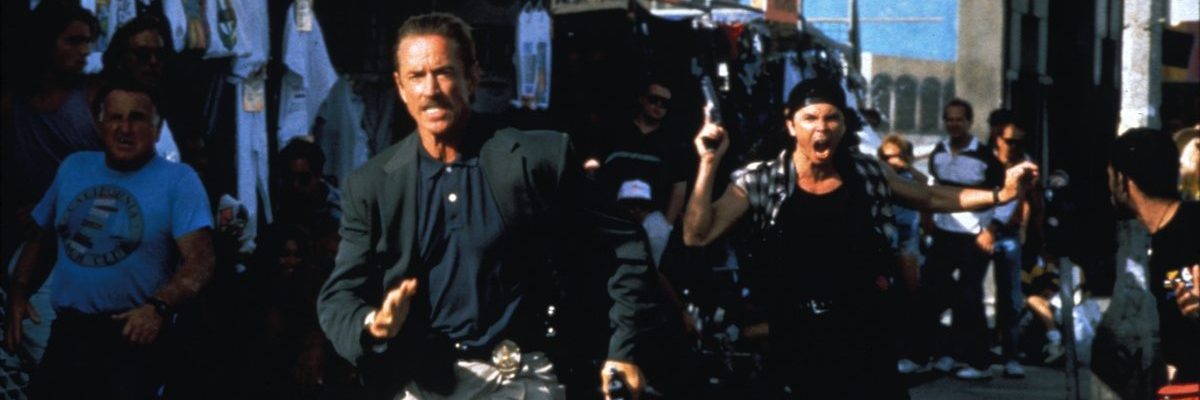
Matty profiles Mark L. Lester’s gritty thriller and its complicated journey to screen.
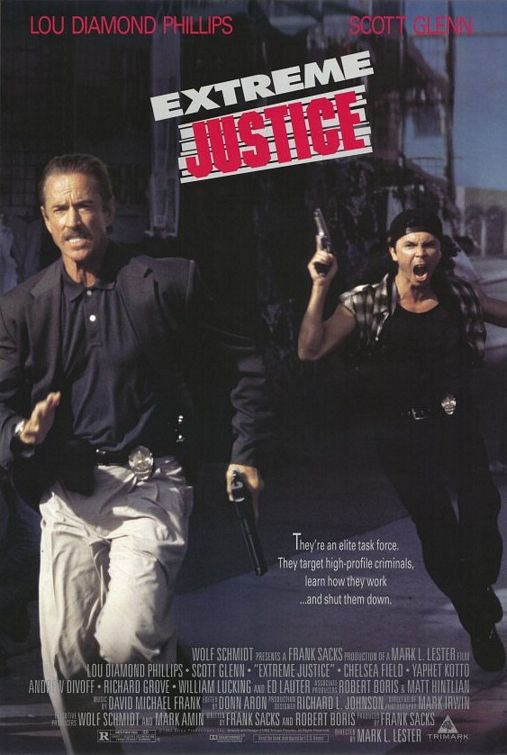
Distributed by Trimark, EXTREME JUSTICE (1993) caused quite the commotion back in the day. The film was slapped with an NC-17 by the MPAA in late 1992 due to its violence and Trimark’s battle to get the rating overturned informed their decision to unleash their next acquisition, Peter Jackson’s splatter classic Braindead (1992) (or, as the Yanks call it, ‘Dead Alive’), unrated.
“It’s the unfortunate public perception that NC-17 films are pornographic,” sighed the shingle’s Vice President of Distribution, Tim Swain, rightly circling how ‘adult’s only’ frequently means ‘sex’ rather than ‘mature themes’ [1].
Extreme Justice’s helmer, Mark L. Lester, and star, Scott Glenn, were likewise vexed. Lester and producer/co-scripter Frank Sacks considered re-editing the film but, as Glenn affirmed in the pages of Variety, that plan flew in the face of its message.
“This movie is about violence and the abuse of power,” said Glenn. “The violence is not extraneous. Taking the violence out of the movie is cutting the heart out of it.” [2]
Glenn was completely correct. Extreme Justice’s depiction of violence is full throttle but it serves a point. In real life, violence is nasty and messy. Here, it’s purposefully unpleasant. There’s a visceral, cruel bent to it; a rawness bereft of the waggish crowd-pleasing quality present in Lester’s other hyper-violent texts, Commando (1985) and Showdown in Little Tokyo (1991). Lester, of course, has a jeweller’s eye for carnage. And while his vicious pedagogical masterworks Class of 1984 (1982) and Class of 1999 (1990) pack a wallop, Extreme Justice feels authentic. Even the film’s conventional ‘action’ licks — such as an utterly incredible stunt involving a perp falling from a speeding jeep and onto the roof of a car — are ragged and uneasy [3].
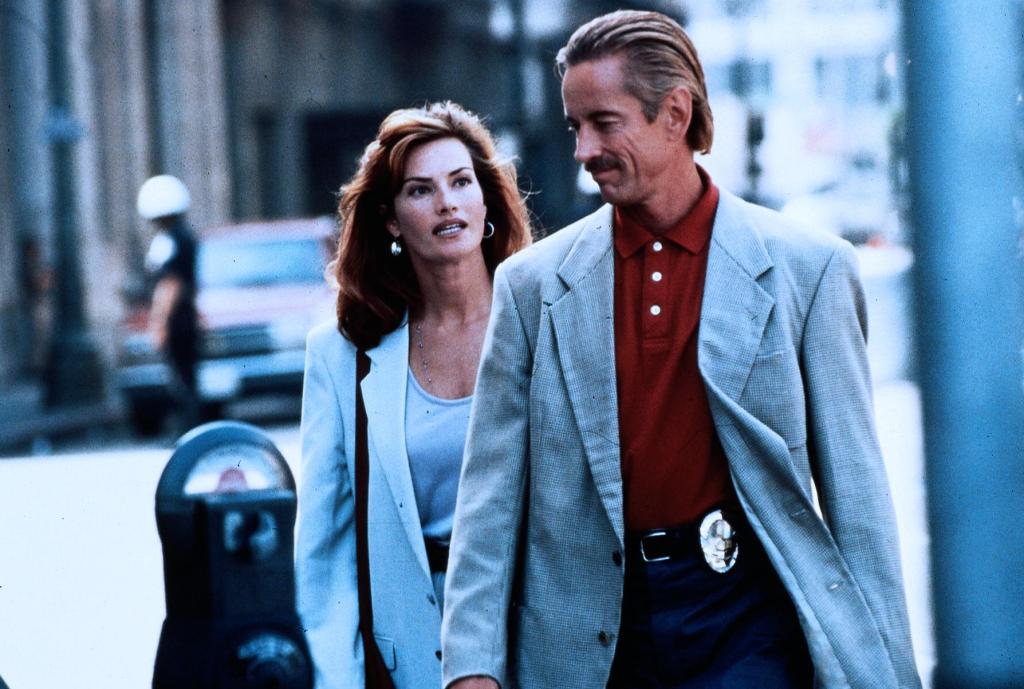
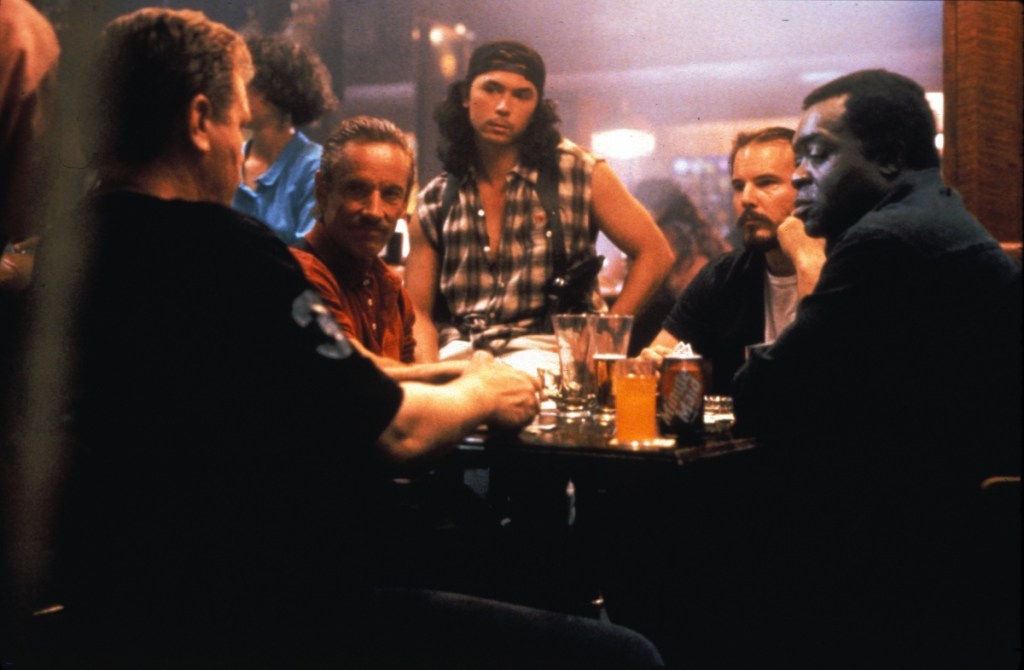
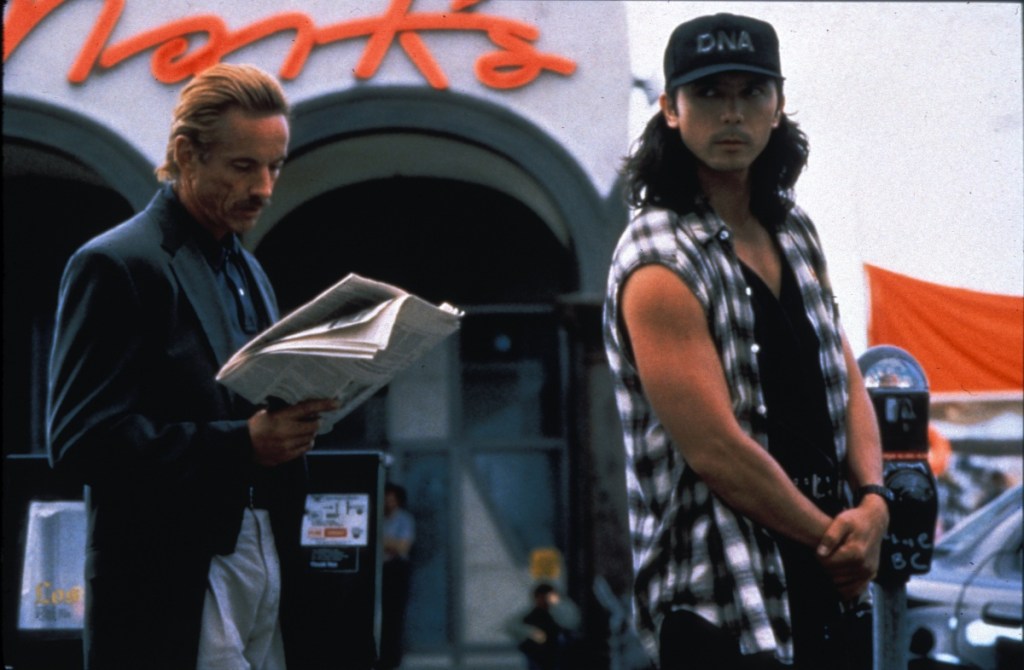
The honesty was a conscious choice on Lester’s part. Annoyed by Class of 1999 and Showdown in Little Tokyo’s poor critical and commercial receptions, Lester craved an artistic reset. Opting to pursue grittier material, his creative rebirth ultimately resulted in the formation of his own shingle, American World Pictures. Prior, he dove into Extreme Justice. He was especially attracted by the project’s true story footing. The bulk of Lester’s wares exude topicality. Fads, trends, headlines and cultural sentiment are plundered for the likes of Roller Boogie (1979), Firestarter (1984), and Classes ‘84 and ‘99. An edgy thriller based on the dubious exploits of the Los Angeles Police Department’s controversial Special Investigation Section — an elite tactical surveillance unit nicknamed ‘The Death Squad’, and known for their ruthless approach to crimefighting — Extreme Justice was penned following one of the team’s most infamous incidents:
On 12th February 1990, a reconnaissance operation on four armed suspects wanted in connection with a string of robberies on McDonalds restaurants ended with the S.I.S. discharging twenty-four shotgun blasts and eleven bullets. The suspects didn’t return fire, and three of the four were killed. It was later established that the suspects’ ‘arms’ were, in fact, pellet guns, and that the ‘weapons’ were stashed in their getaway car’s boot at the time of the shooting.
A scene modelled on the incident appears in the film.
During Extreme Justice’s development, Sacks and co-scribe Robert Boris — writer of cult cop caper Electra Glide in Blue (1973) — were administered a further dose of relevance. On 3rd March 1991, Rodney King was subjected to an eighty-one second beatdown by the L.A.P.D., officers swarming him in the wake of a high-speed pursuit. The pummelling was caught on camera and the footage sparked worldwide outrage; and when the offending officers were acquitted in the ensuing federal court case, hell exploded onto the streets of Los Angeles.
On 8th July 1992, three months after the Rodney King riots in April and May, Extreme Justice began filming. The residual tension bleeds into the film, imbuing it with a twitchy, zeitgeist-tapping electricity that can’t be faked. The questions raised by the King scandal — on the use of force, on the violation of civil liberties — surge through the narrative, arm in arm with the plot’s thesis:
On which side of the line do the S.I.S. fall?
Lester offers no easy answers. A la Class of 1999, Extreme Justice occupies a strange political ambiguity in terms of the divide it straddles. Teams and the dynamics of camaraderie are Lester go-tos. For the right wing, the S.I.S. will be heroes; fierce, bonded and loyal. For the left, a problematic operation at best; state-sanctioned vigilantes, united by hate and bloodlust, and as troubled as their quarry. As Extreme Justice rattles along, Lester reveals himself to be less concerned with the S.I.S. as a construct and more preoccupied with the effect violence has on those who perpetrate it. That within the film they’re protected and funded at a higher level is almost incidental.
The real cost of their kamikaze antics is emotional rack and ruin.
Glenn called it: Extreme Justice’s punch comes from how the characters react to the mayhem they cause, both literal and physical. They’re at once titillated yet horrified, and the S.I.S. contingent are crumbling. Glenn — who’d promptly reunite with Lester and Trimark on their inaugural American World joint, Night of the Running Man (1995) — inhabits the corps’ de facto leader. It’s a barnstorming performance and he probes the role’s complexities despite his whole ‘divorced ‘cos o’ the job’ shtick reeking of cop movie cliche.
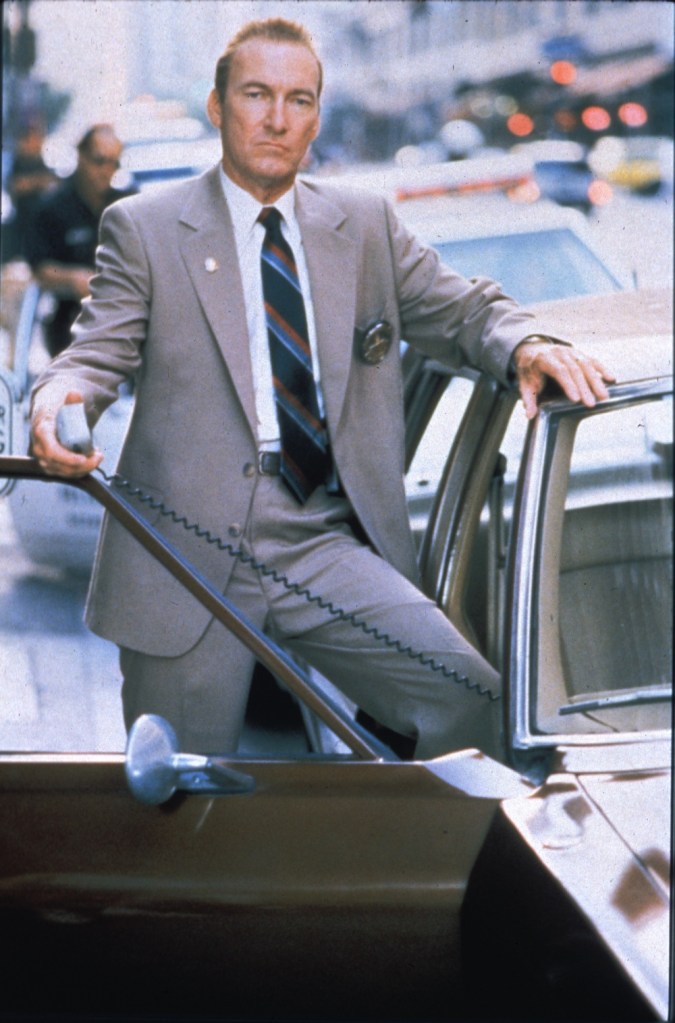
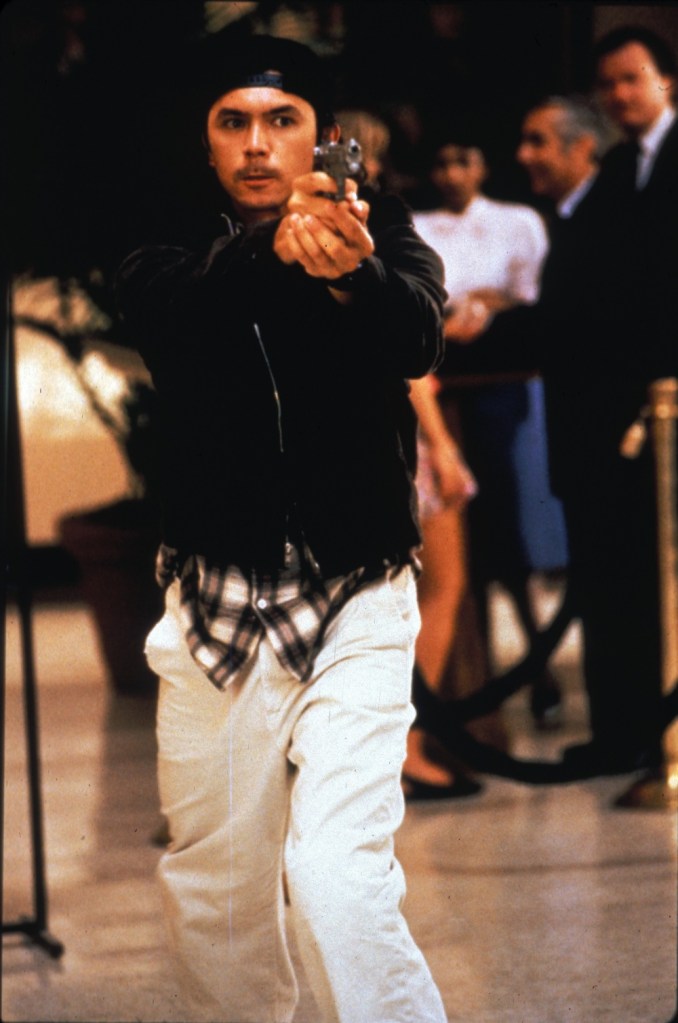
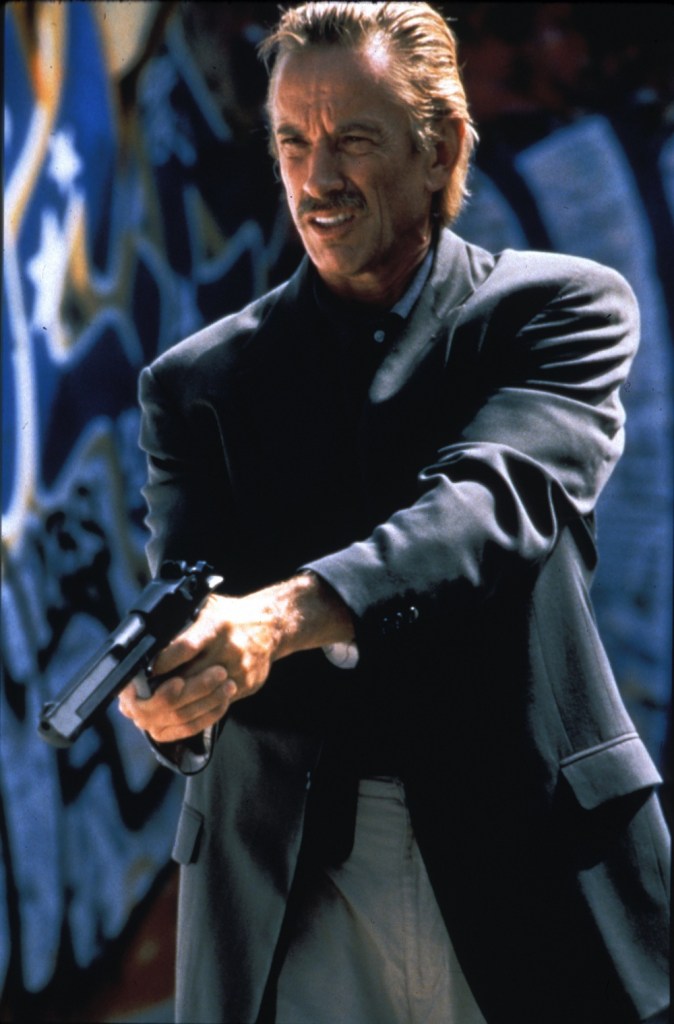
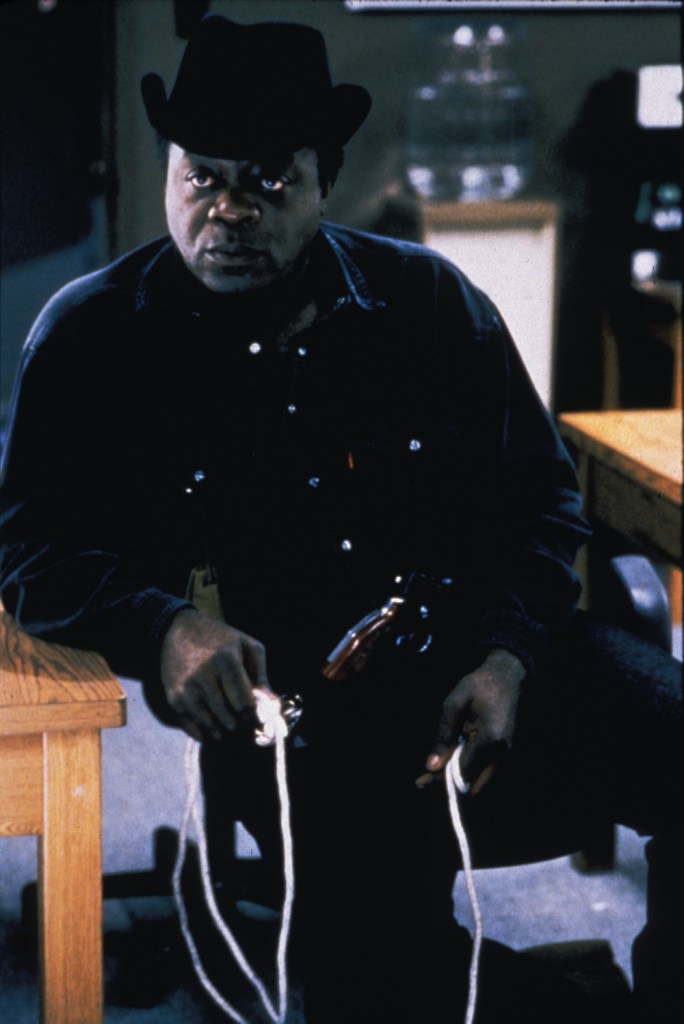
Frustratingly, it’s the similarly hokey tics exhibited by the remaining S.I.S. throng that hinders Extreme Justice’s overall impact. It’s a solid and intellectually stirring experience. And it’s certainly potent and required viewing for fans of Lester. The film looks amazing, and it’s exceptionally well assembled. Alas, Sacks and Boris conflate gimmickry — Andrew Divoff’s Hispanic accent, Yaphet Kotto’s cowboy garb — with characterisation. Still, the distinguished supporting cast — which, in addition to Divoff and Kotto, includes Richard Grove, William Lucking and Ed Lauter — belt it to the bleachers and add heft by virtue of their talent. Top billed, Lou Diamond Phillips submits a decent if show-y turn (you always catch him acting; think Pacino’s grandstanding in Heat (1995)). Nevertheless, Trimark boss Mark Amin was happy with Phillips’ mugging. The mogul hired him to direct and star in erotic thriller Dangerous Touch (1994) when Extreme Justice wrapped.
Towards the end of January 1993, Extreme Justice was downgraded to an R by the MPAA’s New York office. Lester invoked Rodney King in his argument, cannily exploiting the apprehensions surrounding the entire debacle.
“I argued, successfully, that it was a political thing being done,” he said. “By cutting out the violence we would be destroying the story of the film, which is to show the real activities of the S.I.S. in Los Angeles. It would be like showing the King footage and telling the person who made the video to cut out half the times he was beaten. That would be a political act to do that.” [4]
The MPAA’s L.A. branch downgraded their NC-17 a week later.
In a bitter twist of irony, it was lingering fears vis-a-vis King and the riots that were Extreme Justice’s final hurdle.
On 19th February 1993, Trimark opened Extreme Justice in Michigan, testing it in cinemas across Muskegon, Kalamazoo, Battle Creek, Grand Haven and Grand Rapids. The film unspooled in Massachusetts and Connecticut too. In March, Trimark screened clips alongside passages of their sequels, Warlock: The Armageddon (1993), The Philadelphia Experiment II (1993) and Death Wish V: The Face of Death (1994), at the NATO/ShoWest Convention in Las Vegas, to drum up hype for a wider theatrical release they intended to launch on 16th April.
Then the delays happened.
First, Extreme Justice’s cinema bow was postponed by a fortnight, to 30th April.
Then the number of screens it was scheduled to play were reduced.
Then Trimark pulled it.
According to Lester, executives were suddenly worried about the film’s of-the-moment commentary. A civil rights case against King’s attackers had been instigated and police brutality was now ruled contentious. Trimark feared another riot and they didn’t want Extreme Justice stoking the flames. The company toyed with pushing the release to January 1994 but sold the film to HBO instead. The network broadcast Extreme Justice in June 1993 in their Thursday Night Prime slot (action, thriller, horror etc). Trimark and HBO brass championed the move, asserting that the deal was better than dumping the film direct-to-video [5]. Incidentally, Extreme Justice was the second Trimark production HBO presented in the bracket. The first was Interceptor (1992) — which starred Extreme Justice’s Andrew Divoff — in October 1992. Funnier is that Maniac Cop 3: Badge of Silence (1993), another film laced with Rodney King allusions and hit with an NC-17, also debuted as a Thursday Night Prime item.
Lester was crestfallen.
But when he realised that HBO were actively seeking challenging and abrasive fare through their pact with Trimark he soon changed his tune…
[1] Trimark to Distribute ‘Dead Alive’ Unrated by John Evan Frook, Variety, 14th January 1993.
[2] ‘Justice’ Star Fights to Keep Film Violent by Army Archerd, Variety, 25th January 1993.
[3] Extreme Justice’s Second Unit Directors/Stunt Coordinators were Bobby J. Foxworth and Spiro Razatos (whose name is misspelt ‘Razato’ in the closing credits). Foxworth and Lester subsequently collaborated on Night of the Running Man and Public Enemies (1996), and Razatos went on to shepherd the Lester-less sequel Class of 1999 II: The Substitute (1994).
[4] N.Y. MPAA board dumps ‘Justice’s’ L.A. NC-17 Dub by Suzan Ayscough, Variety, 28th January 1993.
[5] Extreme Justice landed on tape in the U.S. via Trimark’s home video division, Vidmark, on 27th October 1993, and arrived on cassette in the U.K. — as ‘S.I.S.: Extreme Justice’ — via First Independent offshoot Reflective Film Distribution on 14th March 1994. As an aside, Reflective issued Jim Wynorki’s Sins of Desire (1993) the same day.


[…] THE BASE (1999) is essentially an army-centric riff on the producer/director’s police thriller, Extreme Justice (1993), with dashes of Class of 1984 (1982) and Class of 1999 (1990) sprinkled in for good measure — […]
LikeLike