
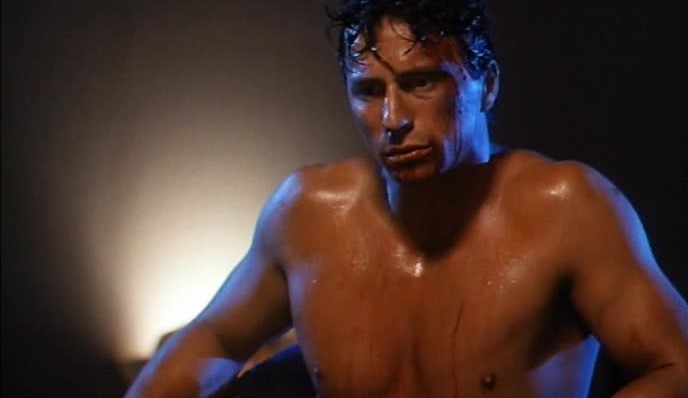
Dave catches up with helmer Richard Munchkin for the inside scoop on one of his many PM Entertainment assignments.
PM Entertainment regular Richard Munchkin’s side hustle is as interesting as his film career.
Hailing from Illinois, Munchkin was dabbling in gin rummy at the age of three, playing for money in his early teens, and pocketing a steady $200 a week by the time he got into college. He moved to Las Vegas in the late ’70s and became a professional blackjack player, earning notoriety around the tables and authoring a book on the subject.
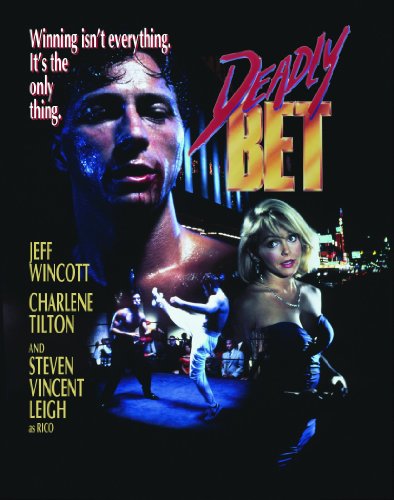
No surprise, then, that Sin City is the backdrop to DEADLY BET (1992); Munchkin’s third directorial credit for messrs Pepin and Merhi, after Dance or Die (1987) and Ring of Fire (1991). It’s clearly a place where the helmer feels at home, even if it was kickboxing rather than blackjack that was the basis for the film’s initially sparse storyline.
“Now Deadly Bet was a movie where I wasn’t credited as the writer,” says Munchkin. “But I was handed a forty-two page script, and what was meant to be the last twenty to thirty minutes of the movie were described in one – ONE! – line: ‘He goes to Vegas and wins the tournament’ [laughs]. That was what I had to work with!”
What was laid out in the scant screenplay was as follows: Angelo (Jeff Wincott) and his girlfriend, Isabella (Charlene Tilton), are about to wave goodbye to the high-stakes buzz of the gambling mecca for a life of peace and serenity in the mountains of Colorado. Angelo, however, is a grizzled veteran of Vegas’ underground kickboxing scene and the lure of one last scrap proves too hard to resist. Alas, in doing so he manages to ruin everything – but, as heralded by an emotional montage set to a fine MOR backing track (Right Side of Zero by Daryll Purpose), a salvation of sorts arrives in the form of a brutal knock-out contest.
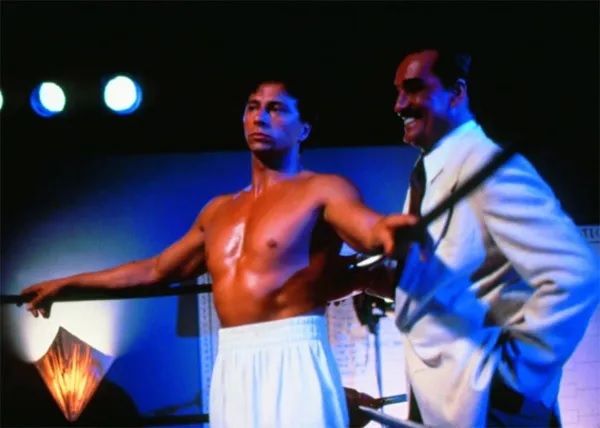
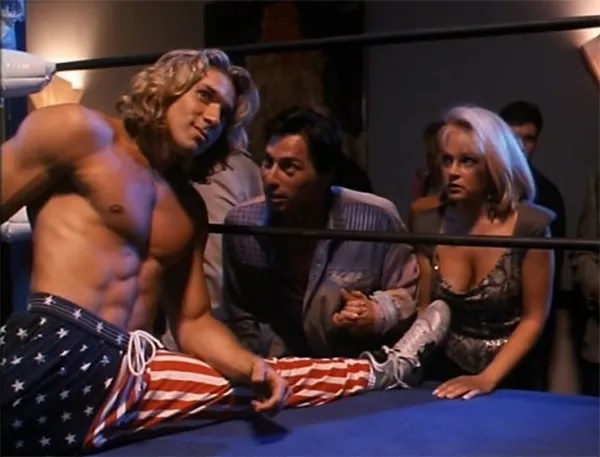
Shot six months after his breakout role in Martial Law II: Undercover (1991), and a couple of years ahead of stone cold classics Open Fire (1994) and Last Man Standing (1995), Deadly Bet nevertheless remains a solid showcase for Toronto-born arse-kicker Jeff Wincott. The rest of the ensemble are similarly strong, with the magnetism of Tilton, the menace of Steven Vincent Leigh, and a bemulletted Gary Daniels cameo all compensating for the narrative shortcomings. Ditto Munchkin’s deft direction, which dovetails seamlessly with Eric Lee’s bruising fight choreography and John Weidner’s rhythmic cutting. It is, though, producer Pepin’s crisp photography that brings it all together, providing a tonal consistency for both the film and, indeed, PM’s entire run of martial arts epics.
The ‘kickboxing noirs’, as the pundits have since called them.
“Rick was a good cinematographer,” recalled PM stalwart Ken Blakey to City on Fire. “He needed someone to light for him, and that’s how I got my foot in the door. They were just making the transition to 35mm, and the film noir look that runs through that first wave of martial arts films – they were all shot by Rick with me as his gaffer.” [1]
It makes sense too. After all, in regards to Deadly Bet, what could be more noir-ish than a flawed, tough-guy protagonist literally fighting to get his girl back from the clutches of a sadistic mobster holed up in a seedy nightclub?
“Deadly Bet was a fun movie to make in all honesty,” concludes Munchkin, who still harbours a great deal of affection for the film. “It meant I was back in Vegas, and I just love it there. The only bad thing about the movie was that all the fight scenes that were in the ring were shot in a warehouse in Van Nuys in July, and it was one-hundred and twenty degrees! And that was before we brought the big ring light overhead in!”
“But I like Deadly Bet a lot, I really do.”
[1] COF Presents: PM Entertainment’s Kickboxing Noir by Michael Retter, 19th March 2019.

