
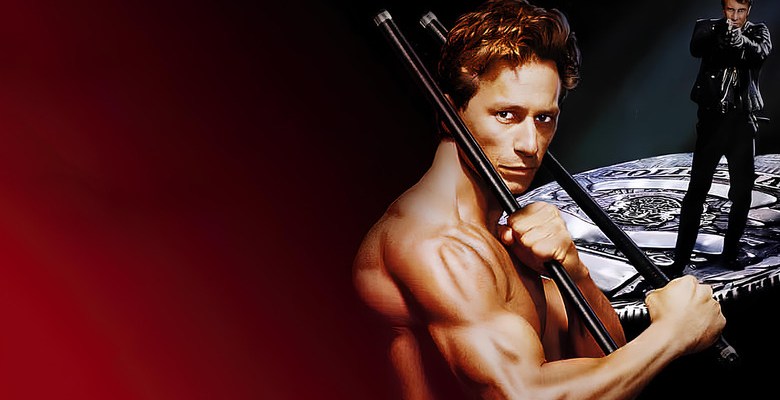
Matty takes a look at Jeff Wincott and producer Pierre David’s flaccid penultimate pair-up.
In September 1992, while promoting Mission of Justice (1992) and its forthcoming cassette release at the Focus on Video Convention in his hometown of Toronto, Jeff Wincott gently – and, some might say, counterproductively given the nature of FoV – bemoaned how both Mission of Justice and Martial Law II: Undercover (1991) didn’t get a theatrical release. As The Toronto Star reported in their quick natter with him on 22nd September, an annoyingly wanky and self-aggrandising Wincott made it clear that he thought he was a cut above his contemporaries, and that his work should be in cinemas. Though, admittedly, that’s kind of true – after all, Wincott’s training and natural capabilities as an actor were what encouraged Mission of Justice and Martial Law II’s producer, Pierre David, to groom the Taekwondo practitioner as his own in-house action hero – it’s icky saying it out loud, isn’t it? Have some decorum, man!
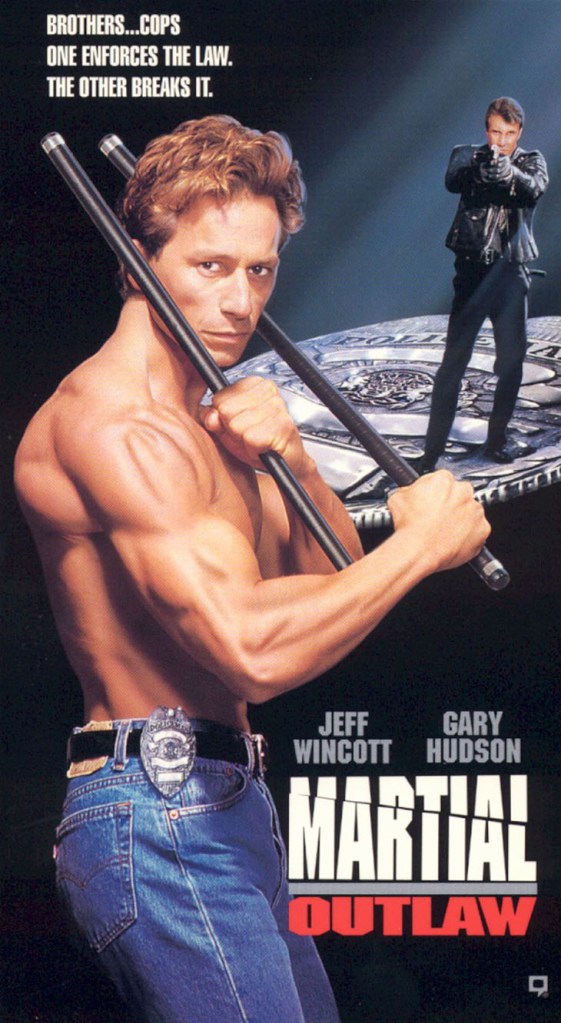
With that in mind, it’s kind of gratifying that Wincott’s penultimate assignment for David’s Image Organization, the ultra-tepid MARTIAL OUTLAW (1993), almost flies in the face of such arrogance. Perversely, the film actually played on big screens in San Antonio, Texas for a week. It opened on Friday 17th September 1993 across several cinemas owned by local chain Santikos Entertainment (née Santikos Theatres) before landing on U.S. video two months later, on 17th November, via regular David distributor Republic Pictures [1].
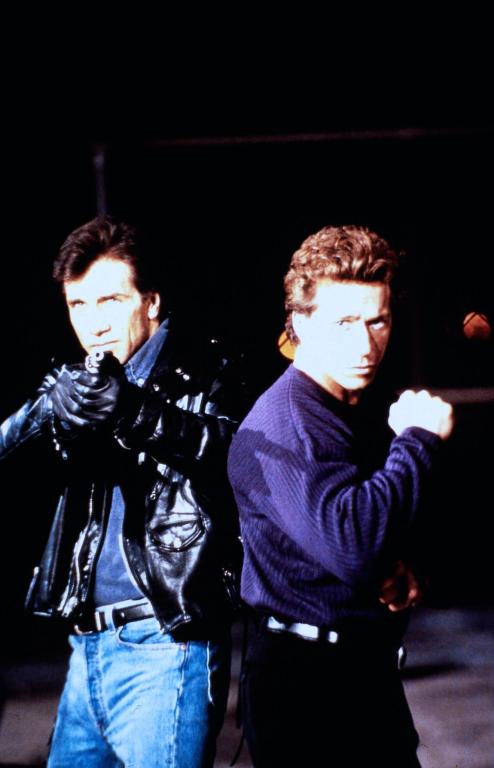
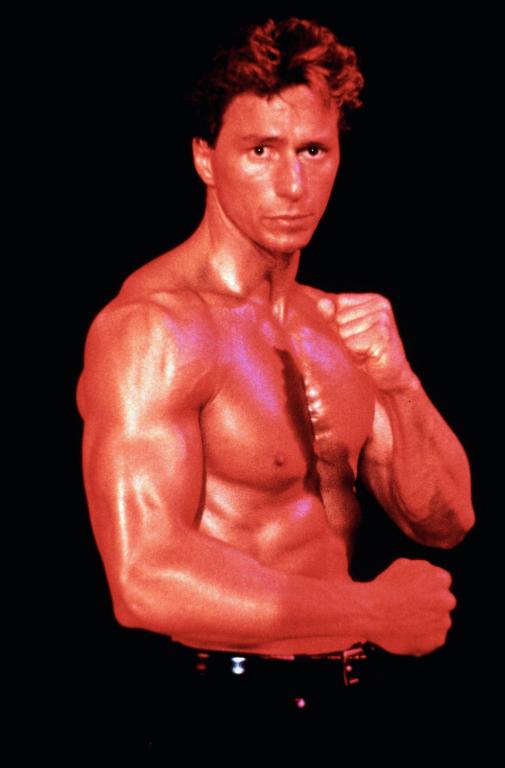
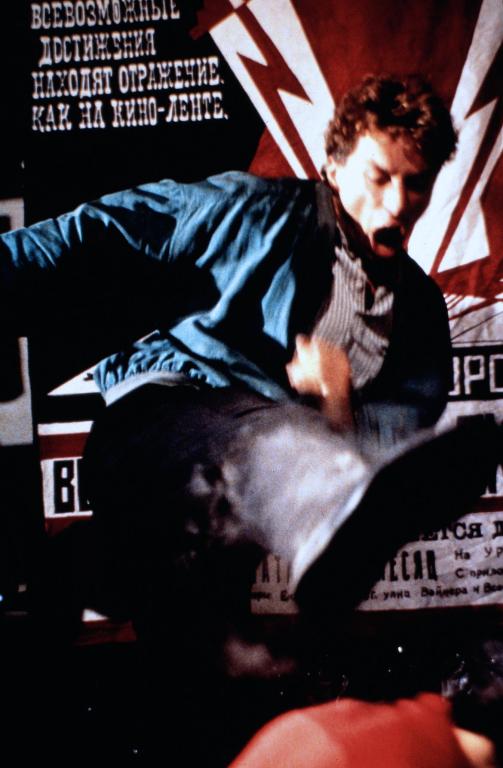
Unlike the superior Mission of Justice, Martial Outlaw gives Wincott little to do other than kick the shit out of a procession of anonymous bad guys. Cast as Kevin White, a DEA agent trying to bring down a multi-million dollar drug deal orchestrated by the Russian mafia (embodied by Vladimir Skomarovsky’s steely kingpin), Wincott suffers because the part is extremely thin. Genuine characterisation is nixed in favour of rote dialogue and Seagal-esque scowling. Frankly, as good as Wincott can be as a performer, he’s not skilled enough to elevate subpar material – at least not at this stage of his action career – and he and the role’s shortcomings are only worsened by the might of co-star Gary Hudson.
Among the finest on-screen talents of the VHS era, Hudson is a dynamic presence. As the likes of Wild Cactus (1993) and Mind Twister (1993) demonstrate, he’s charisma personified; a chameleon character specialist who can make reading a council tax bill sound positively Shakespearean. Essaying Wincott’s disgruntled older brother, bent beat cop Jack White, Hudson injects Martial Outlaw’s limp script with a welcome bit of substance. Hiding Jack’s professional and personal jealousy behind bluster and bravado (an interesting touch considering Wincott’s aforementioned saltiness), the David favourite (cf. The Force (1994), The Wrong Woman (1995), Serial Killer (1995)) bolsters the film’s thematic weight by rooting every moment in insecurity and spite. The core of Martial Outlaw’s plot – Jack teaming with the Russians for a hefty payday – isn’t born from greed but from Jack’s pathological desire to prove he’s the bigger and better sibling. Hudson gets the best lines too.
Shepherded by David stalwart Kurt Anderson (Bounty Tracker (1993), Dead Cold (1995), and, of course, Martial Law (1990) and Martial Law II), Martial Outlaw is tackled with the producer/director’s usual no-nonsense aplomb. And while it’s a marked step down from Mission of Justice in terms of overall dramatic impact, Anderson at least exhibits a stronger hand than Mission helmer Steve Barnett when it comes to action. Anderson’s more meat n’ potatoes approach seems closer in presentational step with returning fight choreographers Jeff Pruitt and Koichi Sakamoto’s thuggish stylistics – a curious anomaly if you think about it, what with the three of them serving as Mission of Justice’s second unit crew…
Due to their strikingly similar titles, Martial Outlaw was issued in Argentina as the fourth entry in the Martial Law series (‘Ley Marcial 4’ – Mission of Justice was ‘Ley Marcial 3’), and Wincott, David and Anderson summarily reconvened for one last hurrah on the enjoyable Die Hard (1988) riff, Open Fire (1994).
[1] As an aside, Martial Outlaw hit tape stateside on the same day as PM Entertainment’s Don ‘The Dragon’ Wilson romp Out For Blood (1992), and the Albert Pyun double whammy of Knights (1993) and Brain Smasher… A Love Story (1993). The film arrived in the U.K. in late January ‘94 through David’s pact with First Independent.

