
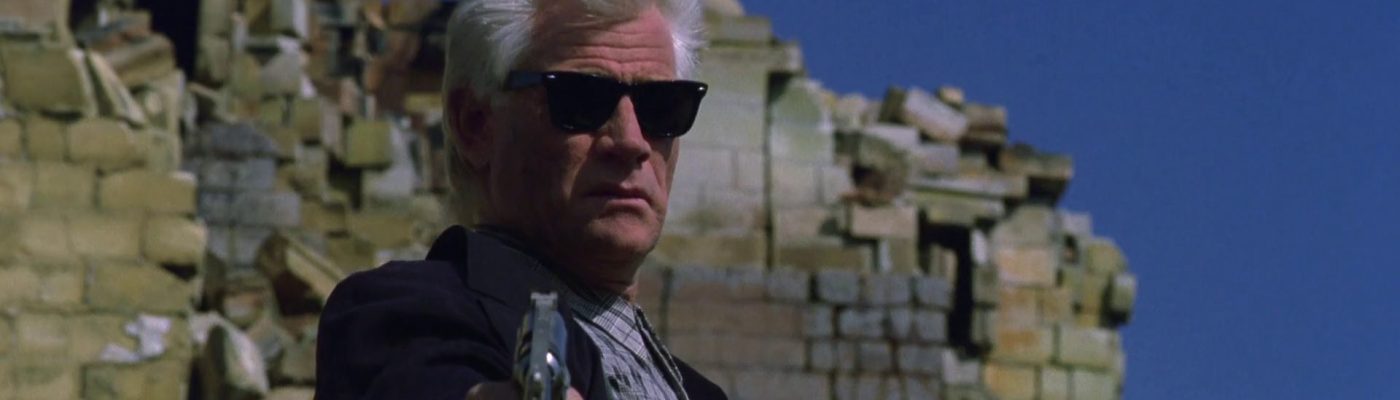
Matty sizes up producer Charles Band and helmer Albert Pyun’s iconic sci-fi action caper.
Conceived by producer Charles Band as a cheeky spin on Richard Matheson’s The Shrinking Man, right down to early promo art depicting the same ‘tiny fella fighting a spider’ image as the 1956 novel’s cover, DOLLMAN (1991) became what it is today as soon as Albert Pyun took the project’s reins. Pyun envisioned the title character as a futuristic Dirty Harry (1971), and he christened his Eastwoodian space detective with an appropriately tough handle:
Brick Bardo.
Pyun had deployed the moniker five times already, in Radioactive Dreams (1985), Alien From L.A. (1988), Cyborg (1989), Deceit (1990), and Bloodmatch (1991). And the real-life ‘Brick’ — exploitation journeyman Joseph Bardo, a friend and mentor of Pyun’s who’d used it as his stage name — exec produced the helmer and Band’s previous pair-up, Vicious Lips (1986). But the Bardo here, in Dollman, is, without question, the appellation’s definitive incarnation.
While a shameless do-over of Band’s earlier Harry Callahan analogue, Trancers (1984) hero Jack Deth — a fact compounded by both roles being inhabited by the peerless Tim Thomerson [1] — the grizzled, deadpan Bardo has proven similarly influential. He’s an equally totemic figure in Band’s sprawling Full Moon universe. Sequel. Crossover. Comic book. Etc. Like Deth, Thomerson renders Bardo as a man out of step. He’s a crime-fighter fuelled by integrity yet frequently at odds with those around him, his inner turmoil (the ol’ ‘murdered family’ thing) masked by cynical wisecracks and a refusal to yield to the powers that be.
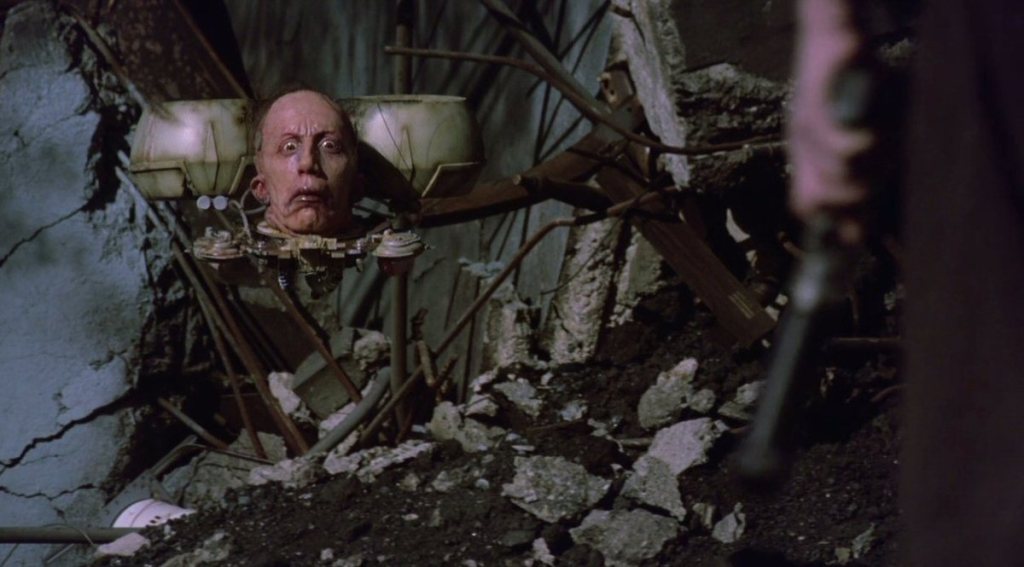
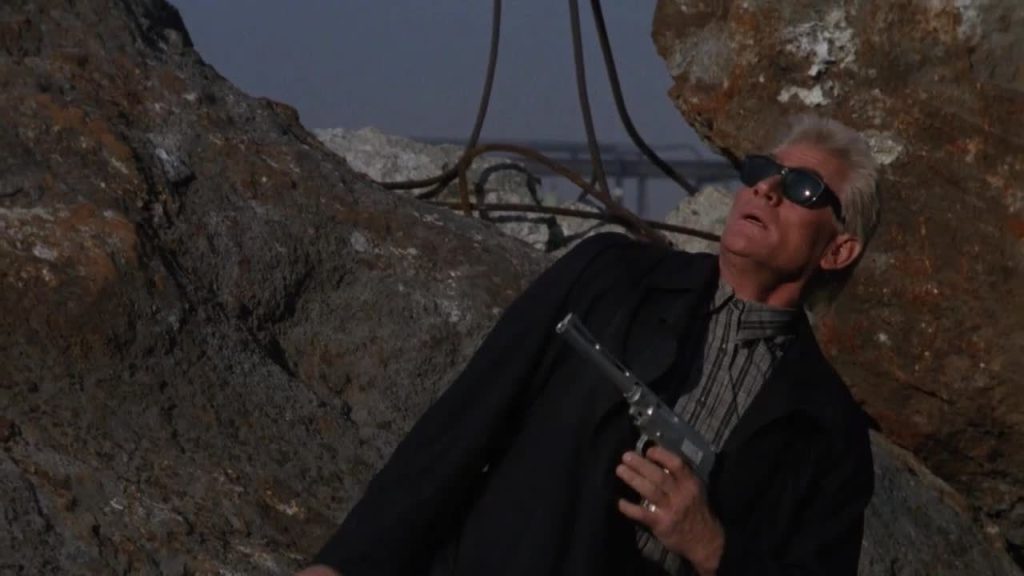
Dollman begins in grandiose fashion, on Bardo’s home planet Arturos. Pyun’s fourth teaming with genius cinematographer George Mooradian (following Captain America (1990), where he shepherded the film’s second unit, Kickboxer 2: The Road Back (1991), and Bloodmatch), the Arturos material represents their union at its most harmonious. It’s gorgeously shot and truly striking: part noir, part space opera, part expressionist horror. It’s so good — so visually arresting, so articulate in terms of cinematic grammar — you could strip Dollman of its dialogue and still understand what’s going on. Mind you, if you actually did that, you’d miss some succulently ludicrous and highly quotable dialogue — dialogue which comes across a little fatphobic when watched with a more modern sensibility, admittedly…
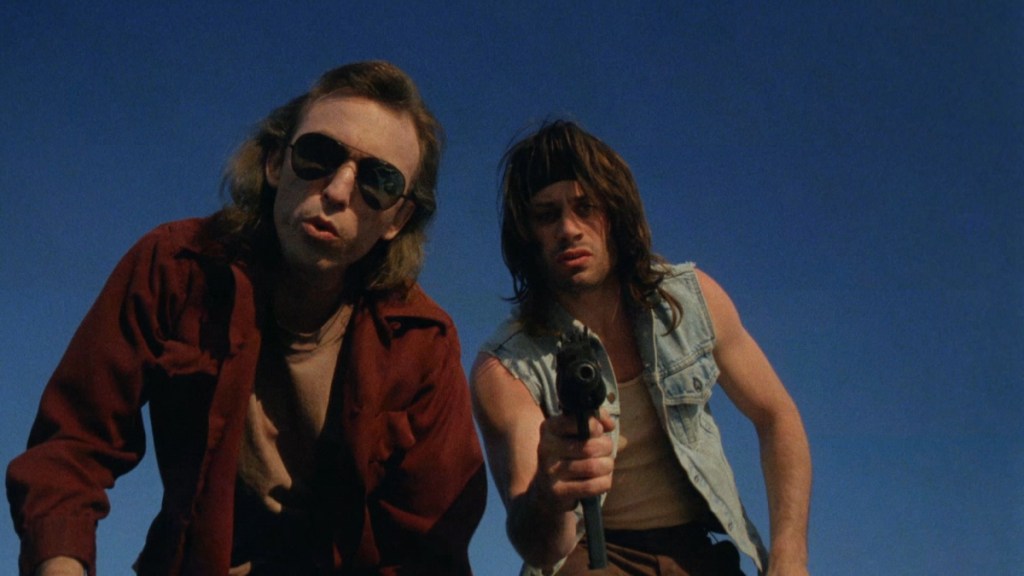
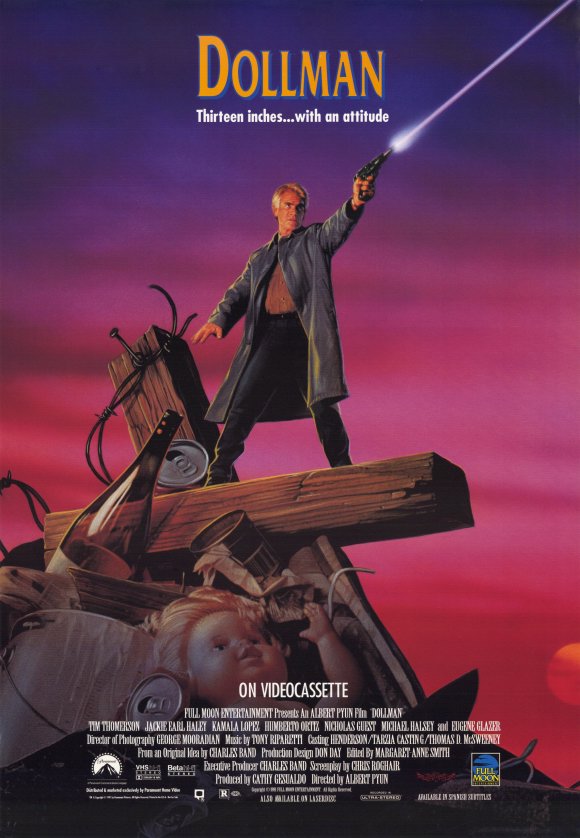
Perversely, the quality of Dollman’s Arturos opening slightly upends the rest of the film, when the story moves to present day New York after Bardo crosses space and time in a wormhole. It is, of course, a way for Pyun and scripter ‘Chris Roghair’ (a pseudonym for Pyun, Dave Pabian, and Ed Naha) to facilitate Band’s titular dinky-dude gimmick. On Arturos, Bardo is normal sized; on Earth, he is, as Dollman’s legendary tagline says, “thirteen inches with attitude”. Aesthetically, though, Dollman is better when it’s being a sci-fi item rather than a gritty, slice o’ life gang flick. The thrust of the plot sees Bardo joining forces with a harangued single mother in a ghetto neighbourhood, in order to thwart a nasty pusher (a shrieking Jackie Earle Haley, chewing the scenery post-child star beginning, pre-Academy Award-winning resurgence) and his gaggle of rent-a-goons. None of it’s bad by any means. It’s just not quite as compelling, and the half-hearted stabs at social commentary pale in comparison to those in Band’s other NY gang movie, the magnificent Enemy Territory (1987). In any case, Pyun-wise, Dollman is a better urban pic than his execrable later attempts, Urban Menace (1999), Corrupt (1999) and The Wrecking Crew (2000).
Though Pyun has never pulled his punches in terms of on-screen violence (cf. The Sword and the Sorcerer (1982), Cyborg), the splattery bursts of bodily destruction in Dollman foreshadow the gratuitous mayhem in the helmer’s subsequent masterpieces, Nemesis (1992) and Mean Guns (1997) (the former of which also features Dollman‘s Thomerson, Haley, Vincent Klyn and Nicholas Guest; the latter Michael Halsey). Incidentally, swathes of Dollman and Nemesis were shot in the same areas of the Kaiser Steel Mill in Fontana, California — an especially amusing titbit since Pyun sodding off to make Nemesis during the editing of his second Full Moon assignment, Arcade (1993), is what severed his and Band’s professional relationship.
Exhilarating and balletic, Dollman’s carnage is played for both dark laughs and cheap shock value. The absurdism is bolstered by the film’s scrappy miniature effects. Pyun subsequently took ownership of their charming ineptitude, explaining years later their clunkiness was because he refused to plan and board them properly.
Lensed back-to-back with Arcade in February and March 1991, Dollman hit tape in the U.S. on 27th November ‘91 through Full Moon’s then-parent company, Paramount. As noted by author, Band historian and Schlock Pit pal Dave Jay in his book, It Came From the Video Aisle!: Inside Charles Band’s Full Moon Entertainment Studio, the film shifted 26,000 units domestically; a solid bit of business but a big drop compared to the whopping 45,000 units that the mogul’s Puppet Master III: Toulon’s Revenge (1991) shifted a month before. Dollman landed on cassette in the U.K. on 10th June ‘92 via Entertainment in Video.
[1] Dollman marks the first of ten Pyun/Thomerson collaborations. The others: Nemesis, Knights (1993), Brain Smasher… A Love Story (1993), Hong Kong ‘97 (1994), Spitfire (1995), Heatseeker (1995), Nemesis 3: Time Lapse (1996), Blast (1997), and the last episode aired of short-lived NBC TV show The Fifth Corner (1992).
 The Schlock Pit