
Matty spars with Albert Pyun’s lukewarm sequel.
“This,” said Albert Pyun, “Is going to be my Raging Bull (1980).”
A bold claim from a bold filmmaker.
Even its recipient, scripter David Goyer, thought Pyun insane.
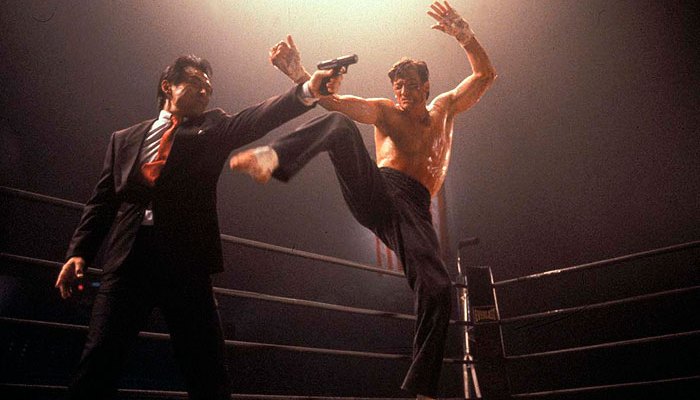
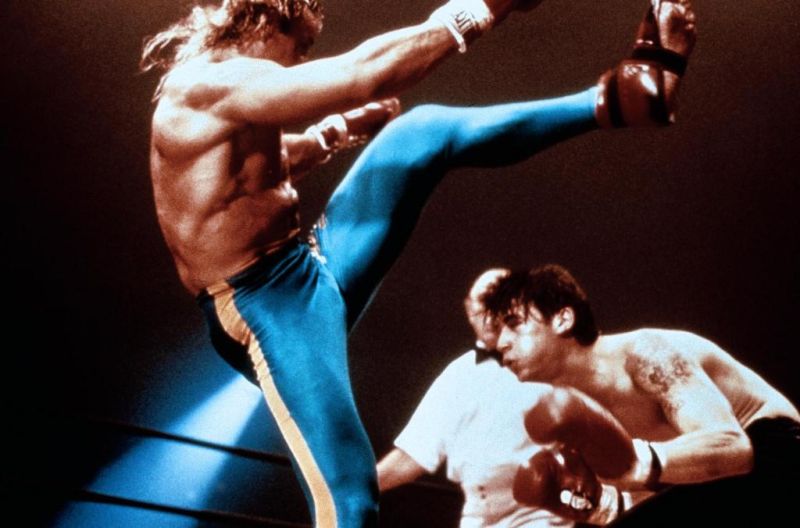
However, as crazy as it might sound to a more casual or more mainstream oriented cinephile, there are moments in KICKBOXER 2: THE ROAD BACK (1991) that do indeed call to mind the gruelling physical and emotional impact of Martin Scorsese’s iconic sports drama. Given Kickboxer 2’s fight choreographer, Jimmy Nickerson, orchestrated the brawling in Raging Bull, the film’s scenes of knock-fuckery are similarly bruising and thrilling – particularly those involving the Kickboxer saga’s most enduring antagonist, the wicked Tong Po (Michel Qissi, returning following the first flick and reuniting with Pyun after Cyborg (1989)) [1]. Alas, there aren’t enough of them. Tong Po, for example, arrives well into the film, bursting in at the hour mark. Instead, Kickboxer 2 gets bogged down in soapy melodrama and the single greatest contrivance of American martial arts cinema in the late ‘80s/early ‘00s: fortune cookie wisdom. The former is accentuated by some toe-curling soft rock soundtrack cuts (Savoy Brown’s ‘A Man Alone’ is especially wretched); the latter by Dennis Chan whose mentor character, Xian, doubles down with the Miyagi-like function he occupied in Kickboxer (1989).
It’s a shame as, again, there are slithers of tremendous power nestled in Goyer’s screenplay. While Xian is largely a trite stock part across the series (he reappears for the final time in Kickboxer 3: The Art of War (1992)), a development towards the back end of Kickboxer 2 teases much-needed depth, emphasising how his motivations aren’t as noble or as spiritual as you’d initially think. It’s here where Kickboxer 2 shines. Conversely, it’s also where the flaws become apparent.
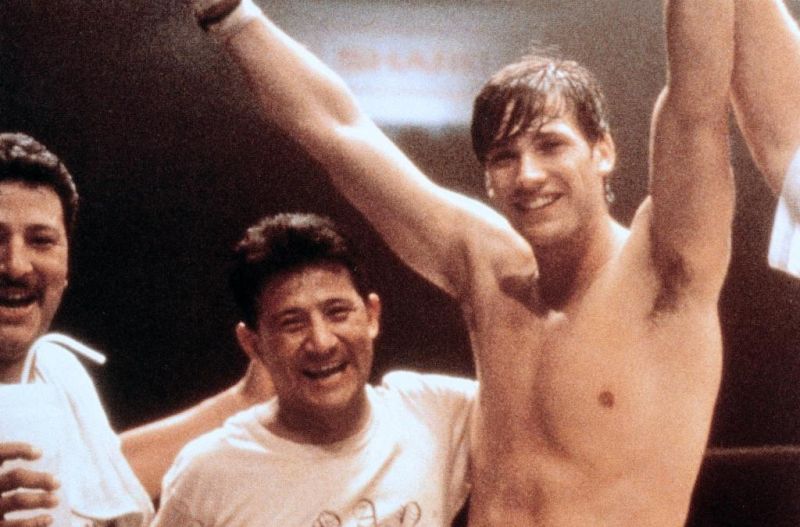
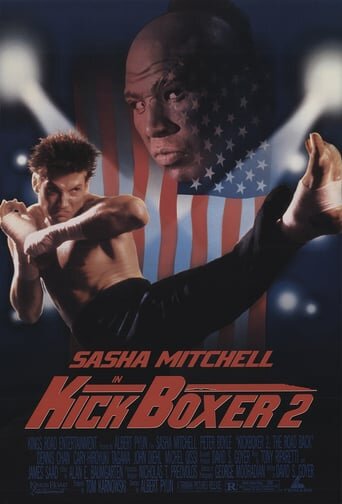
Judging a film based on what it should be is a tricky prospect. Generally, it’s the wrong thing to do. By and large you can only critique what’s in front of you. And yet, in terms of Albert Pyun, an artist repeatedly stricken by interference and creative kneecapping – especially in the pre-’94 days of his career – knowledge of intent is as important as the finished article. According to Goyer, Pyun envisioned a brooding rumination on loss and revenge. A moody underdog story. The tale of a downtrodden man clawing his way back to the top; a theme which, in a sense, mirrored Pyun’s own professional journey – from upstart helmer of a hit indie movie (The Sword and the Sorcerer (1982)) to a hack responsible for a bunch of alleged clunkers, still hungry for success (a belief embodied by the ultra-troubled Captain America (1990)). Future Hollywood heavyweight Goyer had previously penned Death Warrant (1990) for the star of the original Kickboxer, Jean-Claude Van Damme. He was brought onto Kickboxer 2 by producers Kings Road Entertainment who were desperately trying to coax JCVD, a Goyer champion, into reprising the role of Kurt Sloan. When Van Damme passed in favour of Double Impact (1991) – the right choice, ultimately – Kurt became a different Sloan, younger brother David, and up-and-coming action hunk Sasha Mitchell was cast. As Pyun told it, he was immediately struck by Mitchell’s intensity and felt there was a darkness beneath him that suited how he saw David. Sadly, Kings Road demanded Kickboxer 2’s edgier aspects be softened resulting in the film ending up as it is: well shot, well made and well acted (Peter Boyle and Cary-Hiroyuki Tagawa are ace as a pair of nefarious promoters), but clumsily paced, tonally mismatched, and too meek for its own bloody good.
Nevertheless, Pyun was always fond of his experience with Kings Road. He’d go on to make Knights (1993), the awesome Brain Smasher… A Love Story (1993), and Ravenhawk (1996) with them, and formed a close bond with the shingle’s boss, Stephen J. Friedman. Pyun even dedicated his masterpiece, Mean Guns (1997), to the mogul’s memory (Friedman died on 4th October 1996). And funnily, Pyun’s penultimate Kings Road assignment, the criminally underrated Kickboxer 4: The Aggressor (1994), actually found the director doing what he wanted to do with Kickboxer 2 and probing the nihilistic side of David Sloan’s complicated personality [2]. Pyun and Goyer, meanwhile, quickly rejoined forces on tepid sci-fi horror romp Arcade (1993) for Charles Band’s Full Moon Entertainment.
Lensed April and May 1990, Kickboxer 2 opened in a few British cinemas on 1st February 1991, playing London, Cheltenham, and Darlington (hey, that’s near me!) before hitting tape via distro Entertainment’s video wing, Entertainment in Video, later in the year. It landed in U.S. theatres through Trimark on 14th June ‘91 and subsequently arrived on cassette in the U.S. via HBO Home Video on 16th October ‘91.
[1] Nickerson and co-choreographer Benny ‘The Jet’ Urquidez – a decorated and pioneering foot-fighter – provided the same service for Pyun’s biff-’em-up quickie, Bloodmatch (1991) (which was shot on Kickboxer 2’s arena set), and his cyberpunk epic, Nemesis (1992). Qissi also appears in Bloodmatch, and his Tong Po make-up in Kickboxer 2 was designed by Greg Cannom as a solid to Pyun. Cannom and Pyun’s collabs extend to: The Sword and the Sorcerer, Radioactive Dreams (1985), Vicious Lips (1986), Cyborg, and Captain America.
[2] Pyun skipped Kickboxer 3 as he was busy with Nemesis over at Imperial Entertainment, and the reins of Redemption: Kickboxer 5 (1995) were taken by Kristine Peterson (Deadly Dreams (1988), Body Chemistry (1990), Critters 3 (1992)). Prior to franchise reboot Kickboxer: Vengeance (2016), Pyun and Mitchell attempted to get ‘Kickboxer: City of Blood’ off the ground.
 The Schlock Pit