

War! Huh! Yeah! What is it good for? The backdrop to some fun Jim Wynorski films, as it happens. Matty spotlights the auteur’s first three military hardware flicks.
In the late ‘90s, while pal Fred Olen Ray was belting out military hardware flicks for Andrew Stevens’ Royal Oaks Entertainment (Rapid Assault (1997), Counter Measures (1998)), Jim Wynorski started providing the same service to frequent collaborator CineTel and longtime friend and mentor, Roger Corman. Although Wynorski’s finest entries in the form would come later — and, the wonderful, CineTel-backed Militia (2000) aside, via Phoenician Entertainment, the DTV wing of ex-business partner Stevens’ post Royal Oaks outfit, Franchise Pictures — his inaugural three offerings are commendable efforts with noteworthy trivia attached.

Produced by CineTel, THE PANDORA PROJECT (1998) stands as one of only three authentic teamings between Wynorski and another helmer (i.e. one designed that way and not the result of him being replaced or being drafted in a la Virtual Desire (1995), Agent Red (2000), and Bad Bizness (2003)). Preceding pair-ups Scream Queen Hot Tub Party (1991) and Dinosaur Island (1994) saw Wynorski working with fellow veteran Ray (who, incidentally, was asked by Stevens to finish Virtual Desire when Wynorski walked in favour of The Wasp Woman (1995)), The Pandora Project finds him giving the rub to his old Chopping Mall (1986) and Deathstalker II (1987) China, John Terlesky. Having hired Terlesky to pen The Pandora Project, Wynorski readily agreed to let the actor/writer/aspiring director cut his teeth by way of thanks, tasking him with shaping the film’s opening scene and spearheading its second unit. The move paid dividends: in the years since, Terlesky has unleashed several solid programmers of his own (Supreme Sanction (1999), Chain of Command (2000)) and has become an in demand director for television with credits on shows such as The Blacklist and Agents of S.H.I.E.L.D.
Lensed in September 1997, The Pandora Project premiered on Cinemax on Saturday 29th August 1998 and was released on video by Pioneer and First Independent in the U.S. and U.K., respectively. Nicely done and technically polished, there’s a lot to enjoy about it. The set pieces are suitably stirring and bolstered by the genre mandated use of stock footage (primarily from Clear and Present Danger (1994)) — a practice Wynorski is well-versed in and excels at (witness: Not of This Earth (1988), Transylvania Twist (1989), 976-EVIL II (1991)). Cast-wise, Daniel Baldwin is a convincing hero, and Kindergarten Cop (1990) baddie Richard Tyson makes for an expectedly decent villain as the rogue soldier who’s stolen the eponymous concentrated nuke. Baywatch babe Erika Eleniak is underused but a fittingly Wynorskian bit of eye candy, and Tony Todd adds a touch of gravitas as Baldwin’s boss.
Six months after The Pandora Project wrapped, Wynorski, Baldwin, and Tyson reunited for DESERT THUNDER (1999). Assembled for Corman’s New Horizons and presumably so called in order to capitalise on the publicity surrounding the then real-life Operation Desert Thunder — the name given to the American military’s plan to increase military presence in the Persian Gulf, prior to the airstrikes ordered by President Clinton against Iraq in December ‘98 — this attention-holding lark is the final production to bear the handle of Wynorski’s company, Sunset Films International. Essentially Wynorski’s answer to The Dirty Dozen (1967), the plot concerns a ragtag gaggle of air force ne’er-do-wells who’re recruited to undertake a dangerous anti-terrorist mission that’s strictly off the books.
There are a bunch of amusing meet-the-crew scenarios as Baldwin — a jaded high flier seeking redemption following the death of his co-pilot — cobbles together his squad; a stretch of Full Metal Jacket (1987)-esque training; a camaraderie-cementing bar brawl; the actual assignment; and a splash of spectacle accentuated by clips pilfered from military hardware progenitors Iron Eagle (1986) and Top Gun (1986), and, in the most outrageous reappropriated sequence of Wynorski’s career, an entire passage of airborne action lifted from Capricorn One (1977).
Like The Pandora Project, Desert Thunder also marks another flick in which Wynorski affords a member of his stable the chance to ply their trade in a new area. Here, it’s the prolific B-peddler’s on screen good luck charm, Lenny Juliano. Enlisted to write Desert Thunder — his first produced work — Juliano would go on to script Wynorski’s slasher faux-quel, Cheerleader Massacre (2003), and a quartet of erotic dramas for softcore specialist Chanda Fuller (More Married People, Single Sex (2002), Tropical Passions (2002), Married People, Single Sex: The Return (2002), and Hot Desire (2003)). Naturally, in Desert Thunder, the perennial scene stealer (witness: Not of This Earth, Sorceress (1995), Vampirella (1996)) gives himself the best part.
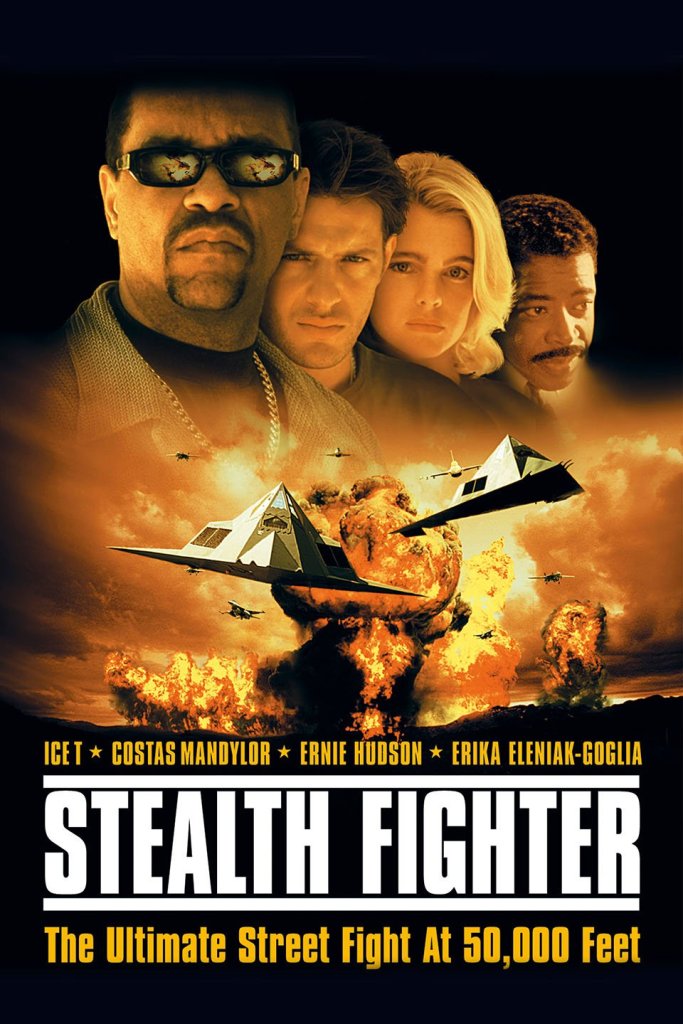
Once described by Wynorski as the film that cemented his personal belief in the military hardware picture’s commercial viability, the engaging — if rote — STEALTH FIGHTER (1999) was a monster hit for the director and producers CineTel. Despite lacking the marquee value (and, even, the essentiality) of Chopping Mall and The Return of Swamp Thing (1989), Stealth Fighter ranks among Wynorski’s most ubiquitous titles based upon the amount of TV appearances and budget priced DVD releases it has — a fact all the funnier considering it’s the first film to be slapped with the maestro’s promiscuous ‘Jay Andrews’ pseudonym.
Bowing on HBO on 8th October 1999, Stealth Fighter boasts solid writing by Juliano (with additional dialogue by Wynorski’s Storm Trooper (1998) scribe, T. L. Lankford) and features a game ensemble comprised of Costas Mandylor, Andrew Divoff, William Sadler, Ernie Hudson, Tiny Lister, The Pandora Project’s Erika Eleniak and Mark Adair Rios, Wynorski regulars Peter Spellos and Nikki Fritz, and rapper Ice-T in his ‘Jay Andrews’ debut (the Law & Order staple rounded out his treble with Final Voyage (1999) and Ablaze (2001)). That said, the true star of Stealth Fighter is Vanick Moradian.
Arguably the greatest splicer in modern B-movie history, Moradian began as an assistant editor for Andy Sidaris before snagging steady employment with Roger Corman, Fred Olen Ray, Andrew Stevens, Mike Elliott, Phillip J. Roth, and Don Michael Paul. Connecting with Wynorski through sexy courtroom drama (!) Body Chemistry 4: Full Exposure (1995), Moradian was responsible for crafting the pace and style of Desert Thunder, and his extensive experience within the military hardware programmer as a whole extends to editing a pair of thrilling genre standouts, Crash Dive (1996) and Active Stealth (1999). It’s Stealth Fighter, though, that’s the snipper’s crowning achievement. A stunning editorial exercise, Moradian weaves Wynorski’s meticulously curated slithers — pruned from Diamonds Are Forever (1971); The Dogs of War (1980); Bat*21 (1988); The Hunt for Red October (1990); Navy Seals (1990); Flight of the Intruder (1991); Interceptor (1992); Under Siege 2: Dark Territory (1995); Down Periscope (1996); Executive Decision (1996); and the oft-raided Iron Eagle, Blown Away (1994), Clear and Present Danger, and Crimson Tide (1995) — seamlessly into the film’s narrative, amplifying Stealth Fighter’s blend of theft, high-tech weaponry and terrorism, and making it feel bigger and better than it actually is.


 The Schlock Pit
Thank you. I’m blushing. Your piece credited a number of talented folks(John Terlesky, Lenny Juliano, and Vannick Moradian) all of whom contributed greatly to the success of these pictures.
LikeLike