
Matty salutes one of the all-time greats of the VHS era.
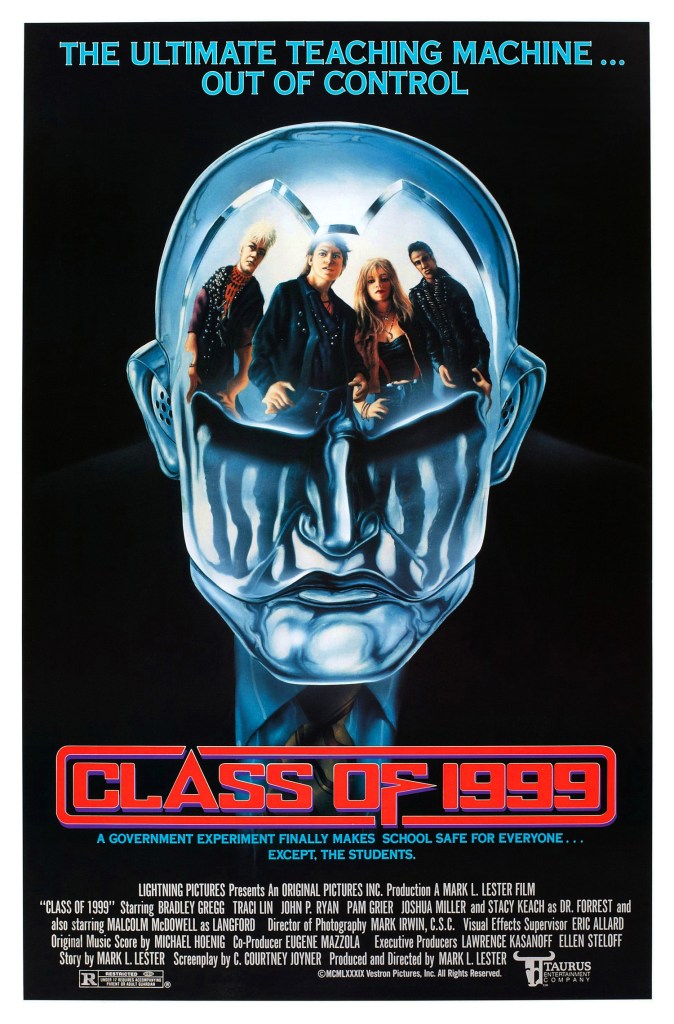
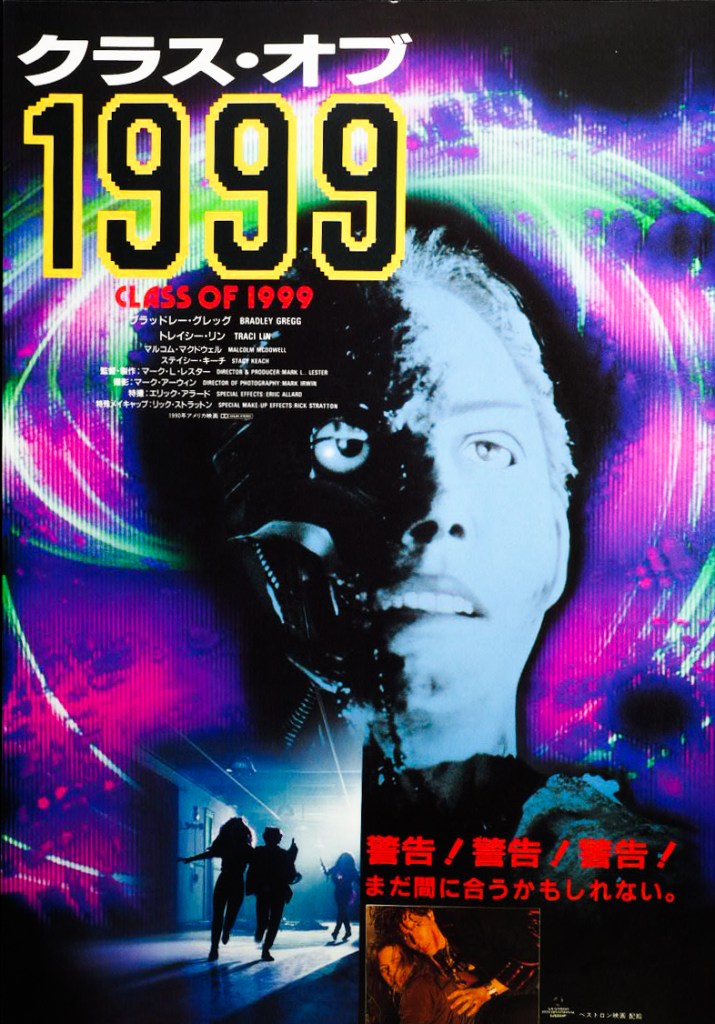
Lensed in November 1988 on a $7million budget, Mark L. Lester’s CLASS OF 1999 (1990) was shelved for eighteen months due to the mounting financial woes of co-producers Vestron. It was eventually acquired by the Taurus Entertainment Company and granted a U.S. theatrical run in May 1990. The film came and went at the box office. However, like its predecessor – Lester’s Class of 1984 (1982) – sidequel/spin-off Class of 1999 found an appreciative audience on video and received a DTV sequel of its own [1].
Now an established cult favourite, Class of 1999 is among the crowning achievements of robo-schlock; a sci-fi subgenre inspired by The Terminator (1984), RoboCop (1987) and Blade Runner (1982), and at its peak during the VHS era. Key titles include: R.O.T.O.R. (1987), Hardware (1990), Nemesis (1992), Project Shadowchaser (1992), Cyborg Cop (1993), Cyber Tracker (1994), and any associated follow-ups.
The big reason why the film is so good is that it’s anchored by a vision. The story – a near-future yarn (well, a then near future yarn) wherein warring high school gangs come together to battle a trio of murderous android teachers – takes place in a shaded and lived-in world packed with nods and allusions to likeminded texts. There are bits of Mad Max (1979) and The Warriors (1979). There are bits of A Clockwork Orange (1972) (the casting of Malcolm McDowell as the principal is an obvious homage – Lester cites the film as a major influence); and, naturally, holdover from the punk-y Class of 1984. According to Lester, he was happy with how Class of 1984 turned out. Thus, he wanted to make a similar film, a companion piece from the students’ – the gangs’ – point of view (Class of 1984 is the teachers’ perspective, lest we forget). Despite both Classes clearly being the product of the same director, Lester, fascinated by the increase in real-life gang violence being reported in the news at the time, wanted to give Class of 1999 a more ripped-from-the-headlines feel as opposed to 1984’s scuzzy, comic book nightmare quality. He insisted, though, on building upon Class of 1984’s vaguely futuristic lilt, hence the stronger sci-fi bent – which, of course, was also informed by the aforementioned success of Terminator and RoboCop [2]. As Lester, a B-movie practitioner with a keen sense of art and commerce, has repeated over the years, “Science fiction was selling”.
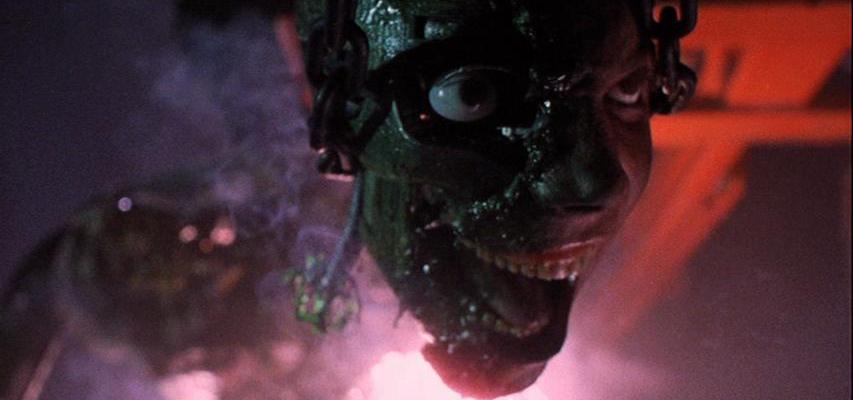
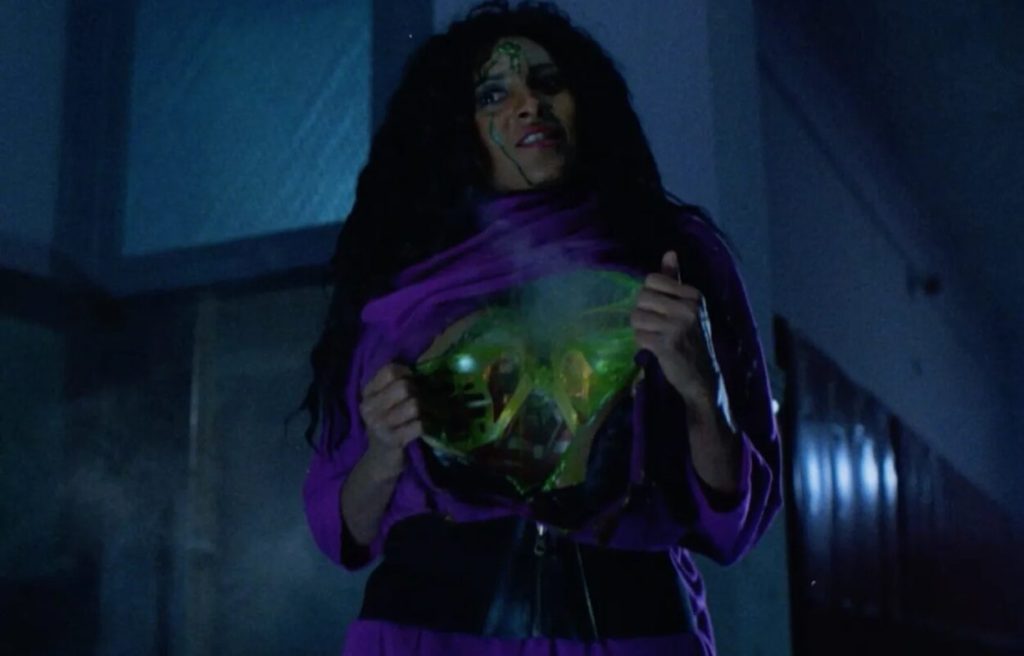
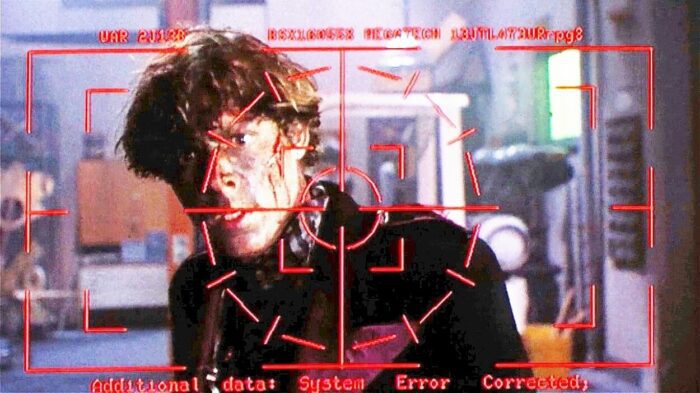
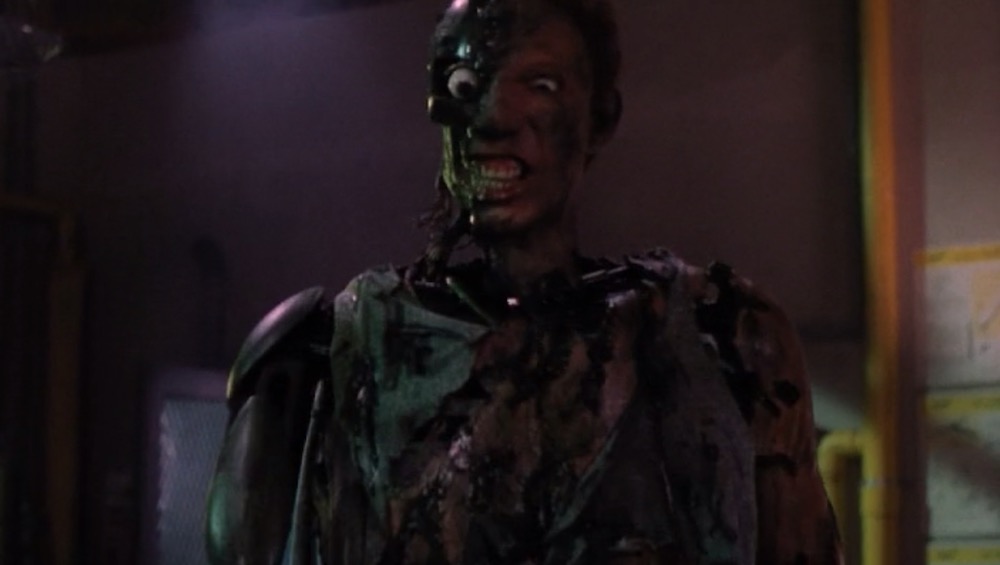
Class of 1999’s vein of RoboCop-ian black comedy is accentuated by the terminology used by the educational war-machines (“VERBAL COMMAND, TAKE TO PRINCIPAL, PHYSICAL PUNISHMENT” reads one of their prime directives), and the film’s run-down Seattle locations help Lester and cinematographer Mark Irwin foster a ruinous and playfully doom-y vibe conducive of the other genre robo-schlock often straddles, the dystopian thriller [3]. Elsewhere, Lester’s flair for mayhem is present on a grand scale. A la fellow Lester essential Commando (1985), Class of 1999 is full of ruthlessly efficient action sequences, maximised for excitement and spectacle. The standout is the film’s bollock-knotting back-end, when all hell breaks loose. Guns, motorbikes, whopping great explosions, a fiery bus crash, and – yes, yes, yes – some of the finest robot FX this side of Stan Winston and Rob Bottin. Recruited by Lester on the strength of his work on family-friendly robot capers Short Circuit (1986) and Short Circuit 2 (1988), the FX are orchestrated by Eric Allard. They are, without question, sublime. The full puppet of Patrick Kilpatrick’s Arnie-esque muscle-bot (he’s the PE droid, quelle surprise) is a phenomenal technical achievement, and the gags used to bolster the mechanical licks of additional tin-men Pam Grier and John P. Ryan – flamethrowers, claw hands, a bionic chest – are equally impressive. And in the sprawling pantheon of robo-schlock, the only flick that exceeds Class of 1999 in terms of such jaw-dropping renderings is Stephen Norrington’s high-octane sci-slasher, Death Machine (1994).
Since their releases, Lester has noted how prophetic Class of 1984 and Class of 1999 have proven. As McDowell’s idealistic – if feckless – headmaster says in the latter, in a board of governors briefing shepherded by Stacy Keach’s albino mad scientist: “You all know what we’ve had to face in the past: drugs, gang activity, rampant violence.” Today, it is indeed truer than ever. A cursory look at the right tag on TikTok and Instagram or the right comment thread on – bleargh – Facebook reveals what heinous behaviour plagues modern education. Entitled and unruly kids and parents. The complete disregard of knowledge and learning. The ludicrous belief that school exists to frighten and control rather than nurture, encourage and support. In a way, Class of 1984 and Class of 1999 serve as wish fulfilment. Don’t be fooled by my exotic online shtick as an in-demand B-movie critic: by day, I toil in education. And quite honestly, there isn’t a member of school staff on the planet who hasn’t dreamt of thrashing or blasting a pain-in-the-arse student, just as the teachers in Lester’s pedagogical thrill-rides do.
Freely conceding Class of 1984 and Class of 1999 are politically troubling, Lester believes 1999 in particular occupies a strange void that’s neither left nor right. With my educator’s head on – well, my ‘pastoral lead in a challenging secondary’ head, at least – Class of 1999 is guilty of propagating the myth that mainstream education is rigid and Prussian. Signs reading “OBEY” and “RESPECT” adorn the film’s setting, the slyly satirical-sounding Kennedy High (I mean, what a clan to be named after), and the air of fascism is amplified by the masked guards prowling the halls. But given Class of 1999’s hero, Cody (Bradley Gregg), is a reformed teenage jailbird desperate to improve his and his family’s life, the film’s message is, ultimately, positive:
That education, self-awareness, self-assurance, and the desire to do better – to strive for more – is all a young person needs.
[1] Vestron retained Class of 1999’s home video rights and issued it on North American cassette in conjunction with LIVE Entertainment on 26th November 1991. The film was sent straight to tape in the U.K. It surfaced on 23rd May 1990 (via Vestron) while it continued to play in stateside cinemas. The sequel rights were purchased by CineTel – in the same deal that saw them bag the rights to Ghoulies (1985) – and the Lester-less Class of 1999 II: The Substitute (1994) landed in the U.S. via Vidmark in March ‘94 and in the U.K. via Vestron’s British successor, First Independent, in October ‘94.
[2] Class of 1999’s treatment was penned by Lester’s Firestarter (1984) scripter Stanley Mann. Credited as an Associate Producer on the finished film, Mann’s outline was whipped into shape by genre specialist C. Courtney Joyner (From a Whisper to a Scream (1987), Prison (1987)). Joyner went on to pen several movies for Lester and his subsequent shingle, American World Pictures: Public Enemies (1996), The Base 2: Guilty as Charged (2000), Devil’s Prey (2001), Instinct to Kill (2001), Betrayal (2003), Stealing Candy (2003), and White Rush (2003).
[3] Once a regular of David Cronenberg (he shot every Cronenberg feature between Fast Company (1979) and The Fly (1986)), Irwin – who’d photograph Lester’s next offering, the magnificent Showdown in Little Tokyo (1991), and his later thrillers Extreme Justice (1993), Night of the Running Man (1995), and Misbegotten (1997) – has some solid robo-schlock pedigree. Credits: RoboCop 2 (1990) and form adjacents I Come in Peace (1990), Man’s Best Friend (1993), and Steel (1997).
 The Schlock Pit