
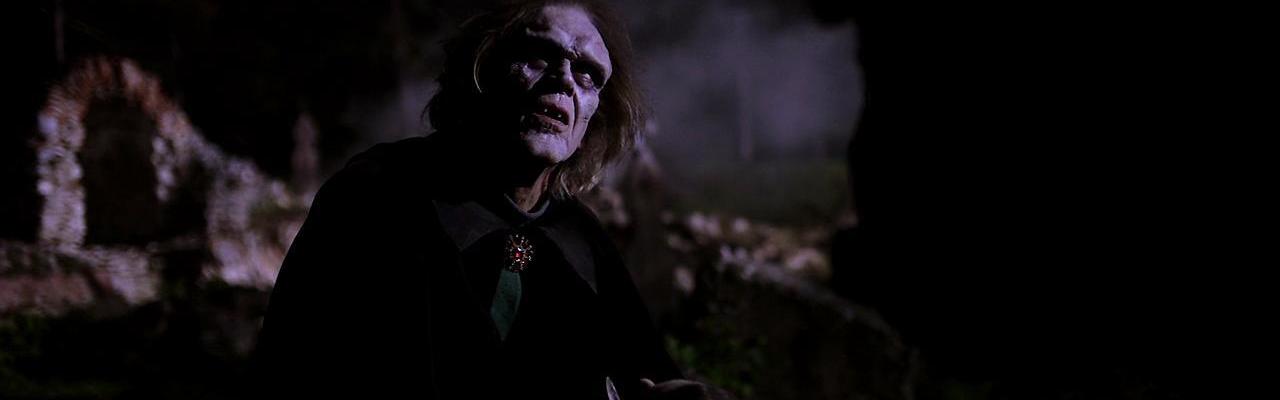
Matty yaps on Ted Nicolaou’s brilliant sequel-prequel combo and ponders their relationship with another iconic horror franchise…
Years ago, when IMDb had message boards, I happened across a post where a particularly insightful user likened Ted Nicolaou’s Subspecies series to Don Coscarelli’s Phantasm saga. The crux of their take rested on them being low-budget; them having four films a piece (at the time); and each chapter starting the second its preceding instalment concludes. While the last attribute is something I’ve always thought Nicolaou did in homage to Hammer and their Draculas, the Subspecies/Phantasm comparison has stuck with me.
At their core the Subspecies and Phantasm collective are about love, death, and family. Both have a central gimmick — the eponymous mini-beasts and flying silver spheres respectively — which serve as iconic shorthand, often more so than their actual antagonists, the evil vampire Radu (Anders Hove) and the sinister Tall Man (Angus Scrimm, who, in a further connective twist, briefly appeared in the first Subspecies (1991)). And film to film, every entry mirrors its numeric counterpart: Subspecies and Phantasm (1979) are the ambitious progenitors; Bloodstone: Subspecies II (1993) and Phantasm II (1988) are the glossier showstoppers; and Bloodlust: Subspecies III (1994) and Phantasm III: Lord of the Dead (1994) are the change of gear, throwing humour and action into their gothic horror mixes.
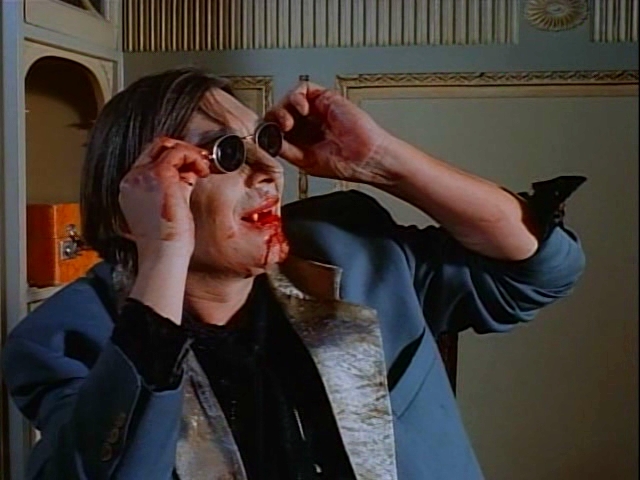
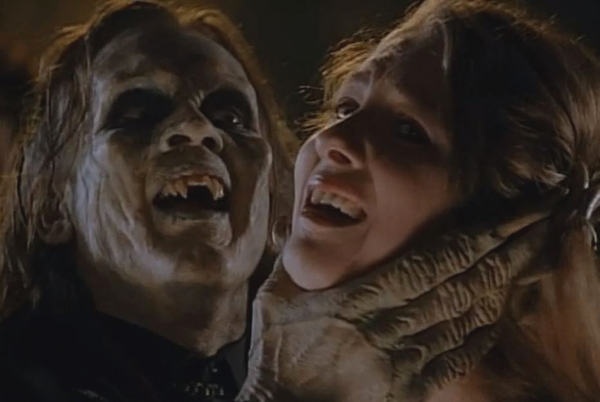
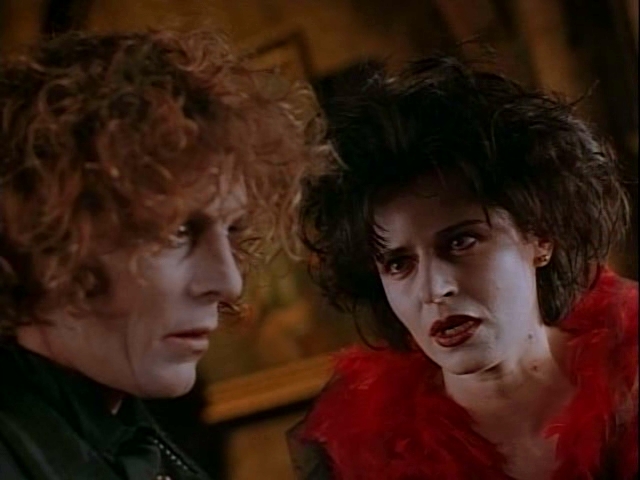
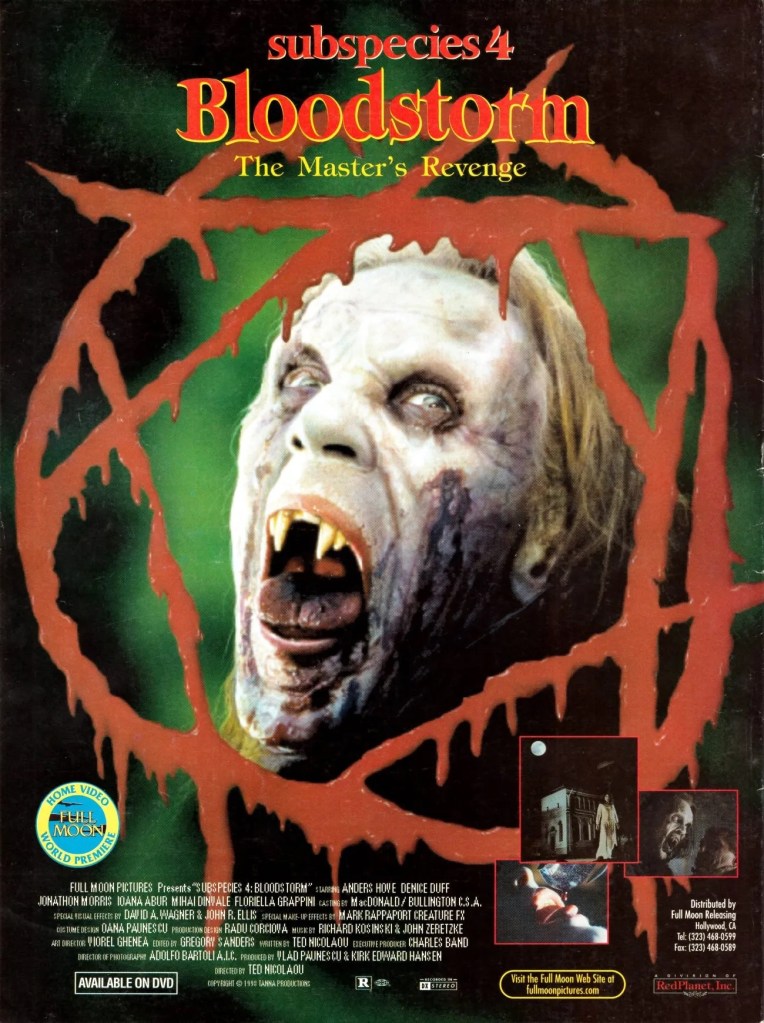
Though Subspecies spin-off Vampire Journals (1997) is an outlier — Phantasm hasn’t got a sidequel or anything — SUBSPECIES IV: BLOODSTORM (1998) continues the trend. My favourite Subspecies, Bloodstorm, a la Phantasm IV: Oblivion (1998) (which, for the record, isn’t my favourite Phantasm; that’s the monumental II), is, from a technical perspective, a step down from the other Subs.
It’s a cheaper, ricketier production.
A return to the, erm, ‘cost conscious’ roots of the original and then some.
It’s obvious within Bloodstorm’s opening seconds, when Radu emerges from his coffin, sporting another redesign to his character make-up. Conceived and executed by Gregg Cannom in Subspecies, Radu’s striking visage was tweaked by Wayne Toth and Norman Cabrera in Bloodstone and Bloodlust, with superior results. Alas, the claggy, putty-esque sheen to Mark Rappaport’s rendering in Bloodstorm is serviceable at best. It does the job — but coupled with the film’s noticeable reduction in scale, the make-up is endemic of the issues Bloodstorm’s producers, Full Moon Entertainment, were plagued by during the period of its making, amidst their mid-to-late ‘90s union with the penny-pinching Kushner-Locke Company.
An age when quality was often secondary to quantity.
That said, Nicolaou uses Bloodstorm’s limited resources to his advantage. It might lack the sweeping scope of Bloodstone, Bloodlust and Vampire Journals, but Bloodstorm is expansive and stylish in a different way. Keeping everything close quarters and claustrophobic, a seductively strange and uncomfortable sensibility permeates the film. Bloodstorm is a work of suggestion and dread. It’s a peculiar dream of a picture that slowly penetrates your psyche. Conversations linger and scenes feel as if you’re silently standing next to those living through them, studying them and observing what unfolds. The pangs for wall-to-wall grandiosity — the initial belief that the film needs Bloodstone, Bloodlust and Vampire Journals’ ornate tableaux — promptly vanish because Bloodstorm is so bracingly odd. Nicolaou builds on the series’ themes of power, connection and control by piling on such topics as quackery and gang warfare (the latter is presumably left over from Bloodstone and Bloodlust’s brainstormed premise, where Radu was going to battle an American vampire in Chinatown). A bigger budget would have yielded an intensely visual depiction; Bloodstorm strips these plot points back to their most basic dramatic form, lending the film a beguiling theatricality reliant on mannered interplay and outrageous performative flourishes.
Launched as ‘Subspecies: The Awakening’ — a title retained for the U.K. video release [1] — Bloodstorm finds Radu, his reluctant fledgling Michelle, and a vampirised Lt. Marin (Subspecies regulars Anders Hove, Denice Duff, and Ion Haiduc, all excellent) joined by Vampire Journals baddies Ash (Jonathon Morris) and Serena (Floriela Grappini) [2], and a deliciously wacky new fiend, Dr. Niculescu (the scene-stealing Mihai Dinvale, who, like Morris and Grappini, featured in Vampire Journals, albeit in a different role).
Mad science, ancient grudges, Michelle surrendering to her monstrous instincts — Bloodstorm cares not for the unfaithful. Even the Subspecies themselves are absent (mercifully I hasten to add, because, really, they’re pretty redundant). Thus, newcomers are liable to find Nicolaou’s warped vision perplexing. But, as with the similarly niche and firmly fan-footed Phantasm IV, if you rock up to a far-along sequel cold this late in the game, you deserve the flummoxing.
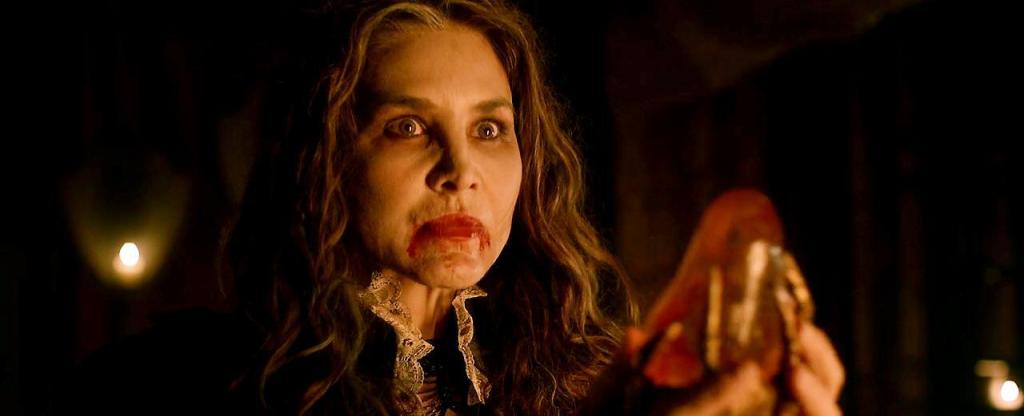
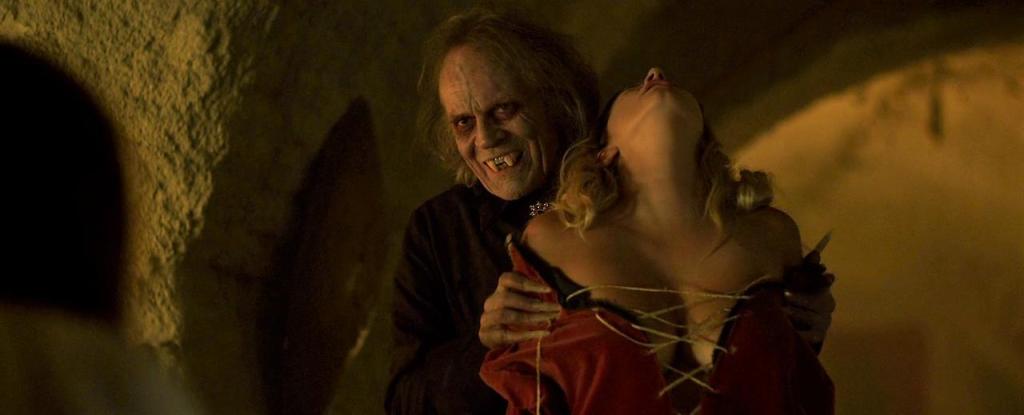
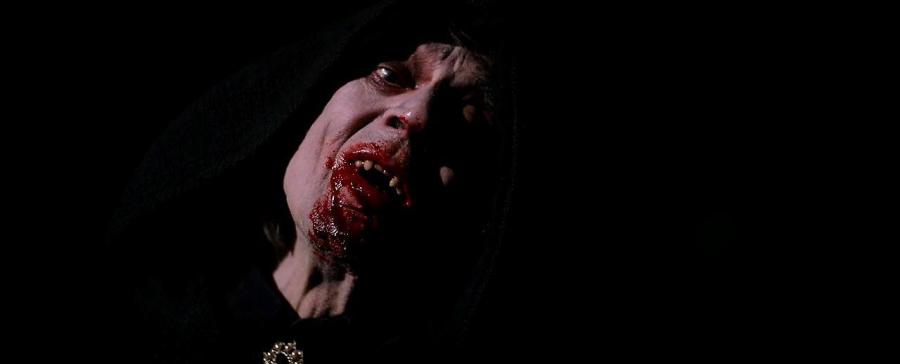
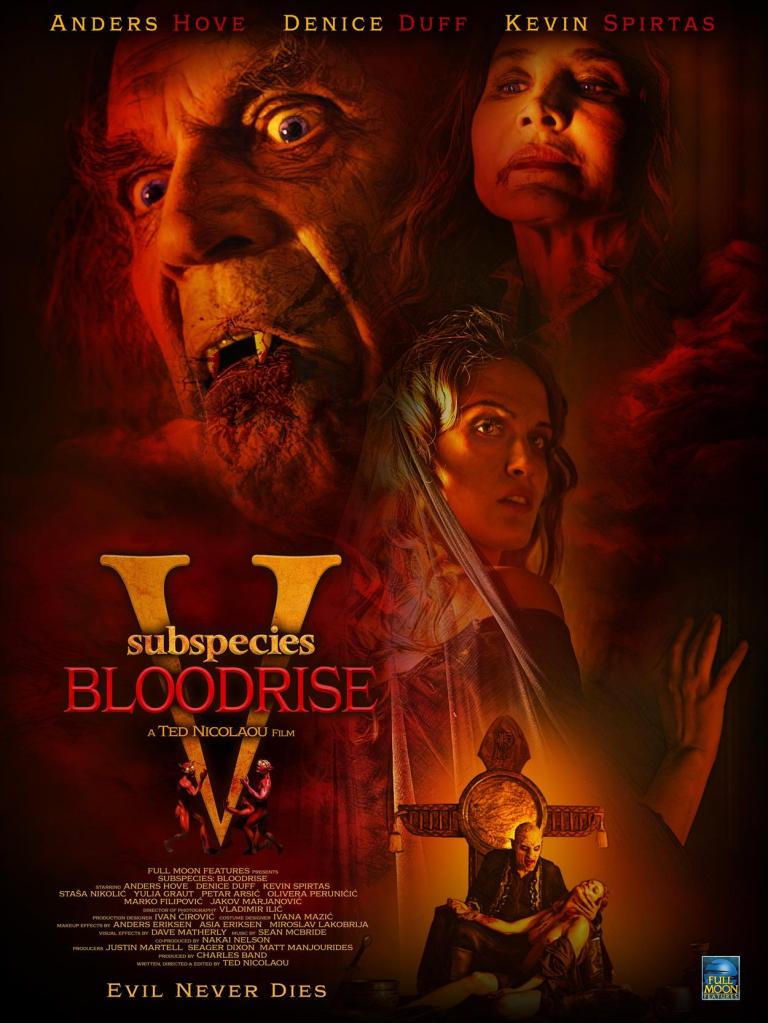
Conversely, SUBSPECIES V: BLOODRISE (2023) caters to the devout and the unfamiliar.
The benefit of prequeldom:
When done well — as Bloodrise is — you get establishment and reacquaintance; introduction, reconnection, and explanation.
Bloodrise begins with a moody prologue. Nicolaou lets loose a jaw-dropping montage of evocative images as Hove’s growling narration — a device clumsily deployed in Vampire Journals but stunningly utilised in this instance — vividly chronicles Radu’s abnormal birth, his human upbringing, and his present status as the weary leader of a secret, vampire hunting cabal. In less than five minutes, Nicolaou gets us up to snuff. And then the narrative proper — Radu’s descent into darkness — kicks in with equal aplomb…
Hove is fantastic in Bloodrise. He’s mesmeric in Subspecies, Bloodstone, Bloodlust and Bloodstorm, but the mournful-looking thesp evidently relishes the chance to play a different kind of Radu; one free of make-up effects for a chunk of the film, and one whose appetites and motivations aren’t totally understood yet. Duff is terrific as Helena, Radu’s master and, by extension, the reason he’s obsessed with Michelle in prior/chronologically later volumes (it’s ‘The Mina Harker Thing’: Michelle resembles a lost love). Bloodstone and Bloodlust’s Kevin Spirtas is now Radu’s Nosferatu-ish father (who, of course, was essayed by Angus Scrimm in Subspecies; his demise there is retconned here), and Vampire Journals and Bloodstorm’s Ash appears — sans the marvellous mugging of Morris, mind. Nevertheless, Marko Filipovic is a passable replacement. He gets the best moment too, when he noisily pounds a piano as Radu moves a step closer to his birthright.
When Subspecies IV: Bloodstorm hit North American video in December 1998, Nicolaou, in what scant promotional opportunities he was afforded, was adamant it was the final Subspecies. Come mid-‘99 he’d softened and the writer/director revealed that he, Hove and Duff were keen to explore Radu’s origins. In fact, according to Nicolaou, a script was already complete. Sadly, it’d be nearly a quarter of a century before Bloodrise came to fruition, its production hindered by Full Moon’s fluctuating finances, talent schedules, and, even, the COVID-19 pandemic. Curiously, it’s with the harnessing of ‘recent’ filmmaking techniques where Nicolaou falters. The herky-jerky camerawork, drone shots, and choppy editing sit at odds with the timeless, conventionally filmic aesthetics of Subspecies, Bloodstone, Bloodlust and Bloodstorm. Script-wise, Bloodrise is stricken with a few logic leaps and trite developments, doubtlessly caused by the budget — which, though hefty by modern Full Moon standards, is still a pittance.
But, hey: they’re moot niggles.
The pleasures of Bloodrise far — FAR — outweigh the cons.
Nicolaou ekes a tremendous amount of value from the film’s Serbian locations, fostering a foreboding atmosphere bubbling with apprehension and perverse eroticism. And as Phantasm’s long-gestating fifth movie – the scrappy, bittersweet sign-off Phantasm: Ravager (2016) – proved, the joy of seeing a gang of storied creatives together for one last hurrah is irreplaceable.
The night will always have fangs.
[1] ‘Subspecies: The Awakening’ was part of the inaugural batch of Full Moon titles released on U.K. video by High Fliers, alongside Talisman (1998) and Curse of the Puppet Master (1998). Later Full Moon-High Fliers releases include Witchouse (1999), Retro Puppet Master (1999), Sideshow (2000), Witchouse II: Blood Coven (2000), Nicolaou’s The St. Francisville Experiment (2000), and a tardy issuing of The Creeps (1997). Full Moon’s parent company, Kushner-Locke, had an output deal with High Fliers, which immediately ended Full Moon boss Charles Band’s long-standing British distribution agreement with Entertainment in Video. As it happens, the final Full Moon flick Entertainment released was Vampire Journals.
[2] Given Ash’s fate in Vampire Journals, it’s fair to say Bloodstorm comes first chronologically.
 The Schlock Pit