
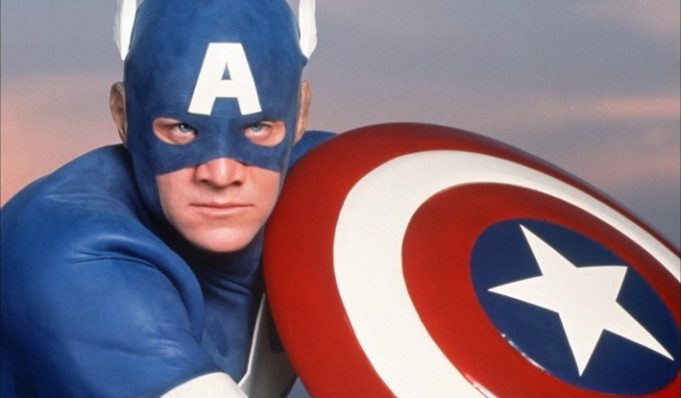
Matty ponders the infamous superhero flick’s place in director Albert Pyun’s filmography.
Mounted as a blockbuster, faffed with by penny-pinching producers during production, panned on release, forgotten about, rediscovered, reclaimed by fans of helmer Albert Pyun, and, in recent years, almost completely reassessed by the cult film blogosphere now Pyun’s fabled original cut has finally become available — CAPTAIN AMERICA’s (1990) history is dense and well documented. Depending who you ask, it’s either the worst comic book adaptation ever or a triumphant underdog story. To me, it’s always ranked somewhere in between. Though I’m not a comic book guy by any stretch, Cap ‘90 lacks the splash panel swagger of its obvious models, Richard Donner’s form blueprint Superman (1978) and Tim Burton’s form defining Batman (1989). There’s no doubt that Pyun is an incredible, visually-driven director. Alas, unlike Donner and Burton, his singular aesthetic struggles to click with the source material.
Nevertheless, a lot of the practical craftsmanship on display is gorgeous, and Captain America’s handmade quality is infinitely more preferable to the video game sheen of subsequent, CGI-heavy Marvel fare (I stand with Scorsese: they ain’t cinema). Better still, as a work of resourcefulness, Captain America underlines Pyun’s ability to build something out of nothing. Challenge and compromise are as much a Pyun trademark as slick cinematography, arthouse aspirations, and a dreamy vibe. And while the sorely missed auteur’s behind the scenes battling dates back as far as his troubled sophomore flick, Radioactive Dreams (1985) (it was shut down by the bond company and effectively half finished), Captain America being assembled on the fly, often without the appropriate sets or props, after producers 21st Century Film Corporation kept pulling funds, certainly paves the way for the ‘movie or bust’ militancy typical of later Pyun epics (think: Knights (1993), Adrenalin: Fear the Rush (1996), Urban Menace (1999), Corrupt (1999), The Wrecking Crew (2000), and the Nemesis (1992) sequels). Of course, Pyun probably knew what he was getting into. Lest we forget that 21st Century were spun from Cannon, who, at the time, had recently shafted him over on Cyborg (1989) — which, in turn, led to the wily artiste exacting his revenge by secretly lensing Deceit (1990) on Cannon’s dime, and then selling it on to 21st Century. Play with feathers, get your arse tickled; but try and stop Pyun from creating, and he’ll diddle you blind (also see: Kickboxer 2: The Road Back (1991) which begat Bloodmatch (1991); Adrenalin which begat Nemesis 4: Cry of Angels (1996)).
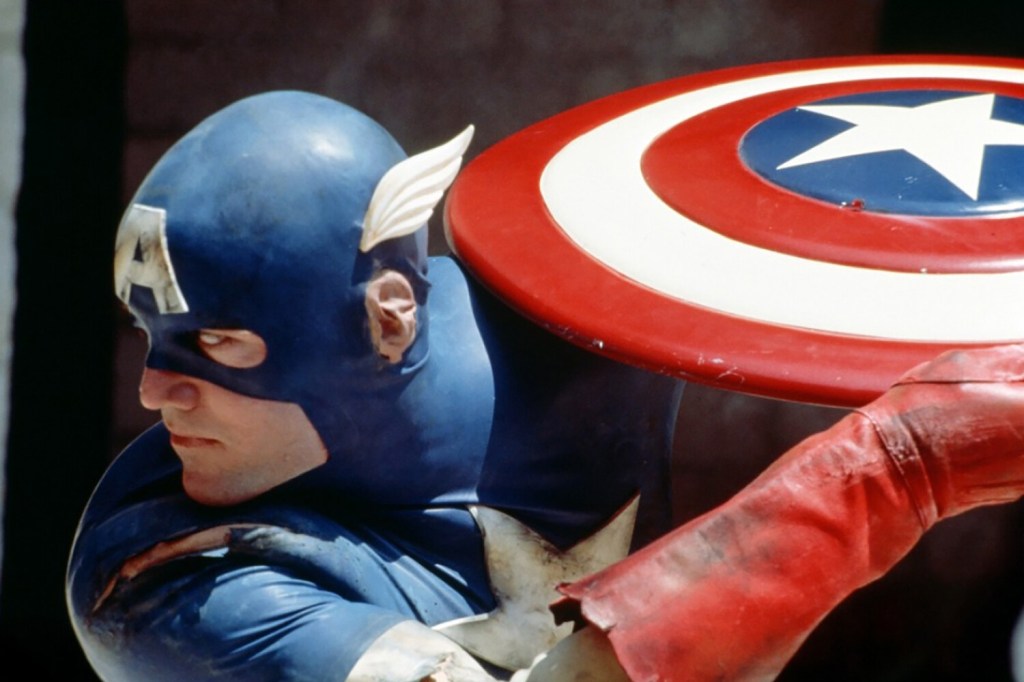
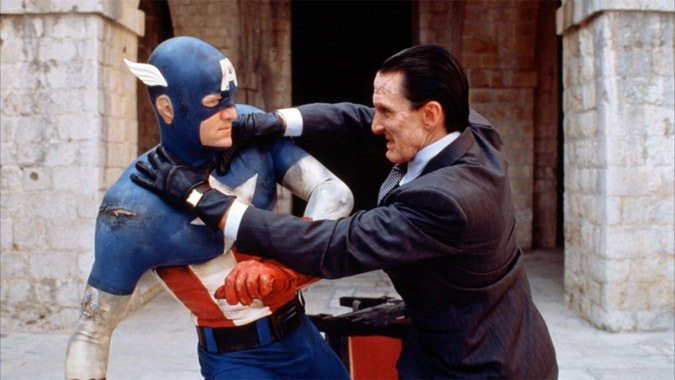
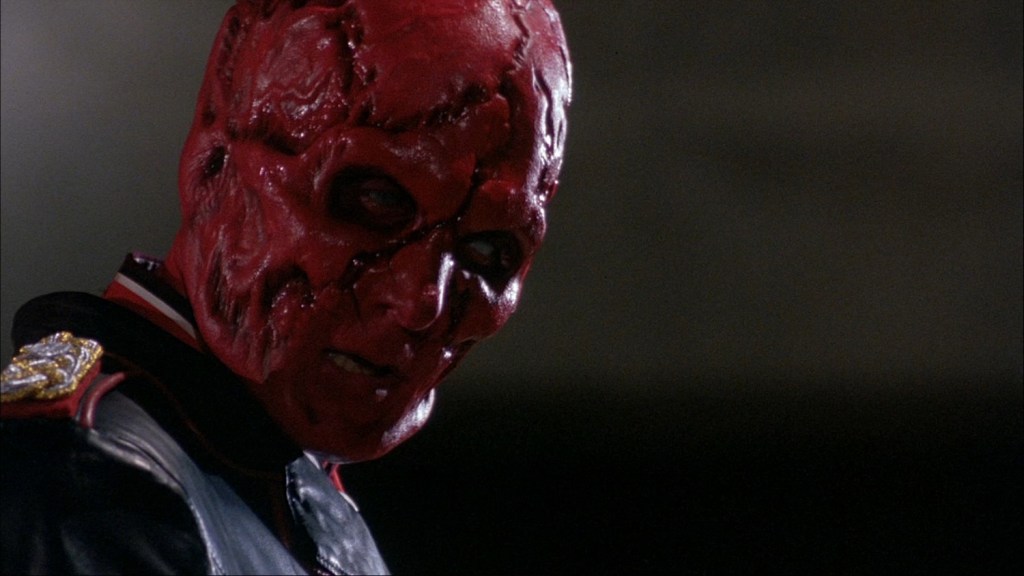
Despite lead Matt Salinger coming across a little bland, the rest of the cast — which includes Michael Nouri, Ronny Cox, Ned Beatty, and Pyun perennials Norbert Weisser and Scott Paulin, the latter as the dastardly Red Skull — submit committed performances. All, mind, are occasionally bogged down by an exposition-laden script which boasts the added ignominy of needing to be tinkered with due to Captain America’s chaotic making. In any case, there’s some potent drama on show as the eponymous hero wrestles with his existence as a man out of time and place — a theme Pyun quickly returned to with Dollman (1991), Nemesis, and Omega Doom (1996) — and emotional symmetry between the Cap and Paulin’s achingly tragic Red Skull stirs and beguiles, especially so in the director’s cut.
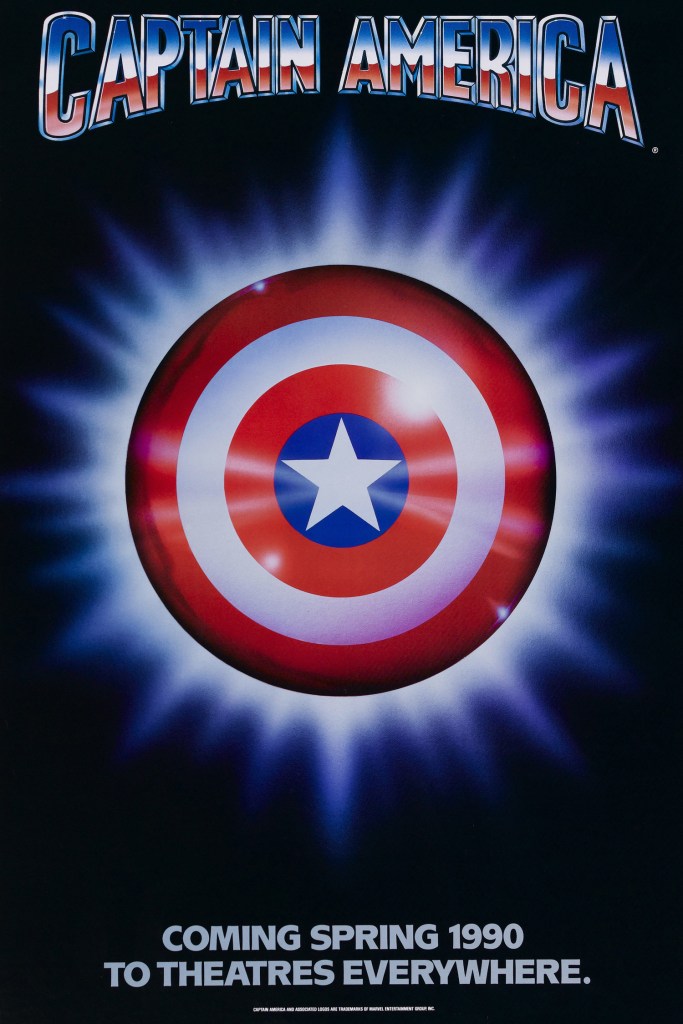
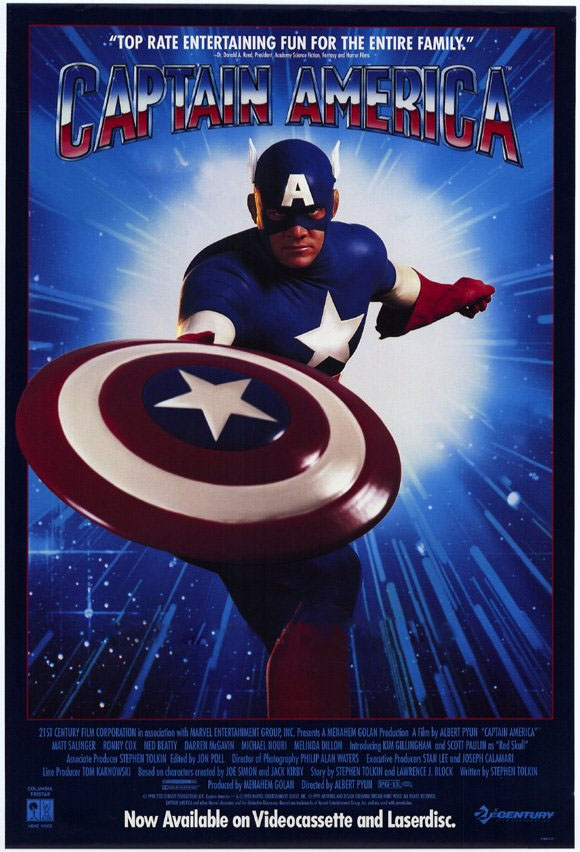
Captain America’s compromised version was issued on cassette in the U.S. by Columbia-TriStar Home Video and in the U.K. by the studio’s British offshoot, 20:20 Vision. As it happens, we Brits got the film first. It quietly opened on the big screen in Derby, Wrexham and Manchester in mid-December 1990 before heading to Nantwich and Crewe in early ‘91, prior to an April ‘91 tape bow. Captain America landed in the U.S. in July 1992, after an intended theatrical release was abandoned (it went: Spring 1990, Summer 1990, November 1990, TBC, gone). Funnily, the film played theatrically in the Philippines — in a double feature with a Snoopy cartoon, no less — as ‘Bloodmatch’; the same title of the aforementioned martial arts quickie Pyun supplied 21st Century with. Funnier is that Pyun’s Cyborg star, Jean-Claude Van Damme, was credited as ‘martial arts instructor’ in the press bumf.
He absolutely isn’t.
 The Schlock Pit