

Matty highly recommends UFO’s snazzy ship shocker.
One of three haunted boat capers to arrive within fourteen months of each other, LOST VOYAGE bridges the gap between the two either side of it. The film features the same Bermuda Triangle hook as ratings smashing TV flick The Triangle (2001), and a similar reliance on flashy visuals and ghoulish comic book shenanigans as the much-maligned Ghost Ship (2002). Lost Voyage is, however, better than the pair of them and sits comfortably alongside Total Reality (1997), Python (2000), and Epoch (2001) as a top-tier offering from its producers, the Unified Film Organization.
The first horror pic in UFO’s mostly sci-fi and action-based catalogue, Lost Voyage opens with a striking credit sequence before segueing into an equally atmospheric period prologue, whereupon a powerful supernatural force takes over a cruise ship as it traverses the Bermuda Triangle. When the liner reappears twenty-five years later — piquing the interest of a paranormal expert (Judd Nelson) whose father and step mother vanished on the vessel — the story proper kicks in. Essentially an ocean-bound Event Horizon (1997), the terror hinges on Nelson and the salvage crew he teams with (led by Lance Henriksen in full alimony mode) having their personal fears being brought to life by a malignant presence lingering on the ship, lending the film a dramatic, character-focused richness that transcends the cookie cutter dialogue.
A nicely paced yarn, Lost Voyage marks the directorial debut of UFO stalwart Christian McIntire. Beginning as an editor on Darkdrive (1997) and quickly working his way up to head of production, McIntire’s subsequent megaphone-wielding assignments for the company include Landspeed (2002), Silent Warnings (2003), Phantom Force (2004), and Antibody (2002) — the latter of which also sporting a phoned-in turn from Henriksen. Lost Voyage remains McIntire’s strongest. The helmer unleashes a plethora of potent jump scares, but it’s the sustainedly creepy mood he fosters — the tension, the suspense, the suffocating feeling something unfathomably evil lurks beyond the waves — that resonates. Gorgeously lensed, Lost Voyage is a stylish exercise, bursting with shadowy lighting, splash panel dynamism, and assorted other aesthetic flourishes. All add an immeasurable amount of pomp and production value (lightning effects, rain machines etc.).
Despite the excellence, McIntire falters somewhat during the overblown ending, when the ship becomes infested with spirits from the storm clouds above. While the intent is clearly to create an epic scope and underline the overall sense of cosmic dread, the denouement is hindered by its harried execution, particularly as the CGI — brilliant throughout the rest of the film — is laughably poor. It doesn’t cause Lost Voyage to flounder by any means. It’s just a rough docking to an otherwise pleasurable sail.
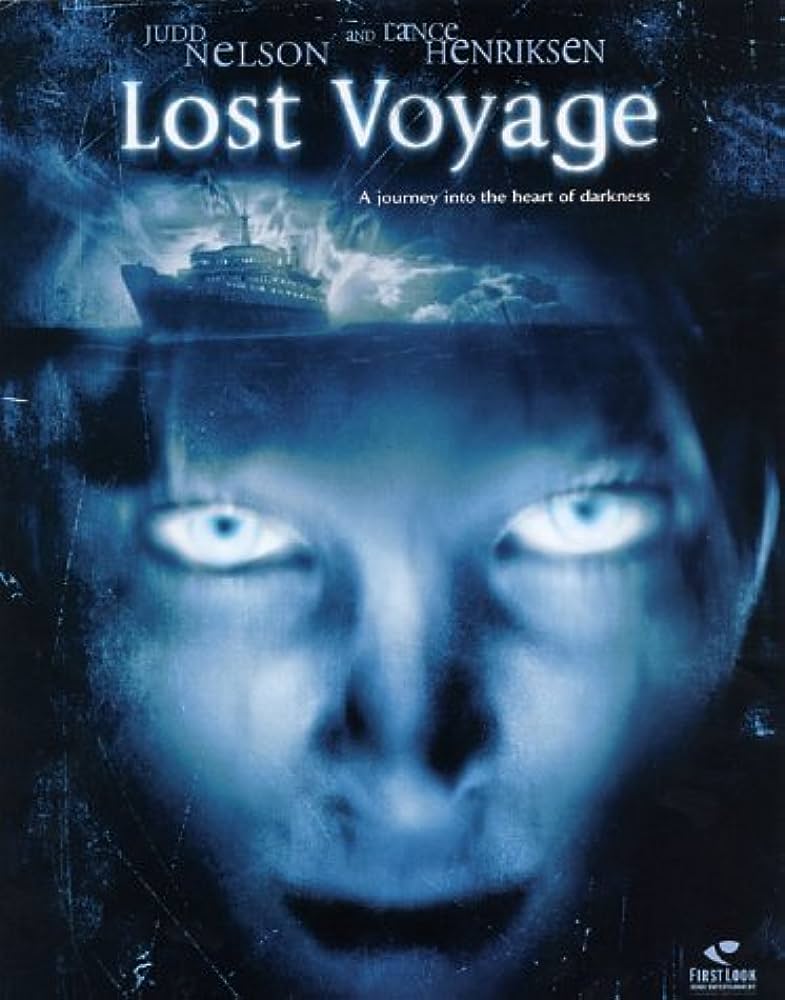
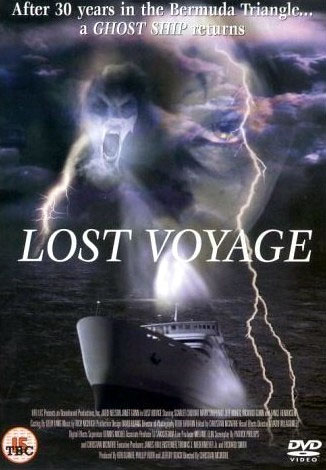
Lost Voyage played on SyFy on 11th May 2002 and landed on U.S. video via frequent UFO peddler City Heat Productions (in conjunction with First Look/DEJ) on 10th September ‘02 (for context: The Triangle debuted on TBS 13th August ‘01; Ghost Ship hit U.S. cinemas 25th October ‘02). A la UFO’s Deep Core (2000), us Brits got the film a little earlier. It premiered on Sky MovieMax on 20th September 2001 and arrived on DVD through another UFO regular, Third Millennium, who issued it as part of their Unipix Entertainment subsidiary in mid 2003 — around five months after Ghost Ship’s British theatrical roll-out the preceding January, and in time for the big budgeter’s tape and disc release in July (note the prominent use of the words “GHOST SHIP” in Third Millennium’s cover spiel). Funnily, on 3rd February ‘03, Sky MovieMax actually screened Lost Voyage ahead of The Triangle in an evening of aquatic B-movie merriment rounded out by a showing of Fred Olen Ray’s actioner, Submerged (2000).
USA ● 2001 ● Horror ● 91mins
Judd Nelson, Lance Henriksen, Janet Gunn, Jeff Kober ● Dir. Christian McIntire ● Wri. Patrick Phillips and Christian McIntire, story by Christian McIntire and Patrick Phillips
 The Schlock Pit