
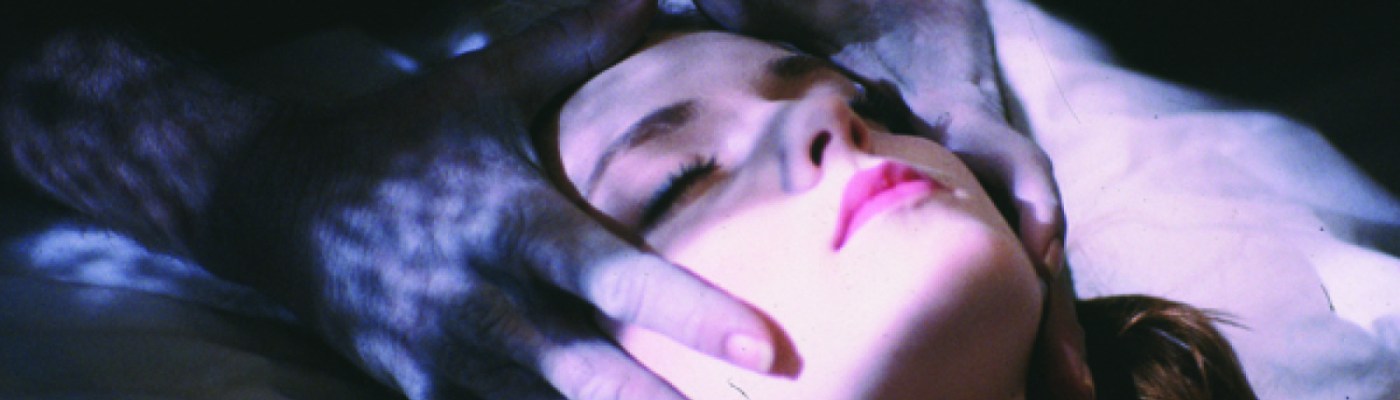
Matty goes to bat for Wes Craven’s perpetually overlooked hair-raiser.
Following the completion of made-for-TV creeper Summer of Fear (1978), Wes Craven spent two years trying to get a multitude of projects off the ground, to no success. Among them was an adaptation of David Morrell’s 1972 novel First Blood (meaning that, in an alternate timeline, we got Craven’s version of Rambo) and a jungle-set thriller called ‘Marimba’ (which eventually morphed into Cut and Run (1984) under Ruggero Deodato’s direction). Worried his career was dead in the water, a lifeline came in the form of comic book caper Swamp Thing (1982) — but just like the buses, as Craven prepped Swamp Thing, his Summer of Fear collaborators, Max Keller and Glenn M. Benest, got in touch with another opportunity:
DEADLY BLESSING (1981).
As the filmmaker told author John Wooley:
“[While I was working on Swamp Thing] the scriptwriters of [Summer of Fear] asked me to rewrite a script of theirs they had some interest in. It was called Deadly Blessing — and while the producers of Swamp Thing decided about the script I’d done for them, I did the rewrite on Deadly Blessing and from then on jumped between the two, until I filmed them virtually on top of one another.” [1]
Alas, as Craven himself freely admitted he never quite got a handle on Deadly Blessing. He already thought the script confusing prior to taking a pass, and his titivating does little to alleviate Benest and co-scribe Matthew Barr’s drab characters and plodding passages. Nevertheless, retrospectively it’s easy to see why Craven would connect to the material on at least some level. Sure, from a purely mercenary point of view, he needed the work; but, in theme and content, Deadly Blessing affords Craven the chance to plunder the same ‘rival families at war’ milieu as The Last House on the Left (1972) and The Hills Have Eyes (1977) — albeit in a slicker n’ showier capacity — and noodle with his other obsessions: dreamscapes, consciousness, and the various layers of reality. At the time, Craven had started developing A Nightmare on Elm Street (1984). Today a significant number of moments in Deadly Blessing play as Elm Street dry runs. Elsewhere, the plot’s religious footing offers an intriguing glimpse into Craven’s own views on faith, dogma, indoctrination, and insularity. Given the auteur’s strict Baptist upbringing, it stands as a particularly fascinating bit of autobiographical rumination — and, perhaps, the exorcism of real-life trauma.
A sort of unofficial companion to Summer of Fear, built from a similar blend of mystery, home invasion, ritual, and rural weirdness, Deadly Blessing finds the farm-dwelling Martha (Maren Jensen) thwarting the dangerous dual attentions of her devout neighbours – fundamentalist sect The Hittites (“They make the Amish look like swingers”) – and a strange, black-clad killer.
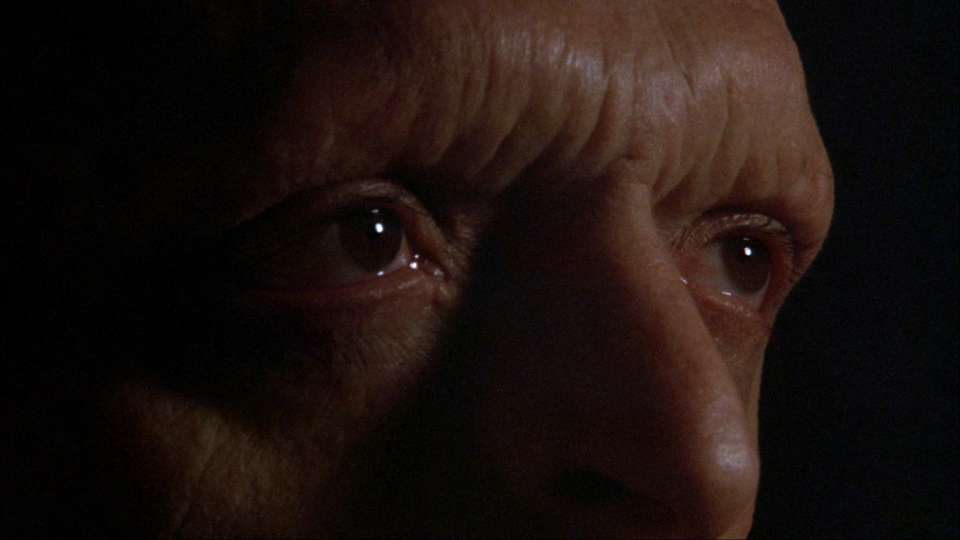
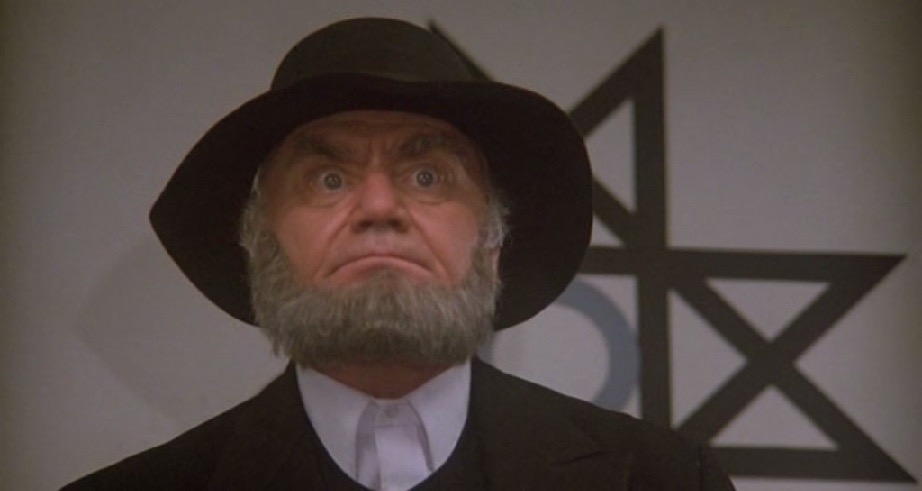
In terms of mood and style, Deadly Blessing is a potent experience. Stalk n’ slash spiked with a gender-bending twist and an air of doom-y, supernatural menace, individual scenes work a treat and underline Craven’s flair for assembling a scare sequence, even at a comparatively early stage. It’s certainly clear that neither Last House nor Hills were a fluke. Irrespective of Deadly Blessing’s narrative flaws — and, I dare say, irrespective of Craven’s initial reluctance to ply his trade solely within horror — it’s evident that his thoughtful approach to and, ultimately, masterful tackling of the genre was something embedded deep inside his artistic soul, despite his steps into fright being fiscally motivated.
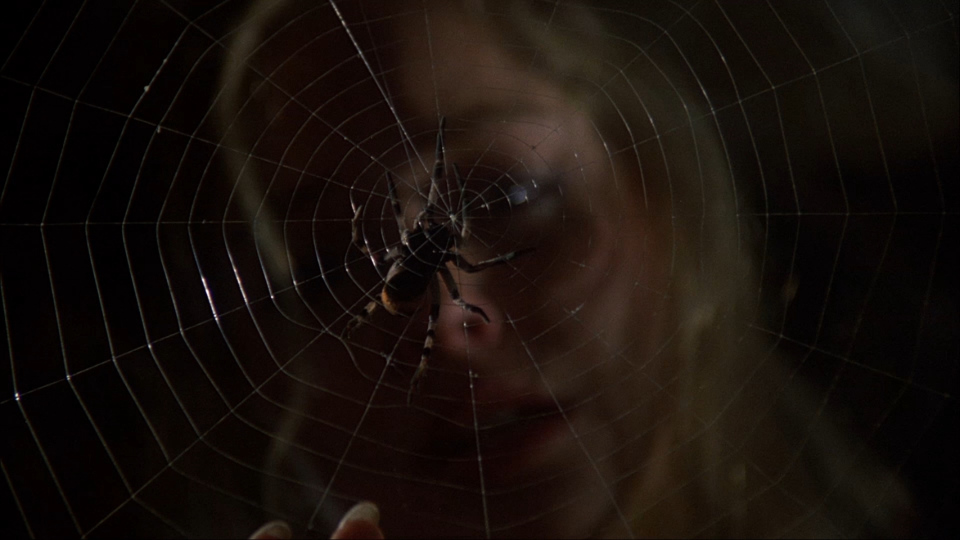
As a piece of horror spectacle — image, tone, implication — Deadly Blessing is required viewing. A young Sharon Stone trapped in a cobweb-strewn barn; Jensen attacked in the bath by a snake; a dream in which a tarantula drops into Stone’s mouth; and the physical appearance of the incubus at the film’s close — which, though reportedly shoehorned in at the insistence of co-producers PolyGram, results in a fabulous, Carrie (1976)-esque final jolt [2] — are justifiably revered among Craven aficionados. It’s just a shame the story isn’t as hearty as it should be. That said, Deadly Blessing gains further mileage thanks to its gorgeous and incredibly effective score by future Hollywood heavyweight James Horner (fresh from The Hand (1981) by fellow future big-hitter Oliver Stone) [3], and the bulk of the cast – Stone; Ernest Borgnine; Craven’s Hills Have Eyes poster boy Michael Berryman and Summer of Fear star Jeff East; and the utterly striking Jensen – add the requisite dramatic heft.
“Deadly Blessing had a very complex story and to my mind not a good one, but the money was there,” Craven reflected. “I tried to minimise the problems with the script due to all those red herrings and I thought I clarified it as much as I could. I guessed the film could live or die on its images rather than rely on great storytelling coherence. I’m pleased with the film. It came off looking pretty good, as if it cost a lot of money but, really, it only cost $2.5million.” [4]
Shot in Texas during November and December 1980, Deadly Blessing was going to be distributed in the U.S. by Universal until PolyGram pulled the plug, concerned by Universal’s lack of enthusiasm (they intended to give the film a limited, two-hundred screen release). As such, Deadly Blessing was acquired by United Artists – so either way it marks Craven’s studio debut – and the scheduled start of its rollout, 31st July 1980, was nudged back a fortnight to 14th August. Funnily, the film was still playing in stateside theatres – usually as a double feature with another United Artists horror acquisition, Philippe Mora’s The Beast Within (1982) – when Swamp Thing, which lensed April and May 1981, landed. In the U.K., Deadly Blessing began its cinema run in February 1982 while Summer of Fear – which had been scooped up for British theatrical distribution – continued to bag playdates. In many cases, the incubus coda was pruned, only appearing on its eventual British video release.
After wrapping Deadly Blessing and Swamp Thing, Craven didn’t work for nearly three years. Craven feared for his career again and described the period as his second barren patch.
He finally broke it by exasperatedly agreeing to helm the much-maligned Hills Have Eyes Part 2 (1984).

[1] Wes Craven: The Man and His Nightmares by John Wooley, Turner Publishing Company, 2011.
[2] Curiously, in a 1982 chat with critic Alan Jones, Craven took ownership. “I did the ending as a send-up,” he said. “It became apparent that having an ending where the girls just said bye to each other wasn’t enough. To my astonishment, the producers gave in to my demand for the new ending, despite it being off the wall. It cost £200,000 to film as we had to reconstruct the set but I was really thankful to them for letting me do it. The only argument we had about it was they wanted to shake the building before the effect but I thought that would only alert the audience that something big was about to happen. I lost!” [4]
[3] Horner and Craven died just over two months apart. Horner perished in a plane crash on 22nd June 2015, and Craven passed away after a battle with brain cancer on 30th August 2015.
[4] Wes Craven by Alan Jones, Starburst Magazine, Issue 44, April 1982.
 The Schlock Pit