
Matty profiles a fine sequel to a martial arts classic.
At the dawn of the ‘90s, as they tumbled towards rack and ruin, The Cannon Group hawked the rights to several properties to increase their cash flow. Cyborg (1989) and Bloodsport (1988) wound up in the hands of Jeffrey Konvitz. A lawyer by trade but best known as the author of horror novel The Sentinel and producer of its subsequent film adaptation — helmed, no less, by Cannon favourite Michael Winner — Konvitz’s ties with the company dated back to his debut feature, festive frightener Silent Night, Bloody Night (1972), which Messrs Golan and Globus acquired for theatrical distribution. Through Konvitz, the rights for Cyborg and Bloodsport were procured by another outfit, FM Entertainment International.
FM were owned and operated by Alan and Diane Mehrez; sibling producers who hailed from a privileged, film oriented background. Their father, Joseph, earned his fortune with a camera and equipment rental company, Cine-Cam Total Picture Services, and added to the pot via real estate. A Greek immigrant, the elder Mehrez had pumped a wad of real estate money into his fellow countryman Nico Mastorakis’ slick thriller, Blind Date (1984). When his kids decided to give filmmaking a whirl, he did the same.
The Mehrezs’ inaugural pictures as FM Entertainment were Cyborg 3: The Recycler (1994) and Savate (1995). They interfered and micromanaged at every opportunity, much to the chagrin of their directors. Harbouring desires of his own to wield the megaphone, Alan Mehrez finally took the reins on FM’s third feature, BLOODSPORT II: THE NEXT KUMITE (1996).
While a hugely enjoyable confection, Bloodsport II falls short of its game-changing predecessor; an unknockable classic that, post the upswing in ninja shenanigans Cannon also helped popularised, effectively rejuvenated American martial arts movies, and inspired a wealth of imitators (cf. Bloodfight (1989), Bloodfist (1989)). The thrust of the plot — some guff about betrayal and a twocked ceremonial sword — lacks the sensationalist swagger of the original and the Walter Mitty-ish ‘true story’ claims ascribed to its protagonist, martial arts fraudster Frank Dux. However, Mehrez and Bloodsport II’s writer, Jeff Schechter, at least understand the first film’s belting approach to structure and spectacle. They lift and remix moments practically wholesale. For those au fait with Bloodsport, they’re a fun bit of fan service. For those walking in cold, they push the requisite dust-‘em-up pleasure points with gusto. A stand-alone, the only ‘proper’ tethering is a returning Donald Gibbs — reprising his boorish sidekick shtick as Jackson — and, naturally, the tournament milieu.
Rattling along, Bloodsport II’s copious scenes of brawling — choreographed by the film’s co-star, legendary stuntman Philip Tan, who, by all accounts kept the easily flummoxed Mehrez on track throughout a chaotic Bangkok shoot — are impactful and thrilling. Occupying the entirety of Bloodsport II’s second act and the bulk of its third, the Kumite, the bone-breaking knock-out contest at the heart of the action, is tremendous; a violent mixtape of showboating styles and colourful side characters (chief among them: Demon, the Kumite’s thuggish reigning champion, played by Malaysian powerhouse Ong Soo Ham). Such abandon adds to the film’s greatest lure:
Its charming out of step attitude.


By the time Bloodsport II graced U.S. cinemas for a quick theatrical run in spring 1996, straighter American martial arts pictures — particularly the Enter the Dragon (1976)-style thumpers Bloodsport V1 cemented as a B-movie staple — were being replaced or having their action augmented by an assortment of gimmicks; from extravagant Hong Kong gunplay, to high-tech sci-fi trappings and other devices. The shift was as prevalent at the form’s highest end — the studio work of Jean-Claude Van Damme and Steven Seagal — as it was at its most grassroots level, with the likes of Richard Pepin and Joseph Merhi on the record bemoaning the lack of consumer and investor interest in conventional tales devoted to kicks, chops and punches. For example, irrespective of the similarities when measured as part of their collected output, the Van Dammage of, say, Death Warrant (1990) is different to Maximum Risk (1996); the Seagalese of Above the Law (1988) a world away from The Glimmer Man (1996); and the PM Entertainment carnage of Out For Blood (1992) different to Sweeper (1996).
Still, there was clearly an appetite for Bloodsport II’s old school mentality somewhere. Issued on U.S. cassette by FM Entertainment’s own video division on 3rd September ‘96, nabbed for British distribution by 20:20 Vision, and licensed in every major territory, Bloodsport II was a big – BIG – hit on tape.
Integral to its promotion was a tantalising prospect:
The promise of a new action hero.
The original Bloodsport helped launch its star, the aforementioned JCVD, into the stratosphere.
Owing to the film’s hefty box office and success on video, Cannon, Van Damme, scripter Sheldon Lettich and producer Mark DiSalle repeatedly toyed with cobbling together a sequel but nothing came to fruition until 1992. By then, Van Damme was out. He’d fulfilled his three picture contract with the floundering Cannon, and his relationship with DiSalle — who’d taken the project to his and JCVD’s Kickboxer (1989) collaborators, Kings Road, which Kobritz was then shepherding — was becoming strained. Furthermore, as Van Damme’s stock in Hollywood rose thanks to a multi-picture deal with Universal (which resulted in Hard Target (1993), Timecop (1994), Street Fighter (1994), Sudden Death (1995), and The Quest (1996)), so too did his price tag.
Accepting he could no longer afford the talent he referred to as his discovery, DiSalle went looking for fresh meat.
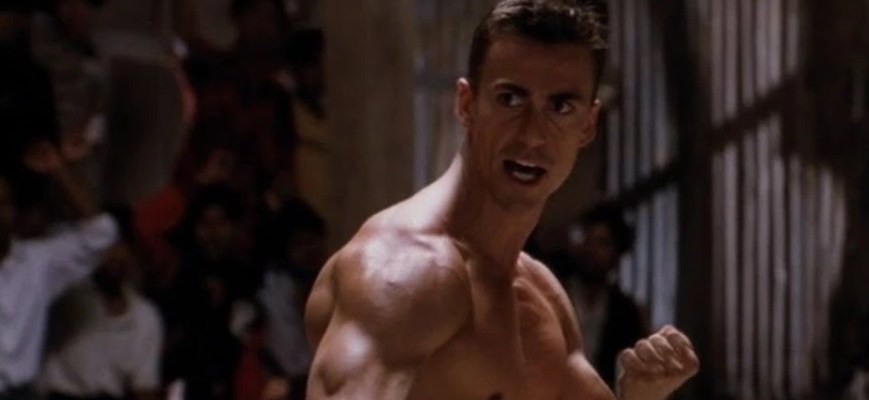
He found it in Daniel Bernhardt.
A martial artist, model, and wannabe actor with a passing resemblance — albeit taller build — to Van Damme, Bernhardt’s sole screen appearance had been, fittingly, opposite The Muscles From Brussels in a Versace commercial.
When the Swiss arse-whupper got DiSalle’s call he thought it was a prank.
When DiSalle left Bloodsport II shortly thereafter, Bernhardt stayed on.
Despite being a little rough around the edges, he equips himself well with the role of Alex Cardo, and imbues his arc — cocky thief to man of honour — with a pleasing amount of verisimilitude.
Bernhardt stuck with the Mehrezs’ across Bloodsport III (1997), Bloodsport 4: The Dark Kumite (1998), and — their masterpiece — True Vengeance (1997). In recent years, he’s joined the 87eleven/87North Productions contingent (John Wick (2014), Atomic Blonde (2017), Nobody (2021)) through his friendship with fellow action titan Chad Stahelski.
Care to guess the film where Bernhardt and Stahelski met?

 The Schlock Pit