
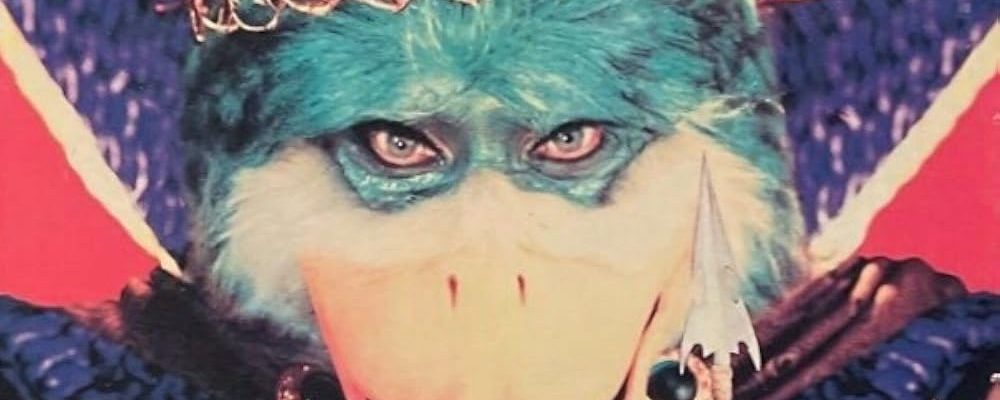
Matty has a quacking time with Ted Nicolaou’s ace fantasy flicks.
According to special effects artist Mark Rappaport, whatever good is in MAGIC IN THE MIRROR (1996) and its sequel, MAGIC IN THE MIRROR: FOWL PLAY (1997), is squarely down to Ted Nicolaou. “He made them work,” the Full Moon stalwart told film journalist and Schlock Pit pal William S. Wilson in It Came From the Video Aisle! [1], before dishing the dirt on the bully-boy tactics and cruel penny-pinching that hindered their making.
Among the handful of Full Moon titles caught in their messy split with Paramount, Magic in the Mirror and Fowl Play were part of the Moonbeam divorce package; a stip within the agreement that saw Paramount bagging the properties cobbled together under the family friendly subdivision [2]. The irony, though, is that in order for the Magic in the Mirrors to be completed (accounts vary, but they were either prepping, shooting, or seized by the bond company at the time), their finishing funds had to be supplied by Full Moon’s next partners, The Kushner-Locke Company. And as the Full Moon faithful know, The Kushner-Locke years were typified by KL’s eponymous brass — namely Peter Locke — wanting to do everything as cheaply as possible, art and quality be damned.
Thankfully, as Rappaport says in a roundabout way, you’d never be able to tell from the finished films. They’re a triumph of imagination and low-budget ingenuity.
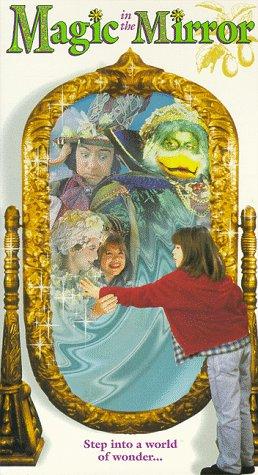
Like Nicolaou’s previous Moonbeam epics Dragonworld (1994), Leapin’ Leprechauns! (1995) and Leapin’ Leprechauns 2 (1996), the Magic in the Mirror flicks were built from treatments dating back to producer Charles Band’s Empire days, all of which were penned by Troll (1986) and Dolls (1987) scripter Ed Naha (cloaked by the pseudonym ‘Michael McGann’ on the bulk of the resulting pictures) [3]. Their plots concern a plucky youngster, Mary-Margaret (Jamie Renee Smith, essaying the warmest and cutest moppet in Nicolaou’s kiddie fare arsenal), and her trip ‘beyond the looking glass’, into a strange land behind the reflective surface of a mirror, where a waddle of evil, anthropomorphic ducks hold dominion. Their diabolical plan? To turn what’s left of humanity into cups of tea. A la the Leapin’ Leprechauns! duo — and, it should be noted, Band and Nicolaou’s earlier two-punch, the awesome Bloodstone: Subspecies II (1993) and Bloodlust: Subspecies III (1994) — Magic in the Mirror and Fowl Play were shot in tandem in Romania, at Castel Film Studios; a Full Moon asset Band managed to keep from Paramount’s clutches.
Best savoured as a giant three-hour experience, there’s relatively little difference between Magic in the Mirror and Fowl Play — but, gun to my head, I’d say the first is slightly better. Magic in the Mirror takes place in the mirrorworld; Fowl Play flips the scenario and has the ducks invading a suburban dinner party, until the inevitable mirrorworld conclusion. The films are cast extremely well, with Smith joined by Saxon Trainor, Kevin Wixted, Eileen T’Kaye (as the wicked duck queen, Dragora), Cristian Motriuc, and Nicolaou’s Romanian staples Ion Haiduc, Godfrey James, and Mihai Niculescu. Nicolaou’s TerrorVision (1986) star, Gerrit Graham, even appears in Fowl Play, playing a flamboyant party planner. All submit fabulous and tonally appropriate performances, spitting the surreal and hilarious verbiage of Ken Carter and Frank Dietz’s scripts with pantomime gusto and charming fairy tale energy. Naturally, it’s the dastardly duck people who get the funniest lines (“I’m not a duck, I’m a drake!”), and the bonkers inner workings of their societal structure — a weird fascist monarchy — provides as many laughs for the grown-ups as the slapstick buffoonery does for the nippers.
As with most Nicolaou joints, Magic in the Mirror and Fowl Play are visually striking offerings. Rappaport’s duck effects are both comical and nightmarish, and there’s an incredible steampunk design to the mirrorland and its denizens. Indeed, despite the alleged hell they were to create, there’s an immense joy to Magic in the Mirror and Fowl Play. It’s clear Nicolaou relished the chance to fashion a textured fantasy world in the tradition of The Wizard of Oz (1939), and a wealth of his intoxicating images and incidentals not only draw from but sit proudly alongside cinema’s greatest dreamers – Cocteau, Gilliam, Lynch, Svankmajer, Jeunet & Caro.
Bravo, Ted. Bravo.

[1] It Came From the Video Aisle!: Inside Charles Band’s Full Moon Entertainment Studio by Dave Jay, William S. Wilson, Torsten Dewi – and me and Dave!
[2] Paramount issued Magic in the Mirror on video in the U.S. on 13th August 1996 and Fowl Play on video in the U.S. on 11th February 1997. Fowl Play was the final Full Moon movie with open ties to Band that the major would ever release. They would, mind, unleash Nicolaou’s Kushner-Locke backed Dragonworld: The Legend Continues (1999) on cassette in August 1999, as ‘Shadow of the Knight’.
[3] Magic in the Mirror and Fowl Play were based on a concept called — what else? — ‘Mirrorworld’. A prior version of Magic in the Mirror was slated to be helmed by Linda Hassani as her follow-up to Dark Angel: The Ascent (1994).
 The Schlock Pit
Great review. Here’s hoping we can see reviews here of the other Moonbeam titles such as the Josh Kirby franchise, Demon in the Bottle, Beanstalk, Pet Shop and Magic Island.
LikeLike
Thanks Matty for the generous consideration of the Magic in the Mirror films!
Ted
LikeLike