

Matty dusts off an archival, previously unpublished chat with director Anthony Hickox, who dishes the dirt on the unhappy making of his much-maligned Steven Seagal opus.
A little over ten years ago, I had the pleasure of speaking to the late, great Anthony Hickox.
The bulk of our chat was devoted to his ace cops n’ werewolves caper, Full Eclipse (1993) — but, fearing I’d never get the chance to hound one of my favourite filmmakers ever again, I fired a bunch of other questions at him.
Happily, that wasn’t the case.
Hickox became an early champion of The Schlock Pit and would exchange the odd message and call with Dave and I. Alas, we fell out of touch about eighteen months before he died. Nevertheless, the following article is pieced together from our various conversations — phone, email, Instagram messages and Twitter DMs. It’s been assembled and unleashed per a darkly humorous blessing of his:
“You can get it all out there when I’m gone!”
My hope is that it stands as a testament to his generosity, his love of film and filmmaking, and — best of all — his utterly no-fucks-given attitude.
Respect always, Tony.
We miss you.

Anthony Hickox, 1959 – 2023
“Steven Seagal is a fucking nightmare.”
Anthony Hickox was no stranger to professional anguish.
Though his early union with Vestron was harmonious artistically, the distribution of his second and third flicks — bloodsucker western Sundown: The Vampire in Retreat (1990) and campy sequel Waxwork II: Lost in Time (1992) — was hindered by the company’s financial woes. As the ‘90s bled into the ‘00s, several tantalising projects failed to launch — giant bug romp ‘Invasion Earth’ and a remake of I Was a Teenage Werewolf (1957) among them — and two of Hickox’s most high-profile offerings, comic book adap Prince Valiant (1997) and kinky serial killer chiller Jill Rips (2000), suffered at the hands of meddling producers.
The annoyance and disappointment they all caused, however, was nothing compared to the holy hell Hickox experienced during the making of SUBMERGED (2005).
“The original script was brilliant, I have to say,” sighed the helmer. “It started life as a full-on horror and sci-fi film. I just thought wouldn’t it be great if you were stuck at the bottom of the ocean with fucking aliens on your submarine! And then you’d have the spaceship above you, and the navy wanting to blow you out the water. So that was the original idea, and we storyboarded it and we designed the creatures; like these little, mini, kind-of crab insects that could go down the drains of the submarine so you’d never know when they were coming. It was really interesting…”
“And then Seagal came on board.”
At the time, the ponytailed hardman was in the middle of a multi-pic run with Submerged’s producers, Nu Image/Millennium Films [1]. Ruling him a bankable commodity — particularly in the international and home entertainment markets — the shingle’s brass (namely: Head of Production Boaz Davidson) told Hickox that Seagal would be the perfect choice to play one of the plot’s central characters, a grizzled, drunken sea captain.
A cynic might wonder if Davidson had ever witnessed Seagal’s limited skillset.
According to Hickox, Davidson assured him that they were going to do for Seagal what they’d done for Jean-Claude Van Damme across Replicant (2001) and In Hell (2003), and actually have him act in between the arse-kicking.
The difference, of course, is that Van Damme is an excellent actor.
Seagal can barely function as a believable human being.
Circa Submerged, the culturally appropriative Seagal was in his Louisiana bluesman phase and speaking with a Cajun accent. Past public personas include: an Italian-American Bronx boy well versed in mafia lore c. Out for Justice (1991); an all-American military tactics expert c. Under Siege (1992); a Native American c. On Deadly Ground (1994) and The Patriot (1998); a Buddhist c. Ticker; and a black man c. Exit Wounds (2001) and Half Past Dead (2002).
“I met Seagal at his house — which is when I should have realised it was all going to go wrong — and he was like “I love the script blah blah blah”. And then I got a phone call three weeks before we started shooting. We’d planned everything and Seagal was like, “I don’t think this movie should be on a submarine”. Erm, but it’s called Submerged and it is on a submarine! And then he was like, “But I want a big opera scene” — I mean, this is literally how it happened — “I want an opera scene.” But, you’re on a submarine! “Yeah, well I’ve decided I don’t like aliens and I don’t like monsters, and I don’t want to be in a monster movie”. And basically that’s why it ended up like it did. Millennium wanted to keep Seagal happy because his DVDs were making them a lot of money… We had no clue what we were doing: no script, and the whole ‘mind control’ thing in the final film was made up the last week before shooting. It was really insane. At that point I should have quit, but I needed the cash.”
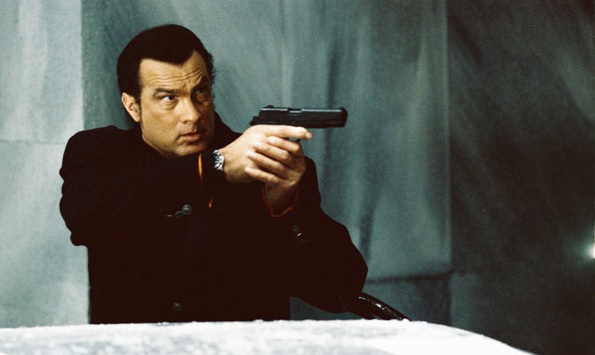

Narratively, Submerged is a mess. Things happen, but none of it hangs. Credited to Hickox and Paul De Souza, the makeshift plot features: a black ops unit; brainwashing; super soldiers; terrorists; a Uruguayan dictator; the aforementioned opera scene, and British ultra-babe Alison King, cast just prior to her career-defining turn as Carla Connor in iconic U.K. soap Coronation Street. The film’s a series of random moments slung together, usually based on Seagal’s whims and whether or not he could be pestered showing up that day on the Bulgarian set.
“The bastard would camp in his trailer for hours at a time doing god knows what… If you watch the film, we use a stand-in for him so many times. We dubbed his voice a lot too. And I know it sort of became a thing in all his direct-to-video movies, but I think we were the first one to really do that. Talk about a dubious achievement!”
“When he’d finally grace us with his presence he’d refuse to say any line as written. He’d refuse to be in shots with other people. He’d demand the most ridiculous stuff happen in a scene whether it made sense or not, and he would just be a fucking arsehole to everyone. Impossible. Just impossible. And he’d walk around like a tough guy and then throw these tantrums — big, full-on toddler temper tantrums — because he wasn’t lit properly and it made him “look fat”. But he was fat! That’s why we kept him in the shadows so much! He’d been piling on weight for years, and when we were making Submerged he’d have the make-up department paint over his chins to try and hide them. He’d even have props and bits of set positioned over his stomach. I took it as my Brando moment [laughs].”
Doing what he can, Hickox ladles on the style and goes hard with the rapid fire incident. In a weird way, it’s almost as if he’s free. Unencumbered by cohesion, logic and drama, Hickox elicits baser pleasures: cool visuals; staccato, adrenaline-pumping cutting; eye-searing digital colour filters; flurries of mindless violence; and carnage on a grand scale. Blanks are fired with wild abandon as half of Bulgaria’s population is shot to pieces; cars, a helicopter and — because the title had to apply somewhere — a submarine are smashed to smithereens; and, in a deliciously absurd sequence, a herd of goats are blown sky high by a suicide bomber. Nu Image/Millennium threw money at Hickox to stop the film floundering and to meet their contractual obligations. True to form, they’d pre-sold Submerged to various territories as an epic Seagal vehicle.
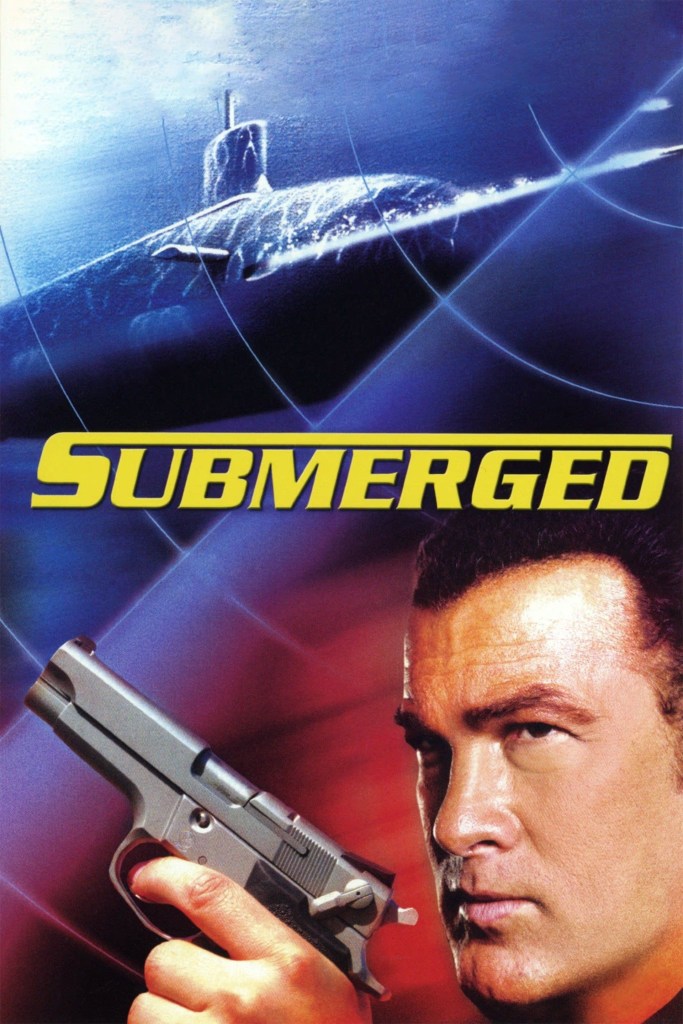
Released on U.S. and U.K. DVD by Sony Pictures Home Entertainment on 31st May 2005 and 5th September 2005 respectively, Submerged was massacred by the mainstream press and summarily cited as the worst Seagal movie in an already laughable filmography.
Harsh.
Submerged isn’t conventionally ‘good’ by any means, but, unlike the genuine Seagal dross that’d follow — hello, Attack Force (2006) and Against the Dark (2009) — it’s never boring. And in terms of Hickox’s wares, it’s a better entertainment than Storm Catcher (1999) and Blast (2004) (“You have no taste!”).
Strangely, the most damning review came from Uruguay.
It wasn’t a single critic, rather the entire country:
Their Ministry of Culture and their National Film Institute looked into filing legal action against Seagal and Nu Image/Millennium, citing damages caused by Submerged’s depiction of Uruguay as a corrupt banana republic. The fact they ruled Submerged awful was the icing on the cake.
“It’s our duty not only to defend the international image of Uruguay but also our national symbols,” said the NFI’s Martin Papich. “We’re not only insulted as Uruguayans but as moviegoers!” [2]
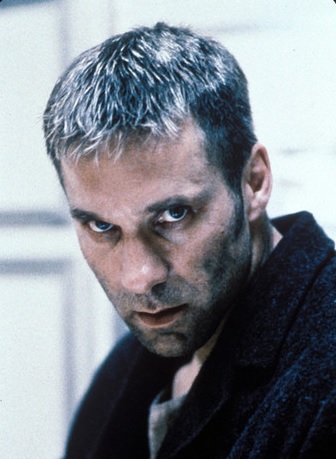


In the years since my last chinwag with Hickox, more stories have surfaced about Submerged, generally via acquaintances of cast and crew members. Per IMDb and several additional hard to verify sources, Seagal’s conduct got so bad that Hickox went a bit Werner Herzog-y down in Bulgaria, culminating in the emotionally frazzled auteur giving Nu Image/Millennium bigwig, Avi Lerner, a loaded gun and asking him to “blow Seagal’s head off”. To try and resolve matters, cinematographer/director Don E. FauntLeRoy was jetted in to tackle all outstanding Seagal footage. Co-star Vinnie Jones is said to have chased Seagal with a knife, incensed at how he was treating Hickox, with whom the footballer-cum-B-movie space-filler was close friends with. In another version of the tale, Jones allegedly did so after Seagal cracked wise about his mother. Gary Daniels, meanwhile, had his planned, lengthy on-screen brawl with Seagal truncated. Apparently, Seagal — a long suspected poseur — feared being upstaged by the British martial artist’s legitimacy.
The final words on the film, though, should go to Hickox, who passed away on 9th October 2023, age sixty-four.
“After Submerged I stepped back from directing for a second and thought that I was just getting tied up in all this and that and not doing what I wanted to do… I remember being heartbroken when it happened but it was for the best because it finally got me turning back to horror movies again. So that’s why I made Knife Edge (2009). And no one liked that movie either [laughs].”
“But that’s a whole other story — because Natalie Press was a fucking nightmare too!”
[1] Seagal’s other Nu Image/Millennium joints: Ticker (2001), Out For a Kill (2003), Belly of the Beast (2003), Today You Die (2005), Mercenary For Justice (2006), and Kill Switch (2008). Out for a Kill and Belly of the Beast were the first two pictures Seagal spearheaded for his own production and sales company, Luminosity Media, and were launched in conjunction with producers Randy Emmett and George Furla (Emmett/Furla Films) and their first-look deal with Nu Image/Millennium; an arrangement that extended to Submerged, Today You Die, and Mercenary For Justice. Naturally, Seagal and Nu Image/Millennium chieftain Lerner’s relationship soon soured, leading the equally problematic mogul banning Sylvester Stallone from using the bloated bruiser in his Expendables adventures. The root of their spat was a lawsuit Nu Image/Millennium filed pertaining to the costly delays incurred by — drum roll — Seagal’s unruly behaviour on the sets of Today You Die and Mercenary For Justice.
[2] Uruguay’s Fighting Mad by Anna Marie De La Fuente, Variety, 7th August 2005.
 The Schlock Pit